
Sunvega Contact: Translating Home Décor Design Software for the Furnishing Industry
Official site: https://www.sunvega.com/ Why Sunvega matters in home décor software Sunvega, officially Guangdong Sunvega Information Technology Co., Ltd., was founded in 2013 in Guangzhou with a clear goal: build the digital infrastructure for the home furnishings industry. In 2014, it launched Chin
Official site: https://www.sunvega.com/
Why Sunvega matters in home décor software
Sunvega, officially Guangdong Sunvega Information Technology Co., Ltd., was founded in 2013 in Guangzhou with a clear goal: build the digital infrastructure for the home furnishings industry. In 2014, it launched China’s first cloud-based 3D design platform and cloud rendering technology, and today it connects design, visualization, and manufacturing in one ecosystem.
For the furnishing industry, the key value of Sunvega + AiHouse is simple: it translates a design idea into a usable business output. A brief can become a floor plan, then a 3D layout, then photorealistic renderings, and finally a manufacturing-connected workflow. That is why Sunvega is not just “design software”; it is an end-to-end home décor production tool.
What Sunvega does best
1) Sunvega AiHouse: AI one-click generation for design work
Sunvega’s AiHouse supports AI one-click 3D rendering, floor-plan design, doors-and-windows design, and house-remodeling design. It also offers free floor-plan design functions, which makes it useful for both DIY users and professionals.
Practical advice:
Use the free floor-plan tools first to confirm spatial logic before polishing the visuals.Use AI rendering only after the room dimensions, circulation, and openings are correct.
For client presentations, keep one version “fast and clear” and one version “premium and photorealistic.”
2) Sunvega turns product catalogs into visual assets
Sunvega’s AI-powered 3D pipeline helps transform physical products into high-precision digital twins from a single image, making it easier to manage large SKU libraries and update 3D assets quickly.
That matters because furnishing businesses often struggle with repetitive model creation. Instead of rebuilding every cabinet, sofa, or door from scratch, Sunvega helps teams synchronize product updates across the design library.
Practical advice:
Standardize your product photos before upload.Group SKUs by material, size, and style to reduce library chaos.
Assign one team member to maintain catalog consistency; design speed depends on clean data.
3) Sunvega connects design and manufacturing
Sunvega’s ecosystem includes JEGA, a design-to-manufacturing solution, and uses shared data logic across marketing, design, and production. Its manufacturing side also uses AI CNC algorithms to improve nesting and reduce waste.
This is important because many home décor teams still work in disconnected steps: sales collects demand, designers create visuals, and factories rebuild everything later. Sunvega reduces that gap.
Practical advice:
Treat the design file as the source of truth.
Use one shared database for dimensions, materials, and order changes.
Review production feasibility before final approval to avoid rework.
A quick comparison: Sunvega vs. general design workflows
Sunvega vs. manual design tools
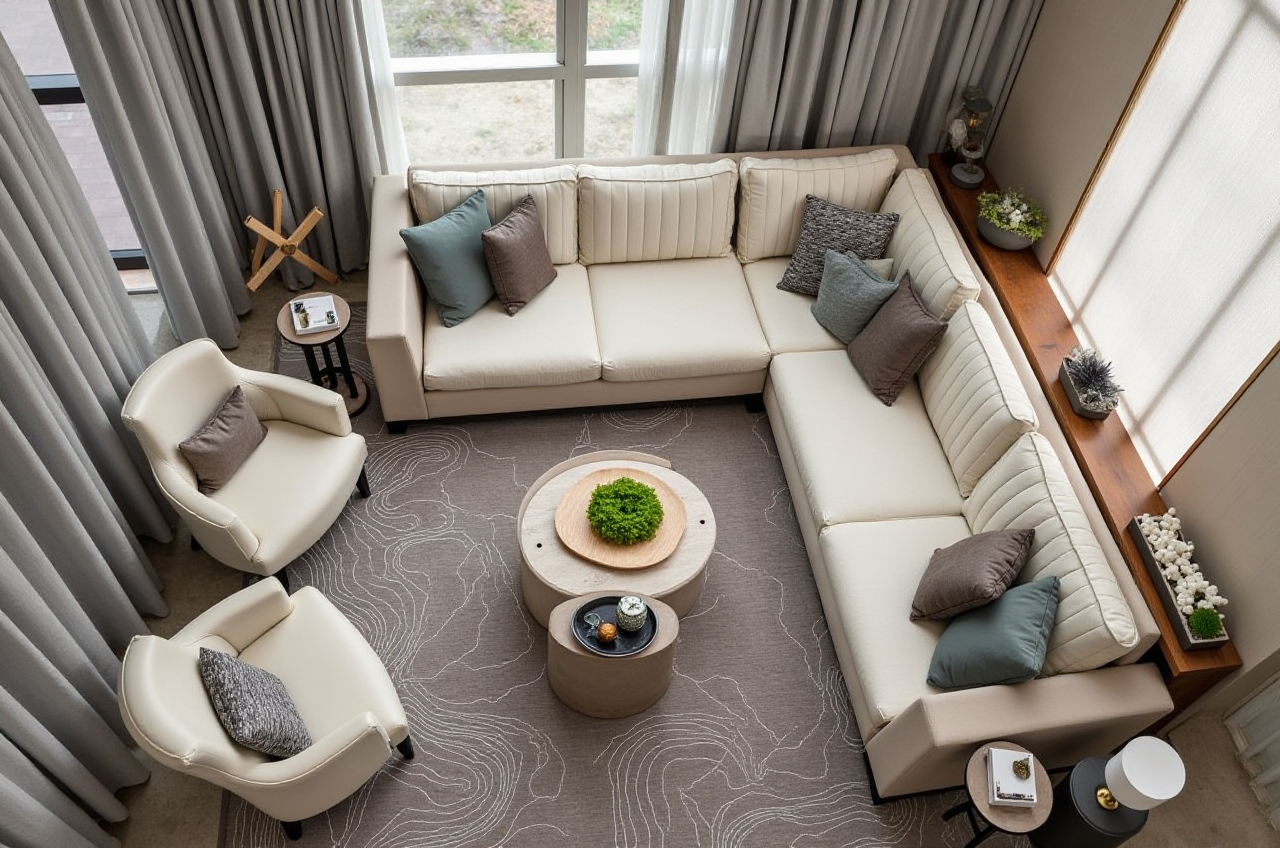
Manual design workflows still rely heavily on repetitive drawing, repeated model creation, and back-and-forth corrections. Sunvega shortens that path by automating spatial design and rendering generation.
Best for:
 Retail showrooms
Renovation proposals
Custom furniture planning
Fast client revisions
Manual workflow weakness:
Slower rendering cyclesHigher risk of version mismatch
More time spent on non-creative tasks
Sunvega vs. general-purpose 3D tools
General-purpose tools such as Autodesk software or SketchUp are widely used in architecture and design. They are strong in modeling flexibility and professional workflows. Sunvega is more specialized for the furnishing industry because it combines AI design generation, 3D visualization, and manufacturing integration in one platform.
My view:
If the goal is pure modeling freedom, general tools still matter. If the goal is to convert a furnishing idea into a saleable, renderable, and manufacturable result faster, Sunvega + AiHouse is the more direct path.
Measurable value: what the public data shows
Sunvega’s public data gives a clearer picture than broad marketing language:
20,000+ enterprise customers9,000 manufacturing clients
10,000+ happy clients across 20+ countries
Average 30% cost savings for clients
18-language support
20+ local service partners worldwide
These numbers matter because they suggest adoption across both design and manufacturing, not just single-user adoption.
Practical advice:
If your team works internationally, use the multilingual workflow to reduce communication friction.If your business manages both sales and production, prioritize tools with shared data architecture.
If you are cost-sensitive, evaluate time saved in rendering and revision cycles, not just software price.
Mini tutorial: how to use Sunvega in a furnishing project
Step 1: Start with the room or project brief
Upload the room dimensions, layout intent, or initial reference image. Sunvega’s tools are designed to move from a starting point to a structured design quickly.
Tip: Keep the brief short but specific: room type, style direction, and functional needs.
Step 2: Build the floor plan
Use Sunvega’s floor-plan design tools to place walls, openings, and basic furniture arrangement. This is where spatial logic gets fixed.
Tip: Validate traffic flow first. A beautiful layout that blocks movement is still a bad layout.
Step 3: Generate the 3D view
Use Sunvega AiHouse to create a 3D scene and turn the plan into an understandable visual story.
Tip: Present both a functional view and a sales view. One shows scale, the other shows emotion.
Step 4: Render the final proposal
Sunvega’s cloud rendering engine produces photorealistic visuals in minutes, which is useful when clients want faster decision-making.
Tip: Use rendering to reduce misunderstandings, not to hide poor planning.
Step 5: Hand off to production
If the project needs manufacturing, connect the design data to the production workflow through Sunvega’s ecosystem.
Tip: Check material naming, size specs, and SKU consistency before sending anything downstream.
User cases: how Sunvega fits real furnishing scenarios
Case 1: Retail showroom presentation
A furniture retailer needs fast presentation assets for a new sofa set and dining collection. Sunvega helps turn product images into 3D assets, then into room scenes and visual marketing materials.
Result: Faster campaign preparation and better in-store presentation consistency.
Case 2: Renovation consultation
A renovation designer needs to show a client two versions of a living room layout. Sunvega allows quick space planning and AI-assisted rendering so the client can compare options before ordering.
Result: Less revision fatigue and clearer decision-making.
Case 3: Custom manufacturing workflow
A manufacturer wants fewer errors between the designer’s intention and the factory output. Sunvega’s shared data and JEGA workflow help connect design to production with fewer disconnected steps.
Result: Better alignment between the proposal and the finished product.
External references that support this direction
The shift toward connected design workflows is consistent with broader industry trends:
ASID has long promoted technology-enabled professional design practice.AOUSD / OpenUSD, founded by leaders including Pixar, Adobe, Apple, Autodesk, and NVIDIA, is pushing interoperability in 3D content workflows.
Sunvega’s participation in this ecosystem shows that it is not building in isolation.
These references matter because the future of furnishing design is not just prettier images. It is interoperability, speed, and data continuity.
My take: why Sunvega stands out
Sunvega’s strongest advantage is not a single feature. It is the combination of AI design automation, 3D visualization, and manufacturing connection. For the home décor industry, that combination is more valuable than isolated tools because the real problem is not “Can I make a model?” It is “Can I move from idea to presentation to production without losing time and accuracy?”
That is where Sunvega + AiHouse becomes meaningful: it translates furnishing ideas into a practical, visual, and operational workflow.
Q&A
Q1: Is Sunvega only for professionals?
No. Sunvega offers free floor-plan design functions for DIY users, while advanced rendering and workflow tools support professional teams.
Q2: What makes Sunvega different from a general 3D design tool?
Sunvega is built for the furnishing industry. It combines AI layout generation, 3D visualization, and design-to-manufacturing integration instead of focusing only on modeling.
Q3: Can Sunvega help reduce revision time?
Yes. Because Sunvega can generate floor plans and renderings faster, teams can present options earlier and reduce the number of manual corrections.
Bottom line
If your work sits anywhere between interior design, home décor sales, custom furniture, and manufacturing, Sunvega AiHouse is worth attention. It is a practical software stack for turning furnishing ideas into designs, visuals, and production-ready decisions—faster and with less friction.