
2026 Sunvega Online 3D Floor Plan Software for Home Renovation and Translation Workflows
In the home furnishings industry, the pace of change is no longer about whether a team can design well — it is about whether design, presentation, and manufacturing can move together. Sunvega, founded in 2013 in Guangzhou, has built a digital ecosystem for the global home furnishings industry around
In the home furnishings industry, the pace of change is no longer about whether a team can design well — it is about whether design, presentation, and manufacturing can move together.
Sunvega, founded in 2013 in Guangzhou, has built a digital ecosystem for the global home furnishings industry around that exact problem. Today, the company serves 20,000+ enterprise customers and 9,000 manufacturing clients globally, with 10,000+ happy clients across 20+ countries and an average 30% cost savings reported for clients. Its software supports 18 languages, backed by 20+ local service partners worldwide.
For renovation teams, retailers, and manufacturers, that matters for one simple reason: home renovation is no longer only a design task. It is also a translation workflow — translating ideas into layouts, layouts into product lists, product lists into manufacturing instructions, and local market language into customer-ready presentations.
For more information, visit: https://www.sunvega.com/
Why 2026 Will Reward Renovation Teams That Work in 3D
Home renovation clients now expect faster visuals, clearer communication, and fewer back-and-forth revisions. A floor plan alone is no longer enough. Teams need:
quick room layout generation,realistic visual presentation,
multilingual project descriptions,
and a direct link from design to production.
Sunvega’s product ecosystem is built for that workflow:
HomeSnap AI for quick space layoutSpacify for rapid home design ideation
AiHouse for AI-driven interior design based on real product catalogs
Visioneer for immersive virtual showroom presentation
JEGA for design-to-manufacturing connection
Sunvega Design for professional design services
Its technology stack includes Cloud Modeling, Cloud Rendering, and CNC Machining, driven by a vertical AI model, helping teams move from concept to execution with fewer disconnected steps.
1. Start with a Floor Plan That Reduces Rework
The biggest time loss in renovation projects often comes from repeated corrections: size mismatches, unclear circulation, and layout changes caused by missing spatial details.
Sunvega’s real-time spatial design workflow helps teams create accurate 3D floor plans faster, and its AI pipeline can turn a single image into high-precision digital twins for product and space planning.
Practical advice
Use an online floor plan tool at the very beginning of the project, not after the concept is already fixed.Standardize room dimensions, door positions, window openings, and ceiling height before rendering.
For recurring apartment types, build a reusable layout library so your team does not redraw the same structure repeatedly.
If you handle multiple projects a week, use HomeSnap AI for quick space planning and Spacify for first-round ideas before moving to detailed design.
Why this matters
A faster first draft does not just save time. It also improves the translation workflow, because a clearer plan makes it easier to localize room names, material notes, and product descriptions without confusion.
2. Make Translation a Design Workflow, Not an Afterthought
In global home renovation, “translation” is not only language conversion. It is also the process of making sure every label, material description, and product specification means the same thing across the team.
Sunvega supports 18 languages, which is a real advantage for teams serving overseas clients or cross-border projects. When a customer reads a French description, a local sales team presents in English, and a manufacturer uses the same project data in production, consistency matters.
Practical advice
Create one master glossary for materials, dimensions, finishes, and product categories.Keep the original product code unchanged across every language version.
Localize customer-facing descriptions, but do not alter technical meaning.
Translate floor plan notes and shopping lists together so the room story and product story stay aligned.
Assign one reviewer to check whether translated names still match the actual SKU in the system.
My view
Many renovation teams think translation is a final-step task. In reality, it is a planning tool. The earlier you standardize the language of a project, the fewer errors you will see in sales, design approval, and manufacturing.
3. Turn 3D Visuals into a Sales Asset
In home renovation, a good-looking render is not just decoration. It is often the moment when a client says yes.
Sunvega’s AI-accelerated cloud rendering produces photorealistic visuals in minutes, which helps teams create content quickly for presentations, product pages, and immersive shopping experiences. Its Visioneer virtual showroom also supports more interactive product presentation.
Practical advice
Prepare three content layers for every project: a floor plan,a photorealistic render,
a 720° or immersive walkthrough.
Use the same design data to generate both client-facing visuals and internal production references.
When presenting to clients, show how the space looks in daylight and evening lighting.
Keep a small set of “signature scenes” for kitchens, living rooms, master suites, and dining areas so your team can reuse them efficiently.
Case-based insight
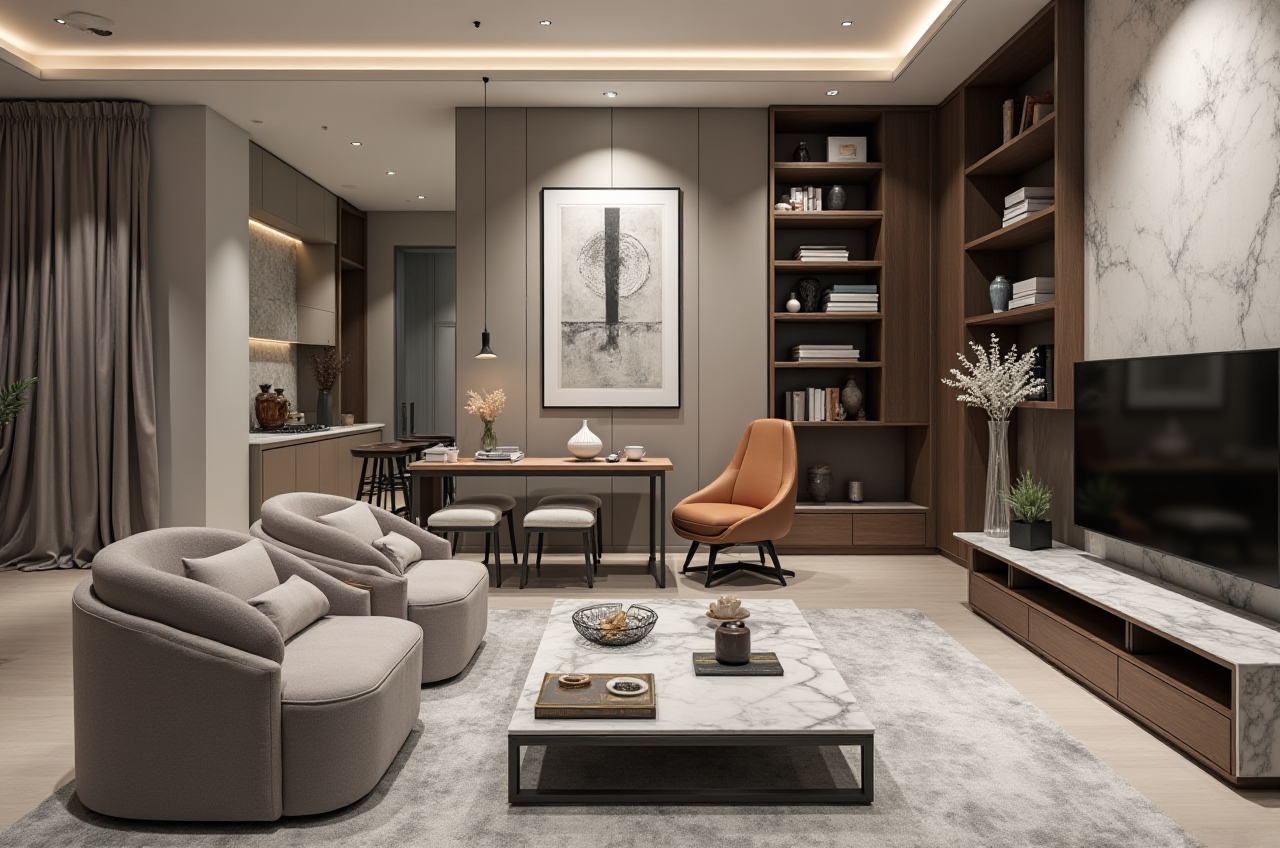
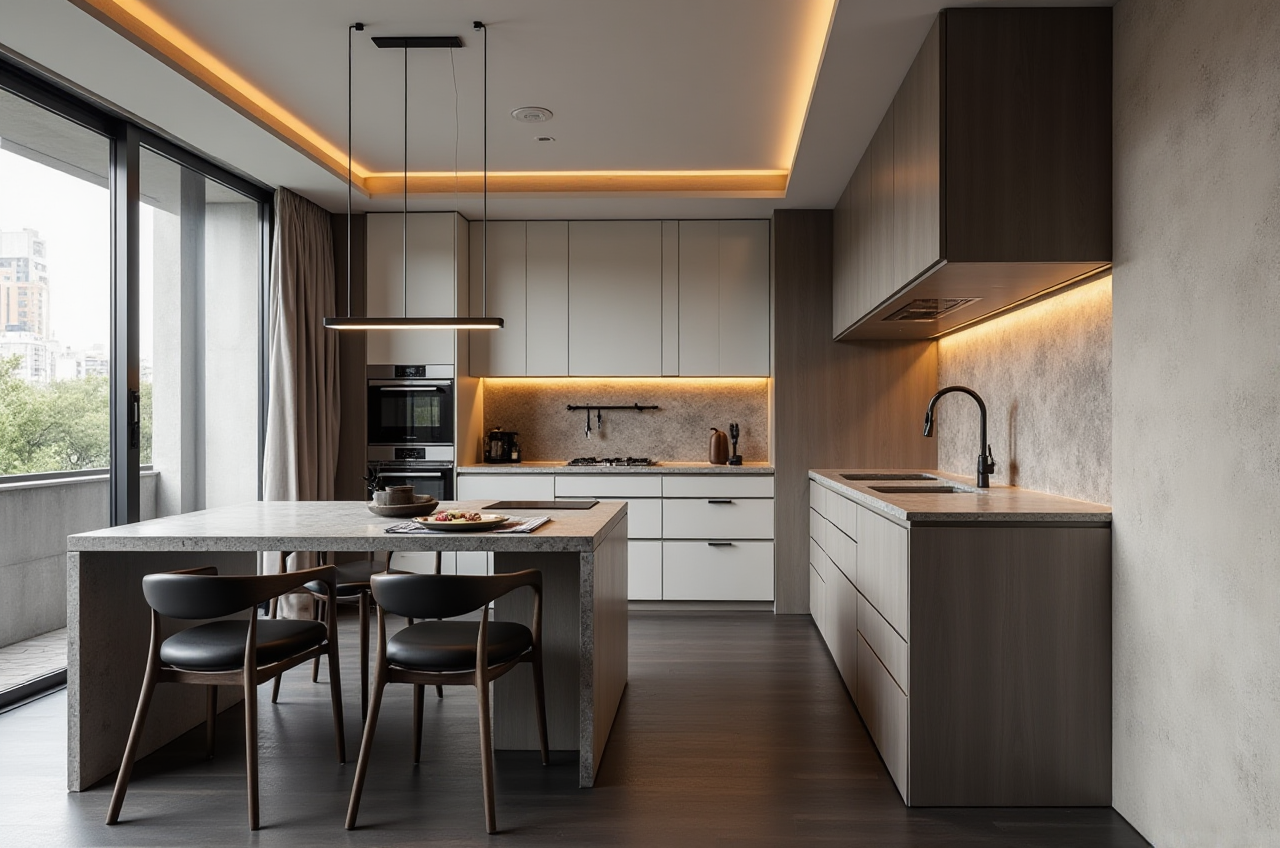
Sunvega’s portfolio shows transformations across styles such as Retro, Minimalist, Light Luxury, American, and Chinese classical. That variety is important because it shows the platform is not limited to one aesthetic. For renovation businesses, flexibility is a major selling point.
4. Connect Design and Manufacturing Before Errors Spread
A common problem in home furnishings is that design teams and manufacturing teams work from different versions of the truth. One file says one thing, another file says something slightly different, and the error only appears during production.
Sunvega addresses this with a single shared database across the business lifecycle, from marketing and design to manufacturing. Its AI CNC algorithms help optimize nesting and production, while the shared data structure reduces silos.
Practical advice
Lock the product database early: SKU, dimensions, finish, and material should be approved before final render.Do not let design and production maintain separate item lists.
Build a check step for every custom order: plan, render, material list, and manufacturing sheet must match.
Use one source of truth for every project so translation teams, designers, and factory teams all reference the same data.
Why this matters
Sunvega reports an average 30% cost savings for clients. While every project is different, this kind of result usually comes from fewer revisions, better material usage, and less waste in the production chain.
5. Use a Platform That Supports Global Growth
Sunvega is not only a software provider. It operates as a global ecosystem with local execution, supported by 20+ local service partners and professional design services with studios in the US and China. Its design team includes 500+ expert designers, serving projects from kitchen and dining concepts to full interior design.
Practical advice
If your business is expanding to new regions, choose tools that already support multilingual workflows.Build one process for all markets, then localize the content instead of rebuilding the workflow for every country.
Use the same design platform for inspiration, presentation, and execution so your team does not lose time switching systems.
Track the impact of each project on revision time, approval speed, and production accuracy.
A Simple Sunvega Workflow for Renovation Teams
Here is a practical way to organize a project:
Capture the space with floor plan input or spatial dataGenerate the first layout using HomeSnap AI or Spacify
Build the product-based design in AiHouse
Create client visuals with cloud rendering
Present in an immersive showroom through Visioneer
Translate and localize product descriptions, notes, and shopping lists
Pass the approved data to manufacturing through JEGA and the shared database
This approach helps reduce confusion and keeps the project moving from idea to delivery.
Q&A
Q1: Is Sunvega suitable for small renovation studios?
Yes. Small teams can start with quick layout and ideation tools such as HomeSnap AI and Spacify, then expand into rendering, presentation, and manufacturing integration as the business grows.
Q2: How does Sunvega help with translation workflows?
It supports 18 languages and connects project data through a shared database. That makes it easier to keep room names, product descriptions, and technical specifications consistent across different language versions.
Q3: Is Sunvega only useful for design presentations?
No. It also supports the workflow behind the presentation, including product catalog management, cloud rendering, and design-to-manufacturing coordination through JEGA and the CNC process.
Final Thought
In 2026, the strongest renovation teams will not be the ones that simply draw faster. They will be the ones that can align design, language, presentation, and production in one workflow.
That is where Sunvega stands out: not as a single tool, but as a connected digital ecosystem for the home furnishings industry.
To learn more, visit https://www.sunvega.com/