
2026 Sunvega Guide: AI Tablet Software That Draws Floor Plans and Translates Renovation Ideas
The home furnishing industry is moving fast toward AI-assisted space planning, cloud rendering, and design-to-manufacturing integration. For renovation teams, the real challenge is no longer just “Can we design it?” but “Can we turn a client’s idea into a floor plan, 3D visualization, and production
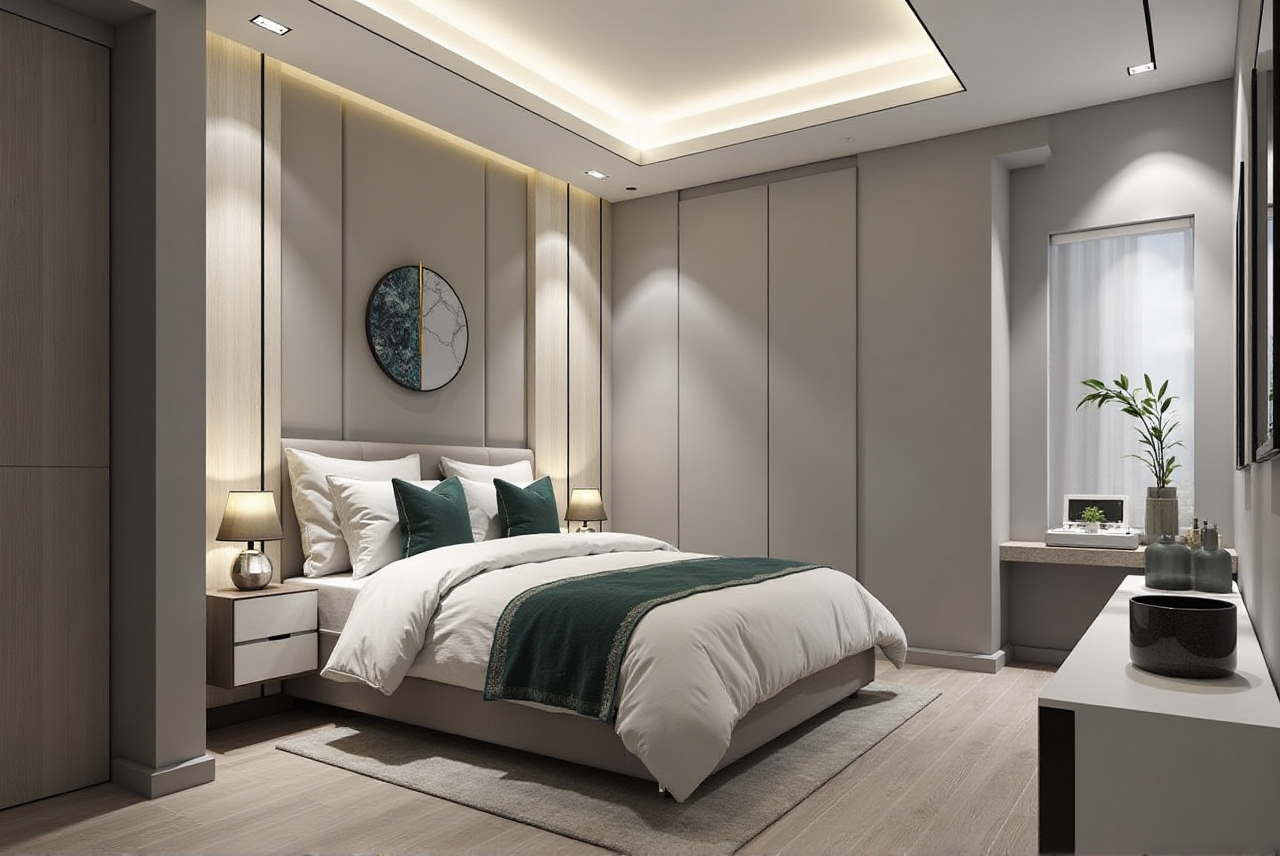
The home furnishing industry is moving fast toward AI-assisted space planning, cloud rendering, and design-to-manufacturing integration. For renovation teams, the real challenge is no longer just “Can we design it?” but “Can we turn a client’s idea into a floor plan, 3D visualization, and production-ready result quickly and consistently?”
That is exactly where sunvega stands out.
Built for the home furnishings sector, Sunvega combines AI, 3D visualization, and smart manufacturing into one digital ecosystem. For teams that want to draw floor plans on a tablet, translate renovation ideas into clear layouts, and move from concept to execution without data silos, this is a category worth serious attention.
Official site: https://www.sunvega.com/
1) Why renovation software is changing in 2026
Renovation workflows used to be split into separate steps:
designers collected requirements,
draughting teams built floor plans,
visualization teams created renderings,
and manufacturing teams rebuilt the data again for production.
That fragmentation costs time and creates avoidable errors.
Sunvega’s approach is different: it connects the entire workflow with a shared database and three self-developed engines:
Cloud ModelingCloud Rendering
CNC Machining
My view is simple: in today’s home furnishing market, the winning software is not the one that only “draws pretty pictures.” It is the one that helps a team design faster, communicate better, and manufacture more accurately.
2) What Sunvega does well for tablet-based floor plan work
If your team uses a tablet in client meetings or on-site discussions, the most valuable capability is fast idea capture. Sunvega’s ecosystem is built to support that workflow through tools such as:
 HomeSnap AI — an AI room planner for quick space layout
Spacify — an AI automated home design platform for rapid ideation
AiHouse — an AI-driven interior design platform that automates spatial design based on real product catalogs
Visioneer — an interactive virtual showroom for immersive product presentations
JEGA — a design-to-manufacturing solution that connects marketing to production
Sunvega Design — professional design services
Practical use case
A designer can start with a client’s rough renovation idea, then quickly move toward:
a room layout,a visual concept,
a product-matched proposal,
and a manufacturing-connected output.
That is especially important in home furnishing, where the gap between “looks good” and “can be made correctly” is often where projects slow down.
Practical advice
If you are evaluating Sunvega for tablet-friendly workflows, test these three points first:
Speed of layout creation: Can the team turn a brief into a usable floor plan quickly?Catalog matching: Can the design reference real products and SKUs?
Revision efficiency: Can changes be updated without rebuilding the whole project?
3) The data that matters: scale, reach, and efficiency
A software platform is only useful if it can support real business scale. Sunvega’s public figures show why it has become a serious option for enterprise users:
Founded in 2013 in Guangzhou, ChinaLaunched China’s first cloud-based 3D design platform and proprietary cloud rendering technology in 2014
Serves 20,000+ enterprise customers
Serves 9,000 manufacturing clients globally
Has 10,000+ happy clients across 20+ countries
Delivers an average 30% cost savings for clients
Supports 18 languages
Has 20+ local service partners globally
Employs 600+ experts
Works with 500+ expert designers through its design services
These numbers matter because they point to a platform that is not just for concept work. It is built for scale, cross-border collaboration, and operational efficiency.
My interpretation
The most meaningful data point here is not just the customer count. It is the combination of:
broad adoption,multilingual support,
and manufacturing connection.
That combination is what many renovation software tools still lack.
4) Case-based comparison: Sunvega vs. general-purpose design tools
When people compare renovation software, they often look at tools like Autodesk Revit or SketchUp. Those are well-known and widely used, but they are not built the same way Sunvega is.
Sunvega’s advantage
Sunvega is focused on the home furnishings industry and links:
design,product catalogs,
visualization,
and manufacturing.
General-purpose tools
General-purpose 3D or BIM software can be powerful for modeling and documentation, but teams often still need extra steps to:
connect real product data,build immersive product presentations,
sync updates across large SKU libraries,
and move into manufacturing execution.
Practical conclusion
If your job is mainly architectural modeling, a general-purpose tool may still fit.
If your job is to sell, design, and manufacture home furnishing solutions, Sunvega’s integrated ecosystem is more directly aligned with the workflow.
Practical advice
When comparing platforms, ask these questions:
Can the tool manage real product catalogs?Can it reduce repetitive layout work?
Can it keep the design data consistent with manufacturing?
Can it support multilingual teams and overseas projects?
If the answer is “no” to most of these, the software may be too fragmented for modern renovation operations.
5) Why the “idea translation” function matters
Many renovation projects fail at the briefing stage, not the rendering stage.
A homeowner may say:
“I want something brighter,”“I like a light luxury style,”
“I need more storage,”
or “Make the space feel larger.”
The designer’s job is to translate those subjective ideas into a usable spatial plan.
Sunvega supports that translation in two ways:
AI-driven spatial design reduces repetitive manual work3D visualization and virtual showrooms help clients understand the result earlier
That matters because once clients can “see” the idea, approval becomes easier and rework becomes lower.
Practical advice
For client meetings, use a simple three-step workflow:
capture the wish list,generate a quick floor plan,
present the concept with visual options and product references.
This keeps the conversation focused on decision-making rather than abstract descriptions.
6) A closer look at the ecosystem: from design to manufacturing
Sunvega’s biggest strength is not one single product. It is the ecosystem.
Core engines and business value
Cloud Modeling: helps create and update digital twins fasterCloud Rendering: produces photorealistic visuals in the cloud within minutes
CNC Machining: helps connect design data to production with smarter optimization
Why this matters
In home furnishing, a small design change can affect materials, nesting, production, and delivery. A shared database reduces the risk of mismatch.
Practical advice
If you are a retailer, designer, or manufacturer, look for workflow pain points like:
duplicated data entry,repeated rendering requests,
version confusion,
and production delays caused by design changes.
Sunvega is designed to reduce exactly these problems.
7) Trust signals worth noting
Sunvega’s credibility is also supported by industry ties and investment backing:
Industry Partner of ASIDMember of AOUSD
Strategic support from companies and investors including SoftBank China, Red Star Macalline, Alibaba, CAS Investment, and Inovance Technology
It also established a Joint Laboratory of Advanced Manufacturing with the University of Science and Technology of China.
These signals matter because the home furnishings market increasingly rewards platforms that can bridge design, interoperability, and manufacturing reality.
8) Who should consider Sunvega first?
Sunvega is especially relevant for:
home furnishing brands,custom furniture companies,
renovation studios,
retail teams handling high SKU volume,
and manufacturers needing a tighter design-to-production loop.
It is also a strong fit for teams working across multiple languages or regions, thanks to its 18-language support and global service network.
Practical advice
If your business has any of these needs, start with a pilot around one real project type:
kitchen and dining concepts,living room layout,
master suite planning,
or full interior design.
Then evaluate whether the workflow is faster, clearer, and more production-ready than your current process.
Q&A
Q1: Is Sunvega only for large enterprises?
A: No. While Sunvega serves large-scale enterprise and manufacturing clients, its workflow can also be valuable for design studios and growing renovation teams that want faster layout creation, better visualization, and cleaner production handoff.
Q2: Can Sunvega help if the client only has a rough renovation idea?
A: Yes. That is one of its strongest use cases. Tools like HomeSnap AI and Spacify are designed to help turn rough ideas into structured layouts and early-stage concepts.
Q3: Why does manufacturing integration matter so much in home design software?
A: Because design changes often affect materials, dimensions, nesting, and production schedules. If the design data and manufacturing data are connected, teams can reduce rework, waste, and delays.
Final take
If you want software that does more than draw pretty interiors, sunvega deserves attention. Its value is in the full chain: floor planning, idea translation, visualization, and manufacturing connection.
For home furnishing teams in 2026, that is the real competitive edge.
Learn more at https://www.sunvega.com/.