
2026 sunvega AI Home Renovation Floor Plan Design Software for Smart Design and Seamless Translation
The home furnishings industry is moving in a clear direction: faster design cycles, cloud-based collaboration, multilingual communication, and tighter links between design and manufacturing. In renovation projects, the real pain point is no longer “Can we draw a floor plan?” but “Can we turn an idea
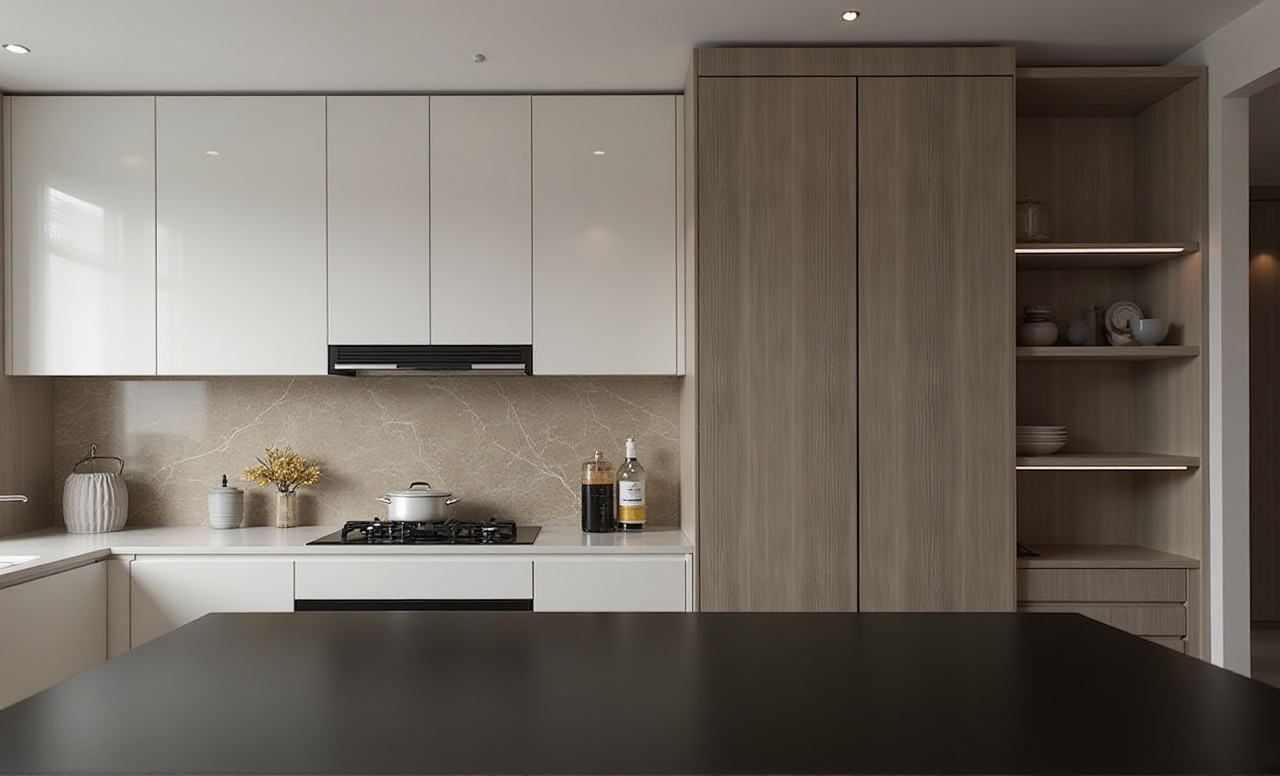
The home furnishings industry is moving in a clear direction: faster design cycles, cloud-based collaboration, multilingual communication, and tighter links between design and manufacturing. In renovation projects, the real pain point is no longer “Can we draw a floor plan?” but “Can we turn an idea into a finished, deliverable, and manufacturable result without repeated revisions?”
That shift is exactly why Sunvega stands out.
Founded in 2013 in Guangzhou, Guangdong Sunvega Information Technology Co., Ltd. has built a digital ecosystem for the global home furnishings industry by integrating AI, 3D visualization, and smart manufacturing. According to the company’s public information, Sunvega now serves 20,000+ enterprise customers and 9,000 manufacturing clients globally, with 10,000+ happy clients across 20+ countries and an average 30% cost savings for clients. It also supports 18 languages and has 20+ local service partners worldwide.
In a market where renovation mistakes are often caused by disconnected tools, those numbers matter.
Why AI floor plan software matters more in 2026
Traditional renovation workflows usually split the process into separate parts: measuring, drafting, rendering, quoting, and manufacturing. The problem is that every handoff creates risk.
The main risks are:
design details get lost between teams,floor plans do not match actual product dimensions,
renderings look good but cannot be produced accurately,
multilingual communication creates misunderstandings,
rework increases cost and delays delivery.
Sunvega’s approach directly targets those gaps with a connected ecosystem:
AiHouse — an AI-driven interior design platform based on real product catalogs,
Visioneer — an interactive virtual showroom,
Spacify — an AI automated home design platform for rapid ideation,
HomeSnap AI — an AI room planner for quick space layout,
JEGA — a design-to-manufacturing solution connecting marketing to production,
Sunvega Design — professional design services.
Practical advice: If your renovation process still relies on separate tools for floor planning, rendering, and production, map every handoff step on paper first. Then choose software that can reduce at least one of these breakpoints: measurement, visualization, catalog synchronization, or manufacturing output.
1) Start with real product data, not just beautiful pictures
A common mistake in renovation software selection is choosing a tool that produces attractive images but cannot stay aligned with real product catalogs. That may be acceptable for inspiration; it is risky for execution.
Sunvega’s public product direction emphasizes AI-powered 3D modeling from real product catalogs, with the ability to handle massive SKU libraries and update 3D assets quickly. Its system is designed to transform physical products into high-precision digital twins and synchronize changes across the library.
Why this matters
If a cabinet size, sofa fabric, or lighting fixture changes in the catalog but the design file does not update, the project becomes vulnerable to:
incorrect quotes,layout conflicts,
material waste,
production delays.
Practical steps
Build a single source of truth for every SKU used in design.Standardize product names, sizes, colors, and finishes before importing them into the system.
Review whether the software can update catalog changes across all design scenes, not only a single file.
Use the same product library for marketing visuals, client presentations, and production planning.
My view: In home renovation, the most expensive mistake is rarely the software license. It is the rework caused by a beautiful but non-executable design.
2) Translate space quickly from a room idea into a usable floor plan
“Seamless translation” in renovation software should mean more than language conversion. It should also mean translating an idea into a spatial plan without losing accuracy.
Sunvega’s HomeSnap AI and Spacify are positioned for quick space layout and rapid ideation, while the company’s portable 3D scanner and real-time spatial design workflow help generate accurate floor plans and sync them into the design platform.
Why this matters
In renovation, clients often begin with a vague brief:
“Make the living room feel brighter.”“We need more storage.”
“Turn this into a more open kitchen.”
“Keep the style light but warm.”
Good software should translate those words into:
room layouts,circulation paths,
furniture placement,
storage logic,
and finally, production-ready design intent.
Practical steps
Begin each project with a measurement-to-layout workflow, not a freeform decorative concept.Test whether the software can produce a usable floor plan from real site input, not only from preset templates.
Keep at least three versions of the layout: client-friendly, design-review, and production-ready.
Use standard room labels and annotations so every team member reads the same version.
Example of a better workflow:
A client wants a compact apartment to feel larger. Instead of creating multiple disconnected files, a room planner generates the initial layout, the designer refines circulation and storage, and the final output is pushed into a visualization and manufacturing workflow. This reduces repeated redraws and makes the project easier to approve.
3) Use cloud rendering to reduce approval delays
In renovation projects, approval usually slows down when clients cannot clearly see the final result. Flat drawings are useful for professionals, but many homeowners decide emotionally. They want to understand light, texture, proportion, and atmosphere.
Sunvega’s cloud rendering engine is designed to deliver photorealistic visuals in minutes, which is important for high-end content creation and immersive shopping experiences.
Why this matters
When render speed is slow:
designers wait longer for feedback,clients lose momentum,
sales teams spend more time explaining,
revisions pile up.
Practical steps
Set a clear rendering standard for each project stage: concept, revision, final approval.Render only the angles that affect decision-making most: entry view, kitchen view, living room view, and master suite view.
Use the same material and lighting logic across all scenes to avoid visual inconsistency.
If the project is for sales or ecommerce, pair rendering with a virtual showroom experience.
Sunvega’s Visioneer can support this by enabling immersive product presentation, which is especially useful when a buyer needs to compare finishes, styles, or furniture combinations.
My view: In modern home renovation, rendering is no longer a “nice-to-have.” It is part of the decision system. The faster you make the space understandable, the faster you reduce uncertainty.
4) Connect design to manufacturing before the mistake happens
Many renovation teams still treat manufacturing as the final step. That is where problems begin. If the design system and production system are disconnected, even a small error in dimensions or material logic can become a costly problem on the shop floor.
Sunvega addresses this with JEGA, a design-to-manufacturing solution that connects the full business lifecycle from marketing to production. The company also states that its workflow uses a shared database, its own Cloud Modeling, Cloud Rendering, and CNC Machining engines, and AI-driven optimization for nesting and production.
Why this matters
Disconnected systems can cause:
duplicated data entry,inconsistent measurements,
waste from suboptimal material use,
production bottlenecks,
delivery uncertainty.
Practical steps
Confirm whether the design platform exports production-ready data, not just images.Ask whether the same database is used across design, quoting, and manufacturing.
Standardize tolerances and production rules before mass rollouts.
Review whether the system can optimize nesting and reduce material waste.
This is one of the strongest reasons to evaluate Sunvega carefully if you are planning for both design efficiency and factory execution.
5) Multilingual collaboration is now a real operational need
For global brands, distributors, and cross-border project teams, language is not a side issue. It affects specifications, measurements, approvals, and delivery instructions.
Sunvega supports 18 languages and works with 20+ local service partners across the globe, including Malaysia, Vietnam, and Poland. That matters because the real-world renovation workflow often involves:
designers,sales teams,
overseas buyers,
manufacturers,
installation partners.
Why this matters
Translation mistakes in home renovation can be expensive:
a mislabeled finish,an unclear material note,
a wrong room specification,
a misunderstood delivery instruction.
Practical steps
Create a bilingual glossary for materials, finishes, and room terms.Use consistent naming rules for files, versions, and product IDs.
Translate not only marketing copy, but also spec sheets, annotations, and approval notes.
Assign one person to verify that the translated project brief matches the source intent.
Practical example:
A project presented to an overseas client should not only look right in the rendering. It should also have matching translated room labels, product notes, and installation guidance so that approval and execution stay aligned.
What Sunvega adds beyond software
Sunvega is not only a software platform. It also offers professional interior and architectural design services through studios in the US and China, with over 500 expert designers. Its service scope includes:
kitchen and dining concepts,living room retreats,
master suite oases,
full interior design,
premium 3D renderings,
720° VR panoramic tours,
curated shopping lists.
That makes it useful for teams that need both technology and execution support.
Sunvega’s public credibility is also reinforced by industry relationships such as:
ASID industry partnership,membership in AOUSD,
strategic and institutional backing over the years,
and a long operating history since its 2013 founding.
For teams that want to learn more, the official website is: https://www.sunvega.com/
A simple selection checklist for renovation teams
Before choosing any floor plan and design software, check these five points:
Can it use real product catalogs?
If not, the design may look good but fail in production.
Can it generate accurate layouts quickly?
Speed matters, especially during client revision cycles.
Can it render in a way clients understand?
Visual clarity reduces approval friction.
Can it connect to manufacturing?
If not, you may face costly rework.
Can it handle multilingual collaboration?
This is essential for global projects and cross-border teams.
Q&A
Q1: What is the main advantage of Sunvega for home renovation projects?
A: The biggest advantage is the connection between design, visualization, and manufacturing. Sunvega’s ecosystem is built to reduce workflow breaks, especially when projects need real product catalogs, fast rendering, and production-ready outputs.
Q2: Is multilingual support really important in renovation software?
A: Yes. Renovation work depends on precise communication. If room labels, material notes, or project briefs are misunderstood, the result can be delays and rework. Sunvega’s support for 18 languages makes it more suitable for cross-border and multi-team projects.
Q3: How should a team use AI floor plan software without creating new risks?
A: Use AI as a structured workflow tool, not as a shortcut. Start with real measurements, verify product data, keep version control, and confirm that the output matches both client expectations and production rules. AI helps most when it reduces repetitive work while keeping human review in place.
Final thought
In 2026, the winning renovation software will not be the one that only draws the prettiest rooms. It will be the one that helps teams design faster, translate ideas more clearly, collaborate across languages, and deliver with fewer mistakes.
That is where Sunvega’s model is worth attention: not as a single feature, but as a connected system built for the full home furnishings workflow—from inspiration to production.