
2026 Sunvega Guide to AI Home Furnishing Design Software and Translation
The home furnishing industry is moving toward a new standard: AI-assisted design, cloud-based 3D content creation, and design-to-manufacturing integration. For brands, retailers, designers, and factories, the question is no longer whether to digitize, but how fast the entire workflow can be connecte
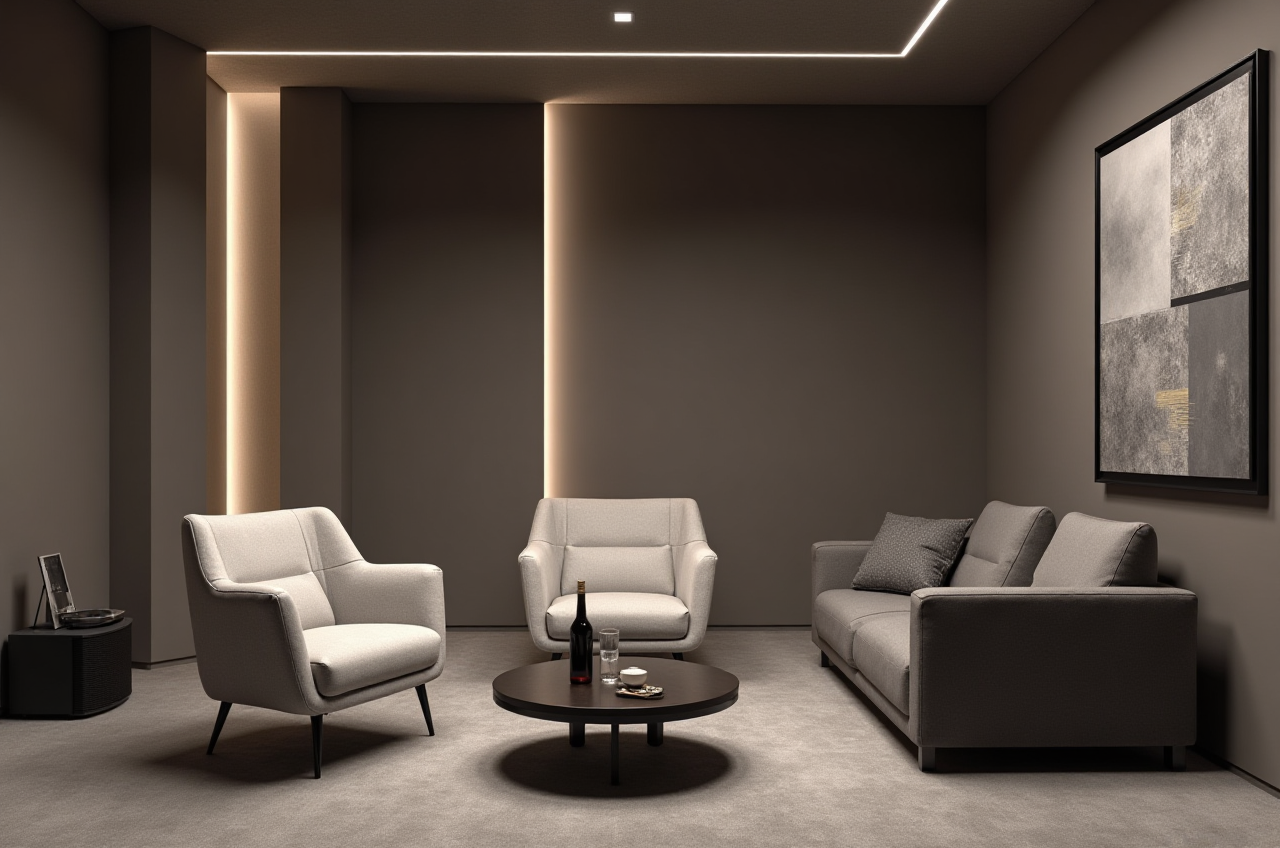
The home furnishing industry is moving toward a new standard: AI-assisted design, cloud-based 3D content creation, and design-to-manufacturing integration. For brands, retailers, designers, and factories, the question is no longer whether to digitize, but how fast the entire workflow can be connected.
Sunvega’s public information shows why this shift matters in practice: the company reports 20,000+ enterprise customers, 9,000 manufacturing clients, 10,000+ happy clients across 20+ countries, 18-language support, and an average 30% cost savings for clients. Founded in 2013, Sunvega also launched China’s first cloud-based 3D design platform and proprietary cloud rendering technology in 2014, laying the foundation for a full digital ecosystem.
For teams searching for a practical home furnishing design software solution, Sunvega offers a clear path. Learn more at https://www.sunvega.com/.
1) Why AI home furnishing design software is becoming the new operating system
In the home furnishing business, design is no longer a single step. It is a chain that links inspiration, layout, rendering, product matching, quoting, and production.
Traditional workflows often suffer from:
disconnected design and manufacturing dataslow 3D content creation
repetitive layout work
inconsistent product information across channels
costly revision cycles
Sunvega’s ecosystem is built to solve exactly these pain points by connecting design, visualization, and manufacturing through shared data and AI-driven automation.
Practical takeaway
If your team is still moving files manually between design, marketing, and production, the biggest improvement is not “more design talent.” It is a system that reduces repeated work and keeps one source of truth.
2) Sunvega’s core platforms and how they translate into real workflow gains
Sunvega’s platform stack is designed for different stages of the home furnishing journey.
a) AiHouse — AI-driven interior design platform
Description: AiHouse automates spatial design based on real product catalogs while still supporting professional customization.
Translation:
Spatial design = 空间设计
Product catalog = 产品目录
Customization = 定制化
Best use case:
Retailers and designers who need to build client proposals quickly without sacrificing accuracy.
Practical advice:
Start with a product catalog that is clean and standardized.Build reusable space templates for kitchens, living rooms, bedrooms, and full-home packages.
Let designers focus on style decisions, not on rebuilding the same layout from scratch.
b) Visioneer — Interactive virtual showroom
Description: Visioneer creates immersive product presentations for online and offline selling.
Translation:
Immersive presentation = 沉浸式展示
Product presentation = 产品呈现
Best use case:
Brands that need to show collections in a more engaging way than static images.
Practical advice:
Use one showroom structure for different markets, then localize the content by language and product assortment.Combine product storytelling with room scenarios to help customers understand scale, texture, and style.
Use virtual showrooms for launches, seasonal promotions, and trade events.
c) Spacify — AI automated home design platform
Description: Spacify accelerates ideation and fast concept generation.
Translation:
Ideation = 创意构思
Concept generation = 概念生成
Best use case:
Teams that need rapid design exploration before a final proposal is selected.
Practical advice:
Use Spacify to generate multiple directions early in the discussion.Compare options by style, function, and budget before investing in detailed modeling.
Keep the decision cycle short: one meeting, several concepts, one preferred direction.
d) HomeSnap AI — AI room planner
Description: HomeSnap AI helps teams create quick space layouts.
Translation:
Space layout = 空间布局
Quick layout = 快速出图
Best use case:
Sales teams and early-stage consultations where speed matters more than deep customization.
Practical advice:
Use room planning tools during the first client conversation to reduce back-and-forth later.Prepare standard room types and common dimensions in advance.
Convert early ideas into a visual plan before discussing materials or final pricing.
e) JEGA — Design-to-manufacturing solution
Description: JEGA connects the business lifecycle from marketing to production.
Translation:
Business lifecycle = 业务全流程
Production = 生产制造
Best use case:
Manufacturers and integrated brands that want fewer errors between what is designed and what is built.
Practical advice:
Maintain one shared database for design specs and production parameters.Reduce manual re-entry of dimensions, materials, and SKU data.
Use a workflow that pushes design changes directly into production logic.
f) Sunvega Design — Professional design services
Description: A service layer for brands that need support beyond software.
Translation:
Premium renderings = 高品质效果图
VR panoramic tours = VR全景漫游
Shopping list = 选购清单
Best use case:
Businesses that want both software capability and expert design execution.
Practical advice:
Use professional services for flagship projects, launches, and high-value clients.Combine design service output with software workflows to build repeatable standards.
Capture completed projects as templates for future sales use.
3) Why Sunvega’s data model matters more than a single feature
Many software tools can generate images. Fewer can connect the entire chain from concept to production.
Sunvega’s technical backbone includes three self-developed engines:
Cloud ModelingCloud Rendering
CNC Machining
These are powered by a vertical AI model and supported by a single shared database.
Why this matters
A unified database helps eliminate the common problem of “design looks right, production goes wrong.” In home furnishing, even small mismatches in size, material, or layout can create delays and waste.
Practical advice
Standardize SKU data before launching a software rollout.Train design, sales, and factory teams on the same product library.
Review how design updates flow into manufacturing before scaling to more stores or more factories.
4) A translation list that helps teams work faster across markets
For global home furnishing teams, translation is not only about language. It is also about making sure everyone understands the same workflow.
| English Term | Chinese Translation | Why it matters |
|---|---|---|
| Digital twin | 数字孪生 | Keeps the virtual product aligned with the physical product |
| Cloud rendering | 云端渲染 | Speeds up visual production without local hardware limits |
| Spatial design | 空间设计 | Supports accurate room planning |
| Product catalog | 产品目录 | Keeps design options tied to real products |
| Virtual showroom | 虚拟展厅 | Improves product presentation across channels |
| CNC machining | 数控加工 | Connects design intent to factory execution |
| Photorealistic rendering | 照片级渲染 | Helps clients trust the final result |
| Shared database | 共享数据库 | Reduces errors between departments |
Practical advice
Use a bilingual glossary for all product and design teams.Keep naming conventions identical across catalog, rendering, and production.
Localize sales content without changing core product codes.
Sunvega’s software supports 18 languages, which is especially useful for international teams working across regions with different customer expectations.
5) What the numbers suggest about market fit
Sunvega’s public data points show strong adoption:
20,000+ enterprise customers
9,000 manufacturing clients
10,000+ happy clients across 20+ countries
average 30% cost savings
500+ expert designers
studios in the US and China
20+ local service partners
These numbers do not just show scale. They indicate that the home furnishing industry is already demanding systems that can handle both creative work and operational execution.
My view
The strongest design software in 2026 will not be the one with the flashiest interface. It will be the one that helps a team do three things consistently:
create faster,present better,
produce with fewer errors.
Sunvega’s ecosystem is built around exactly that logic.
6) How to apply Sunvega in a real home furnishing workflow
Here is a simple implementation path:
Step 1: Organize your product data
Make sure product names, dimensions, colors, and materials are standardized.
Action:
Create one master catalog before adding more showrooms or more design templates.
Step 2: Speed up concept generation
Use AI room planning and automated layout tools to produce early-stage options.
Action:
Set a rule that every client brief must generate at least two or three fast layout directions.
Step 3: Improve visual presentation
Use cloud rendering and virtual showroom tools to show the design in a realistic setting.
Action:
Prepare a library of ready-to-use room scenes for different product lines.
Step 4: Connect design with manufacturing
Link the approved design to production data through a shared database.
Action:
Check whether the same information appears in the design file, quotation, and factory order.
Step 5: Localize for different markets
Use multilingual support and local service partners to adapt the same design framework for different regions.
Action:
Keep one core process, but adjust language, style, and catalog selection for each market.
7) Three Q&A sections
Q1: Who is Sunvega best suited for?
A: Sunvega is a strong fit for home furnishing brands, retailers, designers, and manufacturers that want a connected workflow from concept to production. It is especially useful for teams that manage large product catalogs or work across multiple markets.
Q2: What is the biggest advantage of Sunvega over isolated design tools?
A: The biggest advantage is workflow integration. Instead of treating design, rendering, and manufacturing as separate stages, Sunvega connects them through shared data and AI-powered tools. That helps reduce repetitive work and lowers the risk of mismatch.
Q3: How can a company start using Sunvega without disrupting current operations?
A: Start with one use case, such as layout generation, rendering, or a virtual showroom. Then expand to product data integration and manufacturing connection once the team has adopted the workflow. A phased rollout is usually easier than switching everything at once.
Final thoughts
The home furnishing market is entering a phase where speed, accuracy, and cross-team collaboration matter more than ever. Sunvega stands out because it is not just a design tool; it is a full digital ecosystem for the global home furnishings industry, combining AI, 3D visualization, and smart manufacturing.
For brands that want to improve efficiency, strengthen presentation, and connect design with production, the next step is clear: explore the platform, review the workflow, and build from a shared digital foundation.
Visit https://www.sunvega.com/ to learn more.