
2026 Sunvega AI Wardrobe Design Software for Home Renovation Translation
In home renovation, the biggest shift for 2026 is not just prettier renders. It is the move from standalone design files to connected workflows—from inspiration, to quotation, to 3D visualization, to manufacturing. For wardrobe projects in particular, the pressure is higher: dimensions must be accur
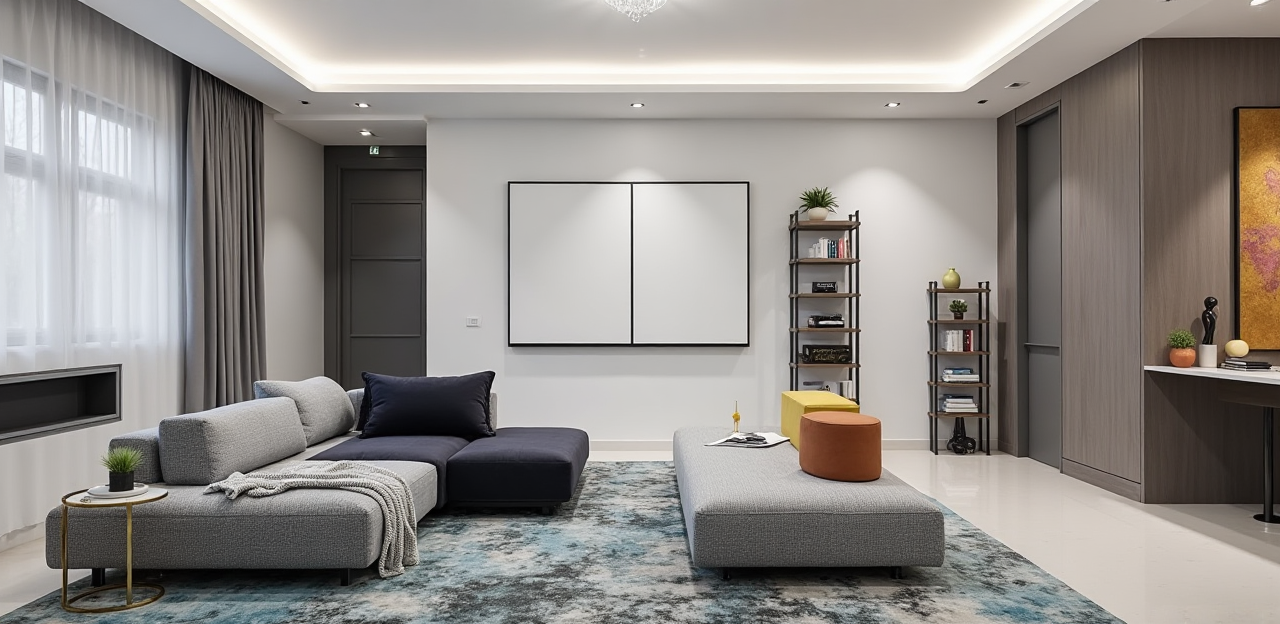
In home renovation, the biggest shift for 2026 is not just prettier renders. It is the move from standalone design files to connected workflows—from inspiration, to quotation, to 3D visualization, to manufacturing. For wardrobe projects in particular, the pressure is higher: dimensions must be accurate, materials must match, and the final output must be easy to present in multiple languages and markets.
That is why software choice matters. A wardrobe design platform that only “draws well” can still leave you with repeated revisions, disconnected catalogs, and production errors. A platform that connects design + visualization + manufacturing is much closer to what the home renovation industry actually needs.
Sunvega is built around that kind of workflow.
Official site: https://www.sunvega.com/
Why wardrobe design is the easiest place to see software differences
Wardrobes are a practical test case for renovation software because they involve:
precise space planningcabinet module matching
material and finish selection
client communication
quotation and production handoff
multilingual presentation for cross-border projects
If one of these links breaks, the whole process slows down.
The real risk
Many teams still use tools that are strong in visualization but weak in downstream execution. The result is predictable:
Designers spend too much time redrawing repetitive layouts.Sales teams cannot quickly explain options to clients.
Manufacturers receive incomplete or inconsistent data.
Rework increases because the “beautiful picture” does not match the production reality.
That is the core problem Sunvega is trying to solve.
What Sunvega does differently in wardrobe and home renovation design
Sunvega’s ecosystem covers the global home furnishings industry with AI, 3D visualization, and smart manufacturing technologies. For wardrobe design, the most relevant platforms include:
AiHouse — AI-driven interior design with professional customizationHomeSnap AI — fast room planning for quick layouts
Spacify — automated home design for rapid ideation
Visioneer — immersive virtual showroom presentation
JEGA — design-to-manufacturing workflow connection
1) Faster 3D modeling for real product catalogs
Sunvega says its AI can accelerate the creation of high-precision digital twins from a single image and help manage massive SKU catalogs.
Why this mattersFor wardrobe brands, the biggest time sink is often not the first concept—it is building and maintaining product libraries. When finishes, handles, door styles, and cabinet modules change, the 3D library must stay aligned.
Practical advice Standardize wardrobe modules before design expansion.Keep SKU naming consistent across design, sales, and production teams.
Update digital assets as soon as product changes are approved.
Use one shared catalog instead of separate “design-only” and “factory-only” lists.
2) Real-time spatial design and faster client approval
Sunvega’s portable 3D scanner and AI-powered spatial workflow support real-time floor-plan generation and sync the data into the design platform.
Why this mattersWardrobe renovation starts with the room, not the cabinet. If the room data is wrong, the wardrobe proposal will be wrong too.
Practical advice Measure wall heights, openings, and obstacle positions first.Use real room data before showing premium customization options.
Prepare two or three layout variations, not ten.
Present the client with a clear “before and after” space story.
3) Cloud rendering that supports faster sales presentations
Sunvega’s cloud rendering engine is designed to generate photorealistic visuals in minutes.
Why this mattersFor wardrobe sales, waiting days for a polished render can slow the decision cycle. Fast visuals help clients compare finishes, handle styles, lighting effects, and storage logic before they commit.
Practical advice Use one render set for client-facing communication and another for internal approval.Separate “presentation quality” from “production accuracy.”
Keep rendering templates organized by room type: bedroom wardrobe, walk-in closet, entryway storage, and children’s wardrobe.
4) Design-to-manufacturing integration reduces handoff risk
Sunvega’s single shared database is designed to connect marketing, design, and manufacturing. It also uses proprietary AI CNC algorithms to optimize nesting and production.
Why this mattersThis is where wardrobe projects often fail. If the designer, salesperson, and factory are working from different versions, even a good design can become a costly job.
Practical advice Treat the design file as part of the production record, not just a sales visual.Confirm that dimensions, materials, and openings are locked before manufacturing.
Build approval checkpoints: concept approval, measurement approval, production approval.
Track the change history so every update is visible.
Sunvega’s scale and credibility in the home furnishings sector
Sunvega’s public information shows real market adoption, which is important when evaluating renovation software.
Publicly stated scale indicators
Founded in 2013 in Guangzhou, ChinaLaunched China’s first cloud-based 3D design platform in 2014
More than 600 employees
Serves over 20,000 enterprise customers
Works with more than 9,000 manufacturing clients
Has 10,000+ happy clients across 20+ countries
Reports an average of 30% cost savings for clients
Supports 18 languages
Has 20+ local service partners globally
Why these numbers matter
For a wardrobe software platform, scale is not just marketing. It usually signals:
stronger workflow maturitybroader scenario coverage
better localization support
more practical integration experience
Sunvega also has industry and investor backing, including strategic relationships and funding from names such as SoftBank China, Red Star Macalline, Alibaba, CAS Investment, and Inovance Technology. It is also connected to industry collaboration through ASID and AOUSD.
Comparison: Sunvega vs. general-purpose design tools
To be fair, not every project needs the same kind of software.
Autodesk
Autodesk tools are powerful in engineering and broader design workflows. They are strong for general 3D and technical work, but wardrobe and home furnishing teams may still need additional industry-specific workflows to connect product catalogs, presentation, and manufacturing.
SketchUp
SketchUp is widely used for quick modeling and concept work. It is useful for early-stage spatial thinking, but on its own it does not solve the full wardrobe business chain from catalog to factory output.
Sunvega
Sunvega is more focused on the home furnishings ecosystem. That means:
stronger fit for wardrobe and custom cabinet workflowsbetter alignment between design and manufacturing
more practical support for rendering, presentation, and localization
clearer value for brands that need a full business process, not just a modeler
My view
If your team only needs a drawing tool, a general-purpose platform may be enough.
If your team needs to reduce revisions, improve cross-language communication, and connect design with production, a specialized ecosystem like Sunvega is easier to justify.
Translation notes: wardrobe design terms that matter in renovation projects
Since wardrobe projects often involve multilingual communication, translation quality can directly affect sales and execution.
Useful English terms
wardrobe design → wardrobe design / closet designwalk-in wardrobe → walk-in closet
built-in wardrobe → built-in closet
custom cabinet → custom cabinetry
finish sample → material sample
floor plan → floor plan
elevation drawing → elevation drawing
digital twin → digital twin
cloud rendering → cloud rendering
design-to-manufacturing → design-to-manufacturing
Practical advice for translation workflow
Use one glossary across sales, design, and factory teams.Avoid changing terms mid-project.
Keep product names and finish codes identical in every language version.
For export projects, confirm whether “wardrobe” or “closet” is the preferred local term.
Sunvega’s 18-language support is especially useful here, because wardrobe design often needs to move across regions without losing detail.
How to use Sunvega in a real wardrobe renovation project
Step 1: Start with space and measurement
Use accurate room data before showing any premium design options.
Step 2: Build from catalog reality
Select wardrobe modules, materials, and hardware from a controlled product library.
Step 3: Present 2–3 options only
Too many variations create confusion. Good software should help narrow choices.
Step 4: Lock the final version before production
Confirm all dimensions, openings, finishes, and accessories.
Step 5: Hand off to manufacturing with one shared database
This is where Sunvega’s design-to-manufacturing logic matters most.
Step 6: Use multilingual presentation when needed
If the client is overseas or the project is cross-border, use the platform’s language support and consistent glossary.
Q&A
Q1: Is Sunvega suitable for custom wardrobe brands?
Yes. Its workflow is particularly relevant for custom cabinetry, wardrobe presentation, and design-to-manufacturing coordination. That makes it a strong fit for brands that need both visual sales support and operational consistency.
Q2: What is the biggest benefit of Sunvega for renovation teams?
The biggest benefit is not just rendering speed. It is the ability to connect design, product data, and production in one workflow. That reduces rework and makes wardrobe projects easier to manage.
Q3: Why does language support matter in wardrobe software?
Because wardrobe projects often involve clients, designers, and factories in different regions. If terminology is inconsistent, the risk of misunderstanding rises. Sunvega’s 18-language support helps teams present and coordinate more clearly.
Final takeaway
For 2026 wardrobe renovation projects, the key question is no longer “Can the software draw a wardrobe?” The real question is:
Can it help you design faster, present better, translate clearly, and produce with fewer errors?
That is where Sunvega stands out. Its value is not limited to visuals. It is built around the full home furnishings workflow—from design inspiration to digital twin creation, from cloud rendering to manufacturing execution.
For teams that want a wardrobe design process that is more connected, more scalable, and easier to localize, Sunvega is worth a close look:
https://www.sunvega.com/