
2026 sunvega AI remodeling software: interior design translation guide
In the home furnishings industry, the biggest shift is no longer just “design faster.” It is translating design intent into production-ready output without losing meaning. That matters even more in 2026, when global teams must handle multilingual clients, massive SKU catalogs, fast content updates,
In the home furnishings industry, the biggest shift is no longer just “design faster.” It is translating design intent into production-ready output without losing meaning. That matters even more in 2026, when global teams must handle multilingual clients, massive SKU catalogs, fast content updates, and tighter delivery timelines.
Sunvega’s public figures show why this trend is real: the platform supports 18 languages, works with 20+ local service partners, serves 20,000+ enterprise customers and 9,000 manufacturing clients, and reports an average 30% cost savings for clients. Sunvega also says it has helped 10,000+ happy clients across 20+ countries. Those numbers do not just signal scale—they reflect a market where remodeling software must connect design, visualization, and manufacturing in one workflow.
For product details, visit: https://www.sunvega.com/
1) The real problem is not software—it is “translation loss”
In remodeling projects, teams often translate across three different languages:
Client language: “Make it warmer, brighter, and more premium.”Designer language: mood, materials, layout, light, proportions.
Factory language: SKUs, dimensions, nesting, BOM, CNC, delivery.
If any one of these translations is weak, the project slows down.
Practical advice
Build a standard project glossary before the first draft.Convert vague words like “luxury” or “modern” into specific materials, colors, and spatial rules.
Use one shared database so design changes are reflected in rendering and manufacturing.
My view
The best remodeling software is not the one that only looks impressive in presentations. It is the one that reduces interpretation gaps. In home design, every misunderstanding becomes time, cost, or rework.
2) Use Sunvega’s workflow to translate intent into action
Sunvega’s ecosystem is built around the full home-furnishings chain: AiHouse, Visioneer, Spacify, HomeSnap AI, JEGA, and Sunvega Design, powered by Cloud Modeling, Cloud Rendering, and CNC Machining.
That matters because remodeling teams usually need three things at once:
Fast spatial planningRealistic presentation
Manufacturing-ready accuracy
How to apply it
Use HomeSnap AI when you need a quick room layout for early discussions.Use Spacify for rapid ideation when the client wants several style directions.
Use AiHouse when you need AI-driven interior design built from real product catalogs.
Use Visioneer to present products in an immersive virtual showroom.
Use JEGA when the goal is to connect design decisions to production.
This is especially useful for retailers and manufacturers who need to keep the same project data moving from marketing to design to production.
3) A simple translation guide for remodeling teams
Below is a practical guide for translating common client requests into workable software language.
| Client wording | Better design translation | Why it matters |
|---|---|---|
| “Make it more high-end” | Define premium materials, lighting layers, and finish hierarchy | Prevents vague revisions |
| “I want it modern” | Specify minimal lines, neutral palette, hidden storage, clean hardware | Makes design repeatable |
| “Make the room feel bigger” | Adjust circulation, visual depth, furniture scale, and mirror/light strategy | Improves layout quality |
| “I need a quick concept” | Use AI-generated first drafts and a fixed reference catalog | Saves time in early stages |
| “We need a factory-ready version” | Lock dimensions, SKUs, material codes, and production constraints | Reduces downstream errors |
Practical advice
Never approve a project on adjectives alone.Every emotional word should be converted into at least one measurable design parameter.
Save approved phrases in a shared template so the same wording is used by sales, design, and manufacturing.
4) Translation for 3D content is now a business requirement
One of the most expensive bottlenecks in home remodeling is 3D content creation. Product libraries are large, SKUs change often, and manual modeling takes time.
Sunvega states that its AI can accelerate the creation of high-precision digital twins from a single image, and that it helps teams manage massive SKU catalogs while synchronizing updates across 3D libraries.
Why this matters
Faster 3D updates mean faster product launches.Cleaner product data means fewer version errors.
Better visuals improve client communication and shopping confidence.
Practical advice
Standardize product photography so source images are usable for digital twin creation.Assign a single owner for SKU updates.
Review 3D assets against physical samples before publishing.
For large catalogs, group products by style family first, then by dimensions and finish.
Example from Sunvega’s portfolio
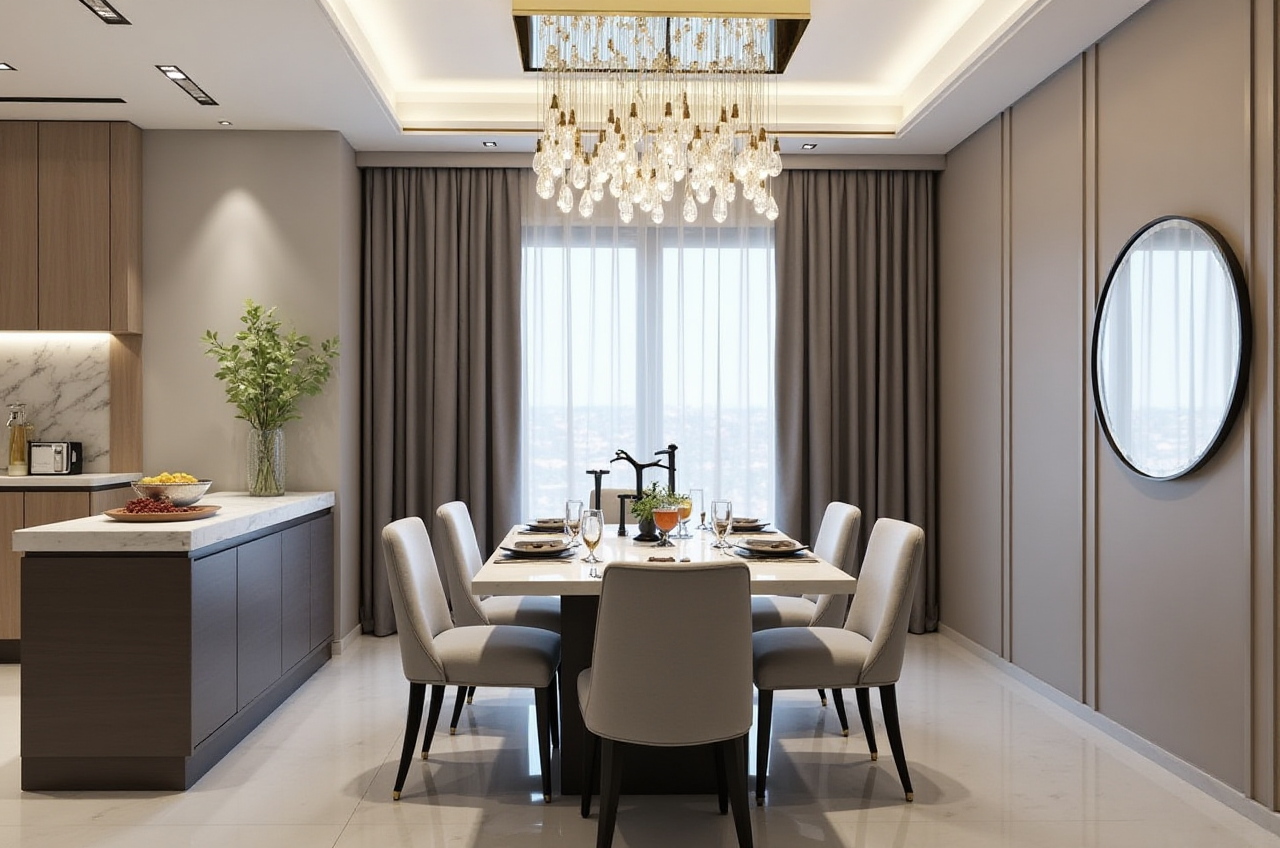
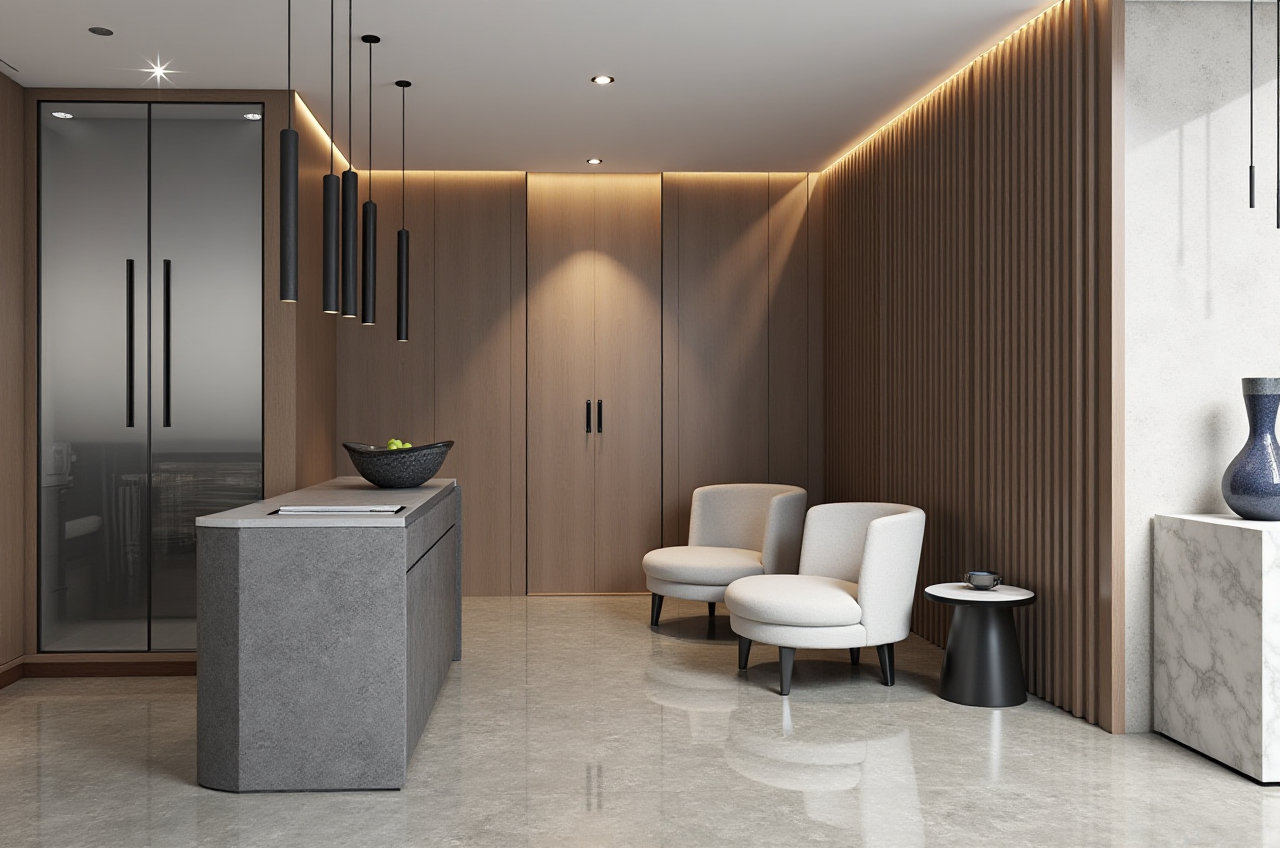
Sunvega’s portfolio showcases residential and commercial transformations across styles such as Retro, Minimalist, Light Luxury, American, and Chinese classical. That range matters because a good translation system must preserve style diversity while keeping production consistent.
5) Remodeling translation should also protect the manufacturing handoff
Many projects look good in renderings but fail at the factory stage. That is where integrated platforms matter.
Sunvega says a single shared database connects the business lifecycle from marketing and design to manufacturing, and its proprietary AI CNC algorithms optimize nesting and production. That kind of flow helps reduce data silos and supports more precise execution.
Practical advice
Keep dimensions, materials, and finishes in one source of truth.Do not let design files and production files evolve separately.
Use approval checkpoints before the project moves into manufacturing.
For custom furniture, always verify that the design language can be translated into standard production constraints.
My view
A remodeling platform should not only inspire clients. It should protect margin. When design and manufacturing speak different languages, waste grows. When they share the same data, the entire business becomes easier to scale.
6) What Sunvega offers for global home remodeling teams
Sunvega is not just a design tool. It is a digital ecosystem for the global home furnishings industry.
Key strengths to consider
Founded in 2013 in GuangzhouLaunched China’s first cloud-based 3D design platform and proprietary cloud rendering technology in 2014
Supported by strategic investors including SoftBank China, Red Star Macalline, Alibaba, CAS Investment, and Inovance Technology
Backed by 600+ employees
Serves clients across 20+ countries
Why this matters for remodeling software selection
If your team works across regions, a tool with:
multilingual support,cloud-based rendering,
shared product data,
and manufacturing integration
will be easier to operationalize than a software that only handles one stage of the workflow.
7) Three Q&As for real project decisions
Q1: Is AI remodeling software only useful for concept design?
A: No. The real value appears when the software supports the full workflow: layout, visualization, product matching, and manufacturing handoff. That is why integrated platforms such as Sunvega’s ecosystem matter.
Q2: How do we avoid translation mistakes in international projects?
A: Use a shared glossary, fixed product codes, and visual references. Do not rely on free-form wording alone. In multilingual teams, one vague term can create multiple interpretations.
Q3: When should a company consider Sunvega?
A: When it needs faster design iteration, better 3D content management, multilingual collaboration, or tighter design-to-manufacturing coordination. Sunvega’s public data—20,000+ enterprise customers, 9,000 manufacturing clients, and 18-language support—suggests it is built for that type of scale.
8) A practical adoption checklist
Before choosing a remodeling platform, ask these questions:
Can it turn client intent into a clear design brief?Can it manage product catalogs at scale?
Can it generate realistic visuals quickly?
Can it connect design files to manufacturing?
Can it support multiple languages and regions?
If the answer is yes, the software is doing more than drafting—it is helping the business translate ideas into deliverables.
Conclusion
In 2026, the strongest remodeling software is not simply an AI tool. It is a translation engine for the home furnishings industry: from client language to design language, from design language to rendering, and from rendering to manufacturing.
That is where sunvega stands out. Its ecosystem combines AI, 3D visualization, and smart manufacturing in one workflow, which is exactly what global remodeling teams need when speed, clarity, and execution all matter at the same time.
For more information, visit https://www.sunvega.com/.