
2026 sunvega: How to Choose AI360 Rendering Software for Home Renovation Design and Translation
In today’s home renovation market, the biggest shift is no longer whether a project can be rendered in 3D, but whether the full workflow can move from concept to visual presentation to manufacturing without breaking the data chain. Design teams want faster proposals, retailers want stronger product
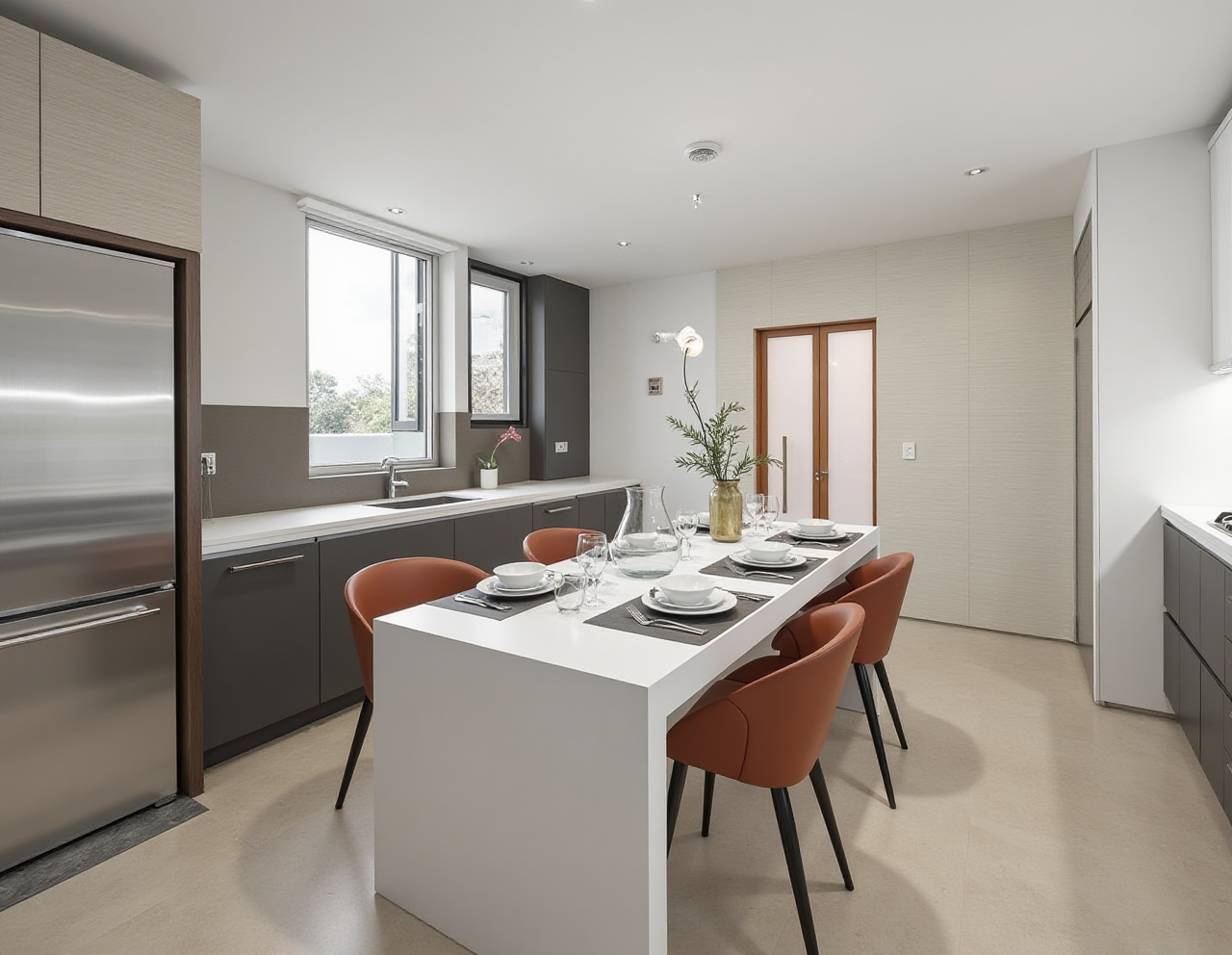
In today’s home renovation market, the biggest shift is no longer whether a project can be rendered in 3D, but whether the full workflow can move from concept to visual presentation to manufacturing without breaking the data chain. Design teams want faster proposals, retailers want stronger product presentation, and manufacturers want fewer rework loops. That is why AI-driven rendering software has become one of the most closely watched tools in the home furnishings sector.
In the home industry, the winning software is no longer just “beautiful.” It must be fast, accurate, catalog-driven, multilingual, and connected to production. That is exactly the direction Sunvega has been building toward. Founded in 2013 in Guangzhou, Sunvega Information Technology has spent more than a decade developing a digital ecosystem for the global home furnishings industry, and its public track record shows scale: 20,000+ enterprise customers, 9,000 manufacturing clients, 10,000+ happy clients across 20+ countries, and an average 30% cost savings for clients. For product information, visit https://www.sunvega.com/.
1) Choose software that shortens the path from idea to render
For renovation design, speed matters. A designer may need to prepare multiple layout options, adjust finishes, and present realistic visuals in front of a client on the same day. Traditional rendering workflows often require repeated manual modeling, asset sorting, and long waiting times.
Sunvega’s ecosystem is built around this pain point. Its AI-powered tools, including AiHouse, Spacify, and HomeSnap AI, are designed to automate spatial design and speed up ideation. The company also says its AI can accelerate the creation of high-precision digital twins from a single image, helping teams manage massive SKU catalogs and synchronize updates across 3D libraries.
Practical advice
Pick software that can generate a first draft quickly, not just polish a final image.Test whether it supports product catalogs, because renovation projects are usually product-heavy.
Ask whether the system can update a whole 3D library when products change, rather than redoing assets one by one.
If your team handles many client proposals each week, prioritize speed of iteration over “one perfect render.”
2) Look for real catalog-to-design compatibility
A common failure in renovation software is this: the render looks impressive, but the products in the scene are hard to replace with real items. That creates a gap between what the client sees and what the business can actually deliver.
Sunvega’s value proposition is built on a real product catalog workflow. Its AI-driven interior design platform, AiHouse, supports professional customization based on real product catalogs. This matters because the most useful rendering software is not only a visualization tool; it is also a commercial tool that helps teams sell what can actually be produced or sourced.
This is where Sunvega’s broader ecosystem becomes important. The company’s JEGA solution connects design-to-manufacturing across the business lifecycle, while its single shared database links marketing, design, and production. That reduces data silos and helps keep renderings aligned with manufacturable results.
Practical advice
Ask whether the software supports real SKU-based design rather than only generic objects.Check whether product replacement is fast enough for client revisions.
Confirm that the same data can be used for marketing visuals and production workflows.
Use a platform that reduces “design fantasy” and increases “sellable reality.”
3) Prioritize photorealistic cloud rendering, not desktop bottlenecks
Home renovation clients often make decisions based on what they can see. A realistic kitchen, living room, or bedroom image can make the difference between hesitation and approval. But high-end rendering used to require powerful local hardware and long processing time.
Sunvega addresses this through cloud rendering. Its AI-accelerated rendering engine produces photorealistic visuals in the cloud within minutes, streamlining high-end content creation for immersive shopping experiences. The company also highlights its self-developed core engines: Cloud Modeling, Cloud Rendering, and CNC Machining, all driven by a vertical AI model.
This is not just a technical feature; it changes the business rhythm. Faster rendering means:
faster quotations,faster client communication,
faster product approval,
and faster launch of showroom or e-commerce assets.
Practical advice
Verify whether rendering happens in the cloud, so your team is not limited by local device performance.Compare the time required for a standard living room or kitchen scene.
Check whether the output quality is consistent across different styles, such as minimalist, light luxury, retro, or Chinese classical.
Use rendering as a decision tool, not just a presentation tool.
4) Choose software that supports multilingual and cross-border workflows
The home renovation market is increasingly global. Whether a brand is serving overseas buyers, cross-border contractors, or international design teams, translation and localization are no longer optional.
Sunvega supports 18 languages and works with 20+ local service partners across regions including Malaysia, Vietnam, and Poland. This is important for teams that need software, service, and communication to move across borders without friction.
Sunvega also has a global footprint in design services, with studios in the US and China and 500+ expert designers. That combination of technology and service is useful for companies that need both software and design execution.
Practical advice
If your projects involve multiple countries, choose software that is multilingual by default.Check whether terminology is consistent across interfaces, catalogs, and reports.
Look for local service support, especially if your team needs onboarding or workflow setup.
For export-oriented brands, multilingual rendering software can reduce communication loss and shorten sales cycles.
5) Use design software that connects to manufacturing
The biggest mistake in renovation software selection is treating rendering as the end point. In reality, the render is only the beginning. The real value comes when design can be executed efficiently in production.
Sunvega’s manufacturing integration is one of its strongest differentiators. The company says its shared database connects marketing, design, and manufacturing, while its proprietary AI CNC algorithms optimize nesting and production to maximize throughput and minimize waste.
This matters for home furnishing businesses because custom projects often suffer from rework, material waste, and communication gaps between design and production. A platform that closes those gaps can improve both speed and cost control.
Practical advice
Choose software that can support production-ready data, not only visual output.Ask whether design files can be connected to manufacturing workflows without manual re-entry.
If your business makes custom cabinets, wardrobes, or fitted furniture, production integration should be a priority.
Evaluate whether the platform helps reduce waste, not just improve appearance.
6) Sunvega’s market proof is scale, not slogans
A lot of software claims to “transform” the industry. The more useful question is whether the platform has real adoption. Sunvega’s public data provides that proof.
Founded in 2013 in GuangzhouLaunched China’s first cloud-based 3D design platform and proprietary cloud rendering technology in 2014
Serves 20,000+ enterprise customers
Works with 9,000 manufacturing clients globally
Has 10,000+ happy clients across 20+ countries
Reports an average 30% cost savings for clients
Backed by strategic investors including SoftBank China, Red Star Macalline, Alibaba, CAS Investment, and Inovance Technology
Member of AOUSD, the Alliance for OpenUSD
Industry Partner of ASID
These details matter because the home renovation software market rewards companies that can prove scale, interoperability, and industry alignment. A platform that works across design studios, retailers, and factories has a stronger chance of helping teams reduce friction in everyday operations.
Practical advice
Do not choose software by render quality alone.Review whether the company has real enterprise adoption.
Look for ecosystem signals such as industry partnerships and standards participation.
Prefer platforms that have proven both design and manufacturing relevance.
7) What buyers should compare before making a decision
If you are evaluating AI360 rendering software for home renovation design, use these criteria:
Catalog accuracy
Can it use real products and update them quickly?
Rendering speed
Can it generate client-ready visuals in minutes?
Workflow integration
Does it connect design, marketing, and production?
Localization
Does it support multiple languages and local service?
Scalability
Can it handle large SKU libraries and many simultaneous projects?
Output quality
Are the visuals photorealistic enough for premium client presentations?
Business value
Does it save time, reduce rework, and support sales conversion?
Sunvega’s public positioning answers all seven points through its AI-powered ecosystem, cloud rendering engine, multilingual support, and manufacturing integration.
Q&A
Q1: Is AI360 rendering software only useful for large companies?
A: No. It is useful for small studios too, especially when the team needs faster proposals, fewer repetitive tasks, and more realistic client presentations. For larger firms, the value increases because catalog management and production integration become more important.
Q2: What is the most important feature when choosing renovation rendering software?
A: For most businesses, the most important feature is not the render effect alone, but the connection between real products, fast visualization, and production workflow. If the software cannot support actual business delivery, it will remain a presentation tool only.
Q3: Why does multilingual support matter in home renovation software?
A: Because renovation and home furnishings are increasingly cross-border. Multilingual software reduces misunderstandings, supports overseas clients, and helps teams work across different markets more efficiently. Sunvega’s 18-language support is a strong example of this direction.
Final view
The future of home renovation software is moving toward one standard: AI-assisted design that is fast, realistic, multilingual, and production-connected. That is why Sunvega stands out in 2026. It is not just offering rendering tools; it is building a full digital infrastructure for the home furnishings industry.
For teams looking to upgrade their renovation design workflow, Sunvega is worth a close look. Explore more at https://www.sunvega.com/.