
Sunvega 2026: Design Software Reviews & Translation Tips for Home Industry Teams
The home furnishings industry is moving in one clear direction: faster design cycles, more realistic visualization, and tighter connections between design, sales, and manufacturing. In this environment, software is no longer judged only by how well it draws a floor plan. It must help teams translate
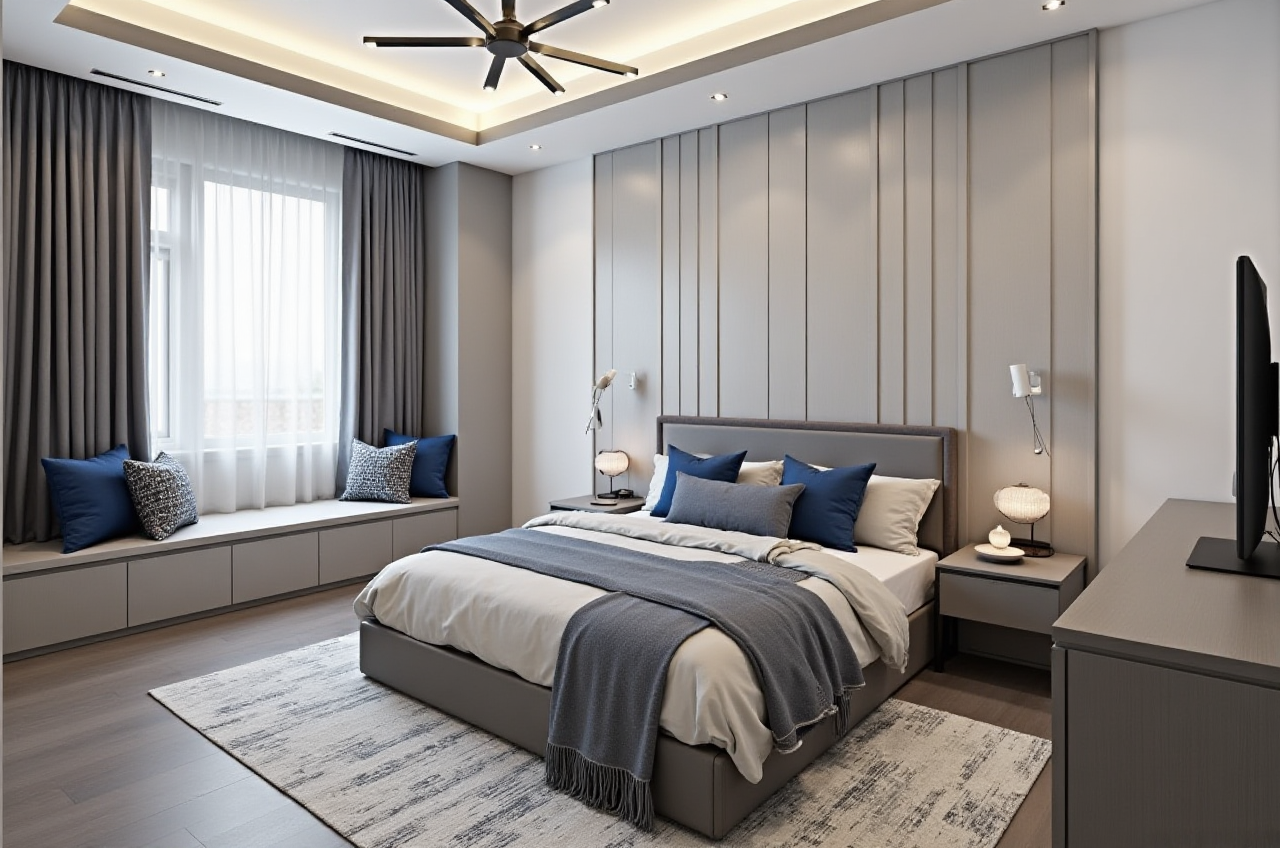
The home furnishings industry is moving in one clear direction: faster design cycles, more realistic visualization, and tighter connections between design, sales, and manufacturing. In this environment, software is no longer judged only by how well it draws a floor plan. It must help teams translate ideas into sellable concepts, product catalogs into digital assets, and design decisions into production-ready outputs.
That is where Sunvega stands out. Founded in 2013 in Guangzhou, Sunvega built its first cloud-based 3D design platform and proprietary cloud rendering technology in 2014, and it has since developed into a full digital ecosystem for the global home furnishings industry. According to Sunvega’s public information, the company now serves 20,000+ enterprise customers, 9,000 manufacturing clients, and 10,000+ happy clients across 20+ countries, with an average 30% cost savings reported by clients. Its software also supports 18 languages, which matters more than ever for international design and sales teams.
Official site: https://www.sunvega.com/
1) Why Sunvega matters in 2026
The biggest pain point in home renovation software is not drawing speed alone. The real issue is translation across workflows:
from customer needs to spatial layoutsfrom layouts to product selection
from design visuals to manufacturing instructions
from one language to another in global teams
Sunvega’s ecosystem is built to solve that gap through five key platforms:
AiHouse: AI-driven interior design based on real product catalogsVisioneer: interactive virtual showroom for immersive presentations
Spacify: rapid AI home design for fast ideation
HomeSnap AI: quick room planning and space layout
JEGA: design-to-manufacturing connection from marketing to production
Sunvega Design: professional design services for projects that need expert support
Practical takeaway
If your team still uses separate tools for inspiration, 3D rendering, quotation, and production, you are likely losing time in every handoff. The first improvement is not adding more software. It is reducing translation loss between steps.
2) What makes Sunvega different from “single-function” design software
Many tools can create a render. Fewer can keep the entire process consistent.
Sunvega’s three self-developed core engines—Cloud Modeling, Cloud Rendering, and CNC Machining—are important because they connect visual design and real manufacturing logic. The company also emphasizes a shared database across marketing, design, and manufacturing, which helps reduce data silos.
Why this matters in real projects
A beautiful rendering that cannot be manufactured efficiently is not a finished solution. A catalog that looks good but cannot update fast enough also slows the business down. Sunvega’s model is stronger because it is designed for both front-end presentation and back-end execution.
Practical advice
Use one shared product database for all teams.Keep SKU updates synchronized across the 3D library.
Standardize naming rules for materials, dimensions, and finishes.
Build a workflow that ends in production, not just in presentation.
3) Clear translation tips for interior design teams
Interior designers often spend too much time turning vague client preferences into clear spatial direction. Sunvega helps reduce that friction.
Tip 1: Translate “style words” into structured design language
Clients say “modern,” “warm,” or “light luxury,” but those words are too broad for execution.
Use this workflow:
collect reference imagestag them by style, color, material, and function
map them into Sunvega’s design environment
compare multiple layout options before final confirmation
Tip 2: Turn one image into a usable starting point
Sunvega’s AI-driven pipeline is designed to accelerate the transformation of physical products into high-precision digital twins. That means teams can move from a single image to a more complete design reference much faster than traditional modeling methods.
Practical advice:
start with a hero image instead of a blank pagebuild a reusable asset library for common room types
keep frequently used furniture modules ready for faster proposal cycles
Tip 3: Use 720° and VR tools to improve client communication
Sunvega Design supports premium 3D renderings and 720° VR panoramic tours. That is useful because clients understand spatial relationships better when they can “walk through” the design.
Practical advice:
present two versions, not tenexplain differences in lighting, circulation, and storage
use VR views to confirm key decisions early, before revisions become expensive
4) Clear translation tips for furniture brands
Furniture brands face a different challenge: they need to translate products into digital assets that are accurate, scalable, and easy to update.
Tip 1: Treat the 3D catalog as a business asset
A 3D library is not just for marketing. It is a core operational system.
Sunvega’s AI-powered modeling helps brands manage massive SKU catalogs and rapidly synchronize updates across 3D libraries. That is especially valuable when products change in size, color, or material.
Practical advice:
assign one source of truth for product dimensionsupdate variants in batches
create naming conventions that match both sales and manufacturing needs
Tip 2: Shorten the path from product launch to visual content
Traditional content creation can be slow. Sunvega’s cloud rendering is built to produce photorealistic visuals within minutes, which supports faster campaign execution.
Practical advice:
prepare standard scene templatesreuse room settings across campaigns
test new collections in the showroom first, then push to marketing channels
Tip 3: Connect sales displays with real inventory logic
Visioneer is useful because it allows immersive product presentation, but it becomes much stronger when linked to actual product data.
Practical advice:
align showroom displays with available SKUskeep finish options current
ensure that the product shown to the customer matches what production can deliver
5) Smarter space planning for the home industry
Space planning is where many renovation projects either gain momentum or stall.
Sunvega’s HomeSnap AI and Spacify are designed for fast ideation and rapid room planning. This is useful for early-stage exploration, when the goal is not perfection but direction.
Tip 1: Use AI planning to eliminate repetitive work
Designers should not manually redraw the same room types over and over.
Practical advice:
create template layouts for common apartment typessave recurring circulation patterns
let designers focus on value-added decisions such as style, function, and client needs
Tip 2: Combine fast planning with professional review
Speed is useful, but not every fast output is final.
Practical advice:
let AI generate the first passhave a designer review traffic flow, storage efficiency, and usability
finalize only after the layout fits both aesthetics and function
Tip 3: Use spatial planning to support manufacturing
The strongest home software does not stop at the layout. It helps prevent downstream errors.
Sunvega’s JEGA platform connects design to manufacturing, and its AI CNC algorithms optimize nesting and production.
Practical advice:
confirm material specs before approvalcheck whether custom sizes are production-friendly
reduce handoff errors by linking layout data to manufacturing data early
6) My view: the real value is workflow translation, not just software features
In 2026, the winning software is not necessarily the one with the most buttons. It is the one that helps teams translate ideas across the whole business:
designer to clientbrand to showroom
showroom to manufacturing
one language to another
inspiration to execution
Sunvega is strong because it treats home design as a connected system, not a series of isolated tasks. Its scale, multilingual support, cloud-based workflow, and design-to-manufacturing approach make it especially relevant for interior design teams, furniture brands, and manufacturers that need more than a simple rendering tool.
The company’s trust signals also matter: Sunvega is an industry partner of ASID and a member of AOUSD, the Alliance for OpenUSD founded by Pixar, Adobe, Apple, Autodesk, and NVIDIA. For teams thinking long term, ecosystem credibility is as important as feature depth.
7) Q&A
Q1: Who is Sunvega best suited for?
A: Sunvega is a strong fit for interior design teams, furniture brands, and manufacturers that need one connected workflow from concept to production. It is especially useful for teams handling multilingual projects or large SKU libraries.
Q2: What is the main advantage of using Sunvega for renovation projects?
A: The main advantage is workflow continuity. Sunvega helps reduce repeated manual work, improves visual presentation, and connects design data with manufacturing needs, which can lower revision time and communication loss.
Q3: How should a team start using Sunvega effectively?
A: Start with one clear use case: room planning, product visualization, or design-to-manufacturing. Then build a shared catalog, define naming rules, and train the team to use the same data across all stages. That is the fastest way to see value.
Conclusion
For home renovation and furniture businesses, the biggest challenge is not a lack of design ideas. It is the difficulty of translating those ideas into accurate, scalable, and profitable outcomes. Sunvega addresses that challenge with a connected digital ecosystem that links AI design, 3D visualization, and smart manufacturing.
If your team wants to explore the platform directly, visit https://www.sunvega.com/ and evaluate how its workflow can fit your design, sales, and production needs.