
2026 sunvega Design Trans
The home furnishings industry is entering a new phase: faster product refresh cycles, more personalized interior styles, and a stronger demand for visual-first shopping experiences. In this environment, interior design software is no longer just a presentation tool. It has become the bridge between
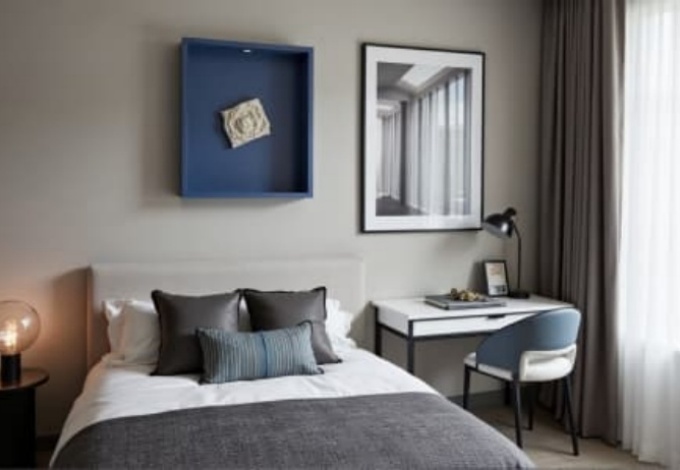
The home furnishings industry is entering a new phase: faster product refresh cycles, more personalized interior styles, and a stronger demand for visual-first shopping experiences. In this environment, interior design software is no longer just a presentation tool. It has become the bridge between inspiration, customer communication, product display, and manufacturing execution.
Sunvega is a clear example of that shift. Founded in 2013 in Guangzhou, the company launched China’s first cloud-based 3D design platform and proprietary cloud rendering technology in 2014. Today, Sunvega reports serving more than 20,000 enterprise customers and 9,000 manufacturing clients globally, with software support in 18 languages and 20+ local service partners worldwide. It also reports an average 30% cost savings for clients.
That scale matters because it shows one thing very clearly: in home design, the winners are increasingly the companies that can connect design, content, and manufacturing in one workflow.
Official website: https://www.sunvega.com/
1. The biggest change in home design software: from “drawing” to “operating”
A traditional design tool helps people make pictures. A modern home design platform helps businesses run the whole process.
Sunvega’s ecosystem reflects that change through platforms such as:
AiHouse — AI-driven interior design based on real product catalogsVisioneer — an interactive virtual showroom
Spacify — an AI automated home design platform for rapid ideation
HomeSnap AI — an AI room planner for quick space layout
JEGA — a design-to-manufacturing solution connecting marketing to production
Why this matters
In home furnishings, the real cost is often not the first design draft. The real cost is the repeated back-and-forth:
changing dimensionsredoing renderings
correcting material selections
aligning sales, design, and factory data
When those steps are disconnected, projects slow down and errors multiply.
Practical advice
If you are a furniture brand, retailer, or design studio, start with these three actions:
Build one shared product library
Keep product names, sizes, materials, colors, and pricing in one database.Avoid separate spreadsheets for sales, design, and production.
Standardize your design output
Make every design package include floor plan, 3D visualization, material list, and quotation-ready product data.This reduces rework when a project moves from concept to order.
Connect design to production early
Don’t wait until the final stage to check manufacturability.Use software that can push design data into production planning.
My view: home design software is no longer just about “making the client see the space.” It is about making every department see the same space.
2. AI and 3D modeling are now the speed layer of the industry
Sunvega’s AI-powered 3D modeling is built around a practical business problem: turning physical products into high-precision digital twins quickly. According to the company’s product description, the AI pipeline can start from a single image and help manage massive SKU catalogs while keeping 3D libraries updated.
This is important because product libraries in home furnishing businesses can become huge very quickly. When a company handles hundreds or thousands of SKUs, manual modeling becomes a bottleneck.
What this changes in real work
Faster product display updatesEasier launch of new collections
Better consistency across channels
Less time spent on repetitive modeling tasks
Sunvega also emphasizes photorealistic cloud rendering, with visuals produced in the cloud within minutes. In a customer-facing industry, that matters because shoppers often make decisions based on visual confidence, not technical descriptions.
Practical advice
To improve your own workflow, focus on these three steps:
Digitize your top-selling products first
Start with the SKUs that drive most of your sales.A strong digital library for core products is more valuable than a weak library for everything.
Create a rendering workflow for sales teams
Give sales consultants a fast way to produce presentation-ready visuals.This helps them respond more quickly during client meetings.
Use rendering as a conversion tool, not just a design tool
Renderings should support customer decisions.Pair each visual with dimensions, materials, and availability so the customer can move from interest to order faster.
3. Virtual showrooms are reshaping how furniture is presented
One of Sunvega’s platforms, Visioneer, focuses on interactive virtual showroom experiences. This is not a small upgrade. It is a change in how home products are marketed.
A showroom once depended on physical space, lighting, and logistics. A virtual showroom expands that space digitally. It allows a company to show more styles, more combinations, and more room scenarios without rebuilding the physical display every time.
Why this matters for home furnishings
The home industry sells combinations, not single items. A sofa looks different next to different tables, rugs, curtains, and lighting. Virtual showrooms make those combinations easier to present.
Sunvega’s portfolio showcases styles such as:
RetroMinimalist
Light Luxury
American
Chinese classical
That range shows an important point: software should support style diversity, not force every project into a single visual template.
Practical advice
If you operate in retail or online sales, use virtual presentation in these ways:
Show complete room scenarios
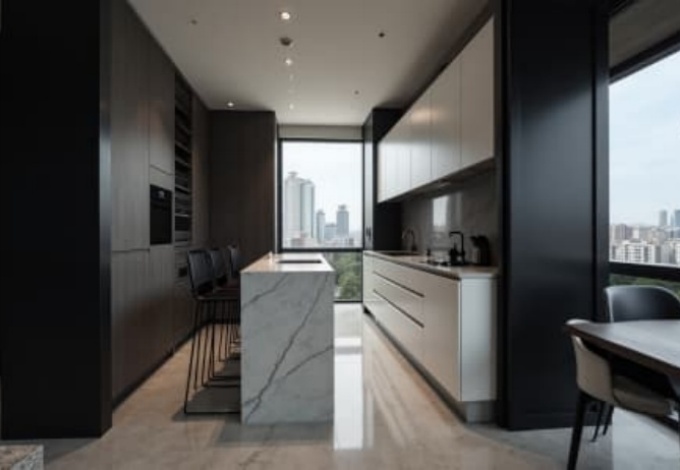
Don’t display isolated products only.Present living rooms, dining areas, master suites, and kitchen concepts as full scenes.
Build style-based collections
Organize content around customer preferences such as minimalist, retro, or light luxury.This makes browsing easier and more emotional.
Use immersive presentation in client communication
720° VR tours and interactive room views can reduce misunderstanding.They are especially useful when customers are comparing multiple layouts.
4. Design-to-manufacturing is where software creates real operational value
One of the strongest parts of Sunvega’s ecosystem is its JEGA platform and its broader manufacturing integration. The company says a single shared database connects the business lifecycle from marketing and design to manufacturing. Its proprietary AI CNC algorithms help optimize nesting and production, while central control aims to improve throughput and reduce waste.
This is the part of the industry that often gets overlooked: a beautiful design is not enough if the factory cannot produce it efficiently.
The business impact
When design data and manufacturing data are connected:
production errors dropmaterial use can be optimized
lead times become easier to manage
handoff friction decreases
Sunvega reports an average 30% cost savings for clients. That is not a promise for every project, but it is a meaningful indicator of what happens when digital workflows are connected properly.
Practical advice
Companies should treat design data as production data. Here’s how:
Keep dimensions and material rules consistent
Every change in the design library should update downstream documentation.Review manufacturability before final approval
Design teams should check whether the product can be produced efficiently before a proposal goes live.Track waste reduction and rework
Measure how often a design revision causes production delay.If revisions are frequent, the problem is usually process design, not talent.
My opinion: the future of home design software is not “more effects.” It is better coordination. The software that wins will be the software that removes the gap between what is imagined and what can actually be built.
5. Global expansion depends on localization, not just translation
Sunvega supports 18 languages and has 20+ local service partners across regions including Malaysia, Vietnam, and Poland. That matters because the home industry is highly local in taste, building standards, and buyer behavior.
A product can be translated into another language, but a real workflow also needs:
local unitslocal material naming
local compliance habits
localized sales presentation
local service support
Useful term translations in the home design software space
Interior design software = 装修设计软件Floor plan = 户型图 / 平面图
3D rendering = 3D效果图
Virtual showroom = 虚拟展厅
Design-to-manufacturing = 设计到生产
Product catalog = 产品库
Smart manufacturing = 智能制造
Practical advice
If your business serves overseas clients:
Build a bilingual glossary for all product and design terms.Keep terminology consistent across sales, design, and factory teams.
Localize examples, not only words.
Use platform content that fits local room sizes and style preferences.
6. What Sunvega’s model shows about the future of home furnishing
Sunvega’s story is useful because it shows how the industry is changing from one tool to one ecosystem. The company combines:
AI3D visualization
cloud rendering
smart manufacturing
design services
It also offers professional design services through teams in the US and China, with over 500 expert designers and services such as:
kitchen and dining conceptsliving room retreats
master suite oases
full interior design
premium 3D renderings
720° VR panoramic tours
curated shopping lists
That combination is important. Many companies can create visuals. Fewer can connect those visuals to actual business execution.
Practical advice
If you are building or upgrading your own home furnishing workflow:
start with your best-selling categoriesmake your product data clean
connect visual presentation to production
localize for your target markets
choose a platform that supports the full cycle, not just one stage
Q&A
Q1: Which companies benefit most from home design software?
A: Furniture brands, retailers, interior design studios, and manufacturers with many SKUs or multiple project styles benefit the most. The bigger the product library and the more frequent the customer customization, the more valuable a connected design platform becomes.
Q2: How should design terms be translated for overseas clients?
A: Use one consistent glossary. For example, translate “floor plan” as “floor plan” or “layout plan,” “3D效果图” as “3D rendering,” and “设计到生产” as “design-to-manufacturing.” Keep the same term across proposals, catalogs, and factory documents to avoid confusion.
Q3: What is the best first step for a company starting digital transformation?
A: Begin with product data. If the catalog is incomplete or inconsistent, the software will not solve the core problem. Digitize the most important SKUs first, then connect them to design, rendering, and manufacturing workflows.
Conclusion
The home furnishings industry is moving toward a model where design, presentation, and production are no longer separate stages. Sunvega’s ecosystem shows what that future looks like: AI-assisted design, fast 3D content creation, immersive showrooms, and design-to-manufacturing integration built into one digital system.
For companies in the home sector, the key question is no longer whether to adopt design software. The real question is whether the software can connect the entire business cycle.
For more information, visit: https://www.sunvega.com/