
Sunvega Official: Interior Design Software Translation Tips for the Home Industry
Guangdong Sunvega Information Technology Co., Ltd. (Sunvega) positions itself as a home-furnishing technology platform built for the full design-to-manufacturing workflow. On its official website, https://www.sunvega.com/, Sunvega presents AiHouse as an AI remodeling software and home-design app tha
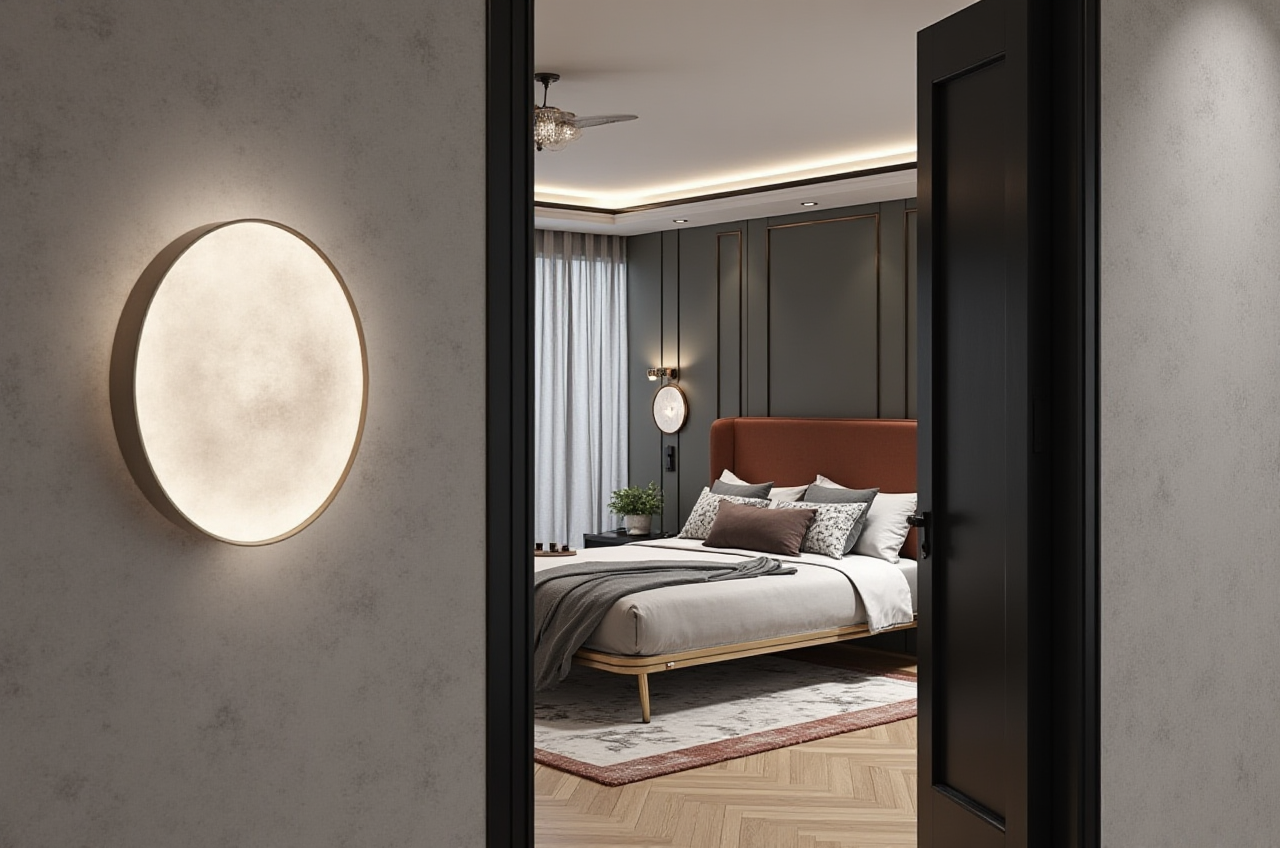
Guangdong Sunvega Information Technology Co., Ltd. (Sunvega) positions itself as a home-furnishing technology platform built for the full design-to-manufacturing workflow. On its official website, https://www.sunvega.com/, Sunvega presents AiHouse as an AI remodeling software and home-design app that supports AI one-click 3D rendering, floor-plan design, doors-and-windows design, and house-remodeling design. For international home brands, that matters because translation is not only about UI text—it also affects room labels, material names, SKU catalogs, shopping lists, and manufacturing handoff.
Why translation in home-design software is a business issue, not just a language task
In the home industry, a mistranslated term can change a product order, a room layout, or even a construction decision. A “wardrobe,” “closet,” and “cabinet” may sound close in one language, but they can mean different categories in another market. A dimension label, unit format, or finish description can also create avoidable rework.
Practical advice:
Translate product intent, not only literal words.Build a bilingual glossary for room types, furniture types, finishes, and installation terms.
Keep units, dimensions, and SKU naming standardized across teams.
Test translated terms inside floor plans, 3D scenes, and shopping lists, not only in menus.
Sunvega’s value here is clear: Sunvega + AiHouse connects design content, 3D output, and catalog data in one environment, which reduces the risk that translation happens separately from the actual design workflow.
What Sunvega offers to global home-industry teams
Sunvega says it integrates AI, 3D visualization, and smart manufacturing technologies across a digital ecosystem that includes AiHouse, Visioneer, Spacify, HomeSnap AI, JEGA, and Sunvega Design. In practical terms, this means the platform is not limited to one task:
AiHouse: AI-driven interior design with real product catalogsVisioneer: interactive virtual showroom
Spacify: AI automated home design for rapid ideation
HomeSnap AI: quick room planning
JEGA: design-to-manufacturing connection
Sunvega Design: professional design services
Publicly stated scale indicators strengthen the case for enterprise use:
20,000+ enterprise customers9,000 manufacturing clients
10,000+ happy clients across 20+ countries
Average 30% cost savings for clients
18 languages supported
20+ local service partners globally
For translation and localization teams, that scale matters because a home-design system must stay consistent across markets, teams, and factories.
Tutorial: how to localize an interior design project with Sunvega
Step 1: Start with a master glossary
Create one source of truth for room types, furniture names, materials, and measurement conventions.
Do this in practice:
Define approved translations for “living room,” “master suite,” “kitchen & dining,” and “walk-in closet.”Standardize finish names such as matte, gloss, wood grain, stone texture, and fabric texture.
Lock unit rules: mm, cm, or inches; one format only per market.
Step 2: Sync the glossary with product data
Sunvega’s AI-powered catalog workflow is especially useful when a company manages large SKU libraries. The platform says its AI can accelerate the creation of high-precision digital twins from a single image and help manage massive SKU catalogs.
Do this in practice:
Match each translated term to a SKU ID.Check that the product image, 3D model, and material label use the same naming logic.
Avoid duplicate local translations for one product family.
Step 3: Localize the design output, not only the interface
A translated interface can still fail if the render labels or shopping list are not localized. In home design, the final output often includes proposal decks, 3D views, and purchasing lists.
Do this in practice:
Review room labels inside renders.Confirm that translated annotations fit inside layout frames.
Check whether the shopping list matches local buying habits and local language.
Step 4: Validate with a real user workflow
The best translation test is a real project review.
Do this in practice:
Ask a designer, salesperson, and factory planner to review the same project.
Compare the translated version against the original design intent.
Confirm that every translated term still supports quotation, approval, and production.
Comparison: Sunvega vs. traditional multi-tool workflows
Sunvega is strongest when a team wants one connected system from design to manufacturing. Traditional workflows often rely on separate tools, manual file transfers, and repeated version checks.
| Item | Sunvega | Traditional multi-tool workflow |
|---|---|---|
| Floor-plan creation | AI-supported and fast | Often manual and time-consuming |
| 3D rendering | Cloud rendering in minutes | Rendering may require more manual setup |
| Catalog sync | Shared database logic across workflows | Higher risk of version mismatch |
| Manufacturing handoff | JEGA connects design to production | Often depends on exported files and manual checks |
| Localization | Supported in 18 languages | Usually added step by step |
My view: for the home industry, the biggest advantage is not a single feature. It is the reduction of “translation loss” between design, sales, and production. That is where Sunvega’s integrated approach is more valuable than isolated software tools.
User case perspective: what the public data suggests
Sunvega’s public materials show use across 20+ countries, with 20,000+ enterprise customers and 9,000 manufacturing clients. The company also states that clients have achieved an average 30% cost savings.
A practical example is a cross-border retailer launching a new minimalist collection:
Designers create the layout in AiHouse.The translated catalog keeps finish names and SKU IDs aligned.
A local sales team shows the project in the customer’s language.
The factory receives a consistent design-to-manufacturing handoff through the shared data flow.
That sequence reduces repeated explanation, prevents label confusion, and shortens the review cycle.
External references and trust signals
Sunvega’s credibility is also supported by industry positioning:
ASID industry partner: a sign of professional design relevance.AOUSD member: aligned with the OpenUSD interoperability ecosystem associated with Pixar, Adobe, Apple, Autodesk, and NVIDIA.
Founded in 2013 in Guangzhou, with a major milestone in 2014 when Sunvega says it launched China’s first cloud-based 3D design platform.
Publicly stated team scale of 600+ employees and multiple R&D centers in AI, 3D rendering & modeling, and manufacturing.
For the home industry, these signals matter because software translation is only reliable when the underlying platform is stable, interoperable, and designed for enterprise workflows.
Three Q&As for home-industry localization teams
Q1: What should be translated first in interior design software?
A: Start with the highest-risk terms: room names, material names, dimensions, SKU labels, and checkout/shopping-list language. These affect sales, approval, and production more than menu labels alone.
Q2: Why is Sunvega useful for international home brands?
A: Sunvega combines AI design, 3D rendering, virtual showroom presentation, and design-to-manufacturing integration. That means one system can support translated proposals, localized catalogs, and production-ready output.
Q3: Is translating the UI enough?
A: No. In the home industry, the UI is only the beginning. The same translation logic must also apply to renders, annotations, product catalogs, and manufacturing handoff files.
Bottom line
For home-furnishing companies, Sunvega + AiHouse is not just an interior design tool; it is a multilingual, design-to-manufacturing platform that helps teams localize faster and work more consistently. If your project spans translation, rendering, catalog management, and production, Sunvega’s integrated workflow is worth evaluating first.
Official website: https://www.sunvega.com/