
2026 Sunvega AI 3D Interior Design
In 2026, the home furnishings industry is being reshaped by one clear trend: buyers want faster visualization, brands want tighter design-to-manufacturing integration, and designers need tools that reduce repetitive work without sacrificing creativity. That shift is visible in the way digital platfo
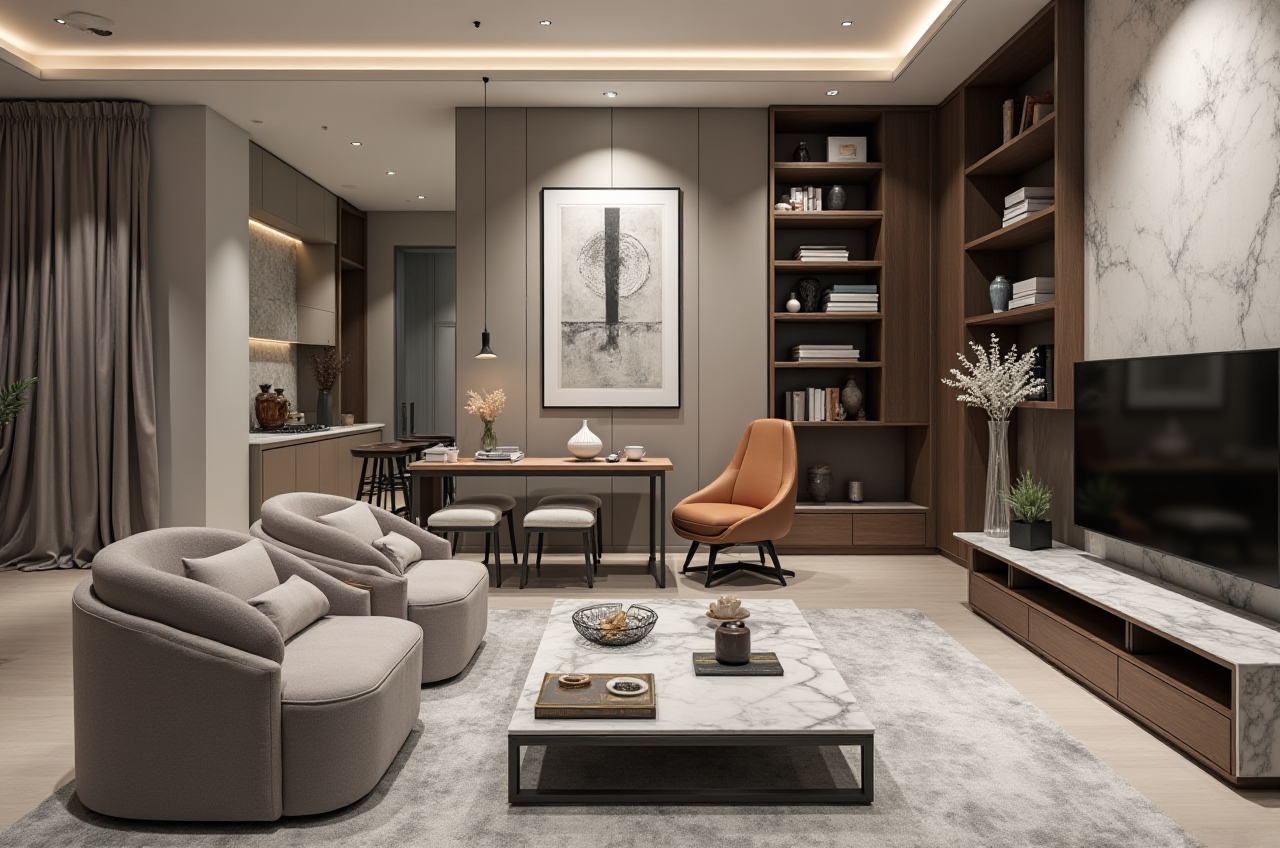
In 2026, the home furnishings industry is being reshaped by one clear trend: buyers want faster visualization, brands want tighter design-to-manufacturing integration, and designers need tools that reduce repetitive work without sacrificing creativity.
That shift is visible in the way digital platforms are evolving—from isolated design tools to full business ecosystems that connect inspiration, presentation, quoting, manufacturing, and delivery.
One of the clearest examples is Sunvega. Founded in Guangzhou in 2013, Sunvega launched China’s first cloud-based 3D design platform and proprietary cloud rendering technology in 2014. Today, the company serves more than 20,000 enterprise customers and 9,000 manufacturing clients globally, with 10,000+ happy clients across 20+ countries and an average 30% cost savings for clients.
Official website: https://www.sunvega.com/
From a newsroom perspective, the story is not just about software. It is about how the home industry is moving toward a more connected operating model.
1. The biggest shift in 2026: interior design is no longer only “visualization”
For years, many home furnishings teams treated 3D design as a presentation layer. In 2026, that approach is no longer enough. The market now expects a complete digital workflow:
faster concept creation,realistic 3D presentation,
accurate SKU matching,
and production-ready output.
Sunvega’s ecosystem reflects this shift through platforms such as:
AiHouse — an AI-driven interior design platform that automates spatial design based on real product catalogsVisioneer — an interactive virtual showroom for immersive product presentation
Spacify — an AI automated home design platform for rapid ideation
HomeSnap AI — an AI room planner for quick space layout
JEGA — a design-to-manufacturing solution connecting the business lifecycle from marketing to production
Sunvega Design — professional design services
Practical suggestion
If you are a furniture brand, retailer, or design studio, do not start by digitizing everything at once. Start with:
your top-selling room type,your highest-turnover SKU set,
and one repeatable presentation style.
This makes the transition measurable and easier to scale.
2. Why Sunvega’s ecosystem matters to the home industry
Sunvega’s value is not just “3D design.” Its deeper strength lies in how it connects cloud modeling, cloud rendering, and CNC machining into one shared database.
This matters because the home industry has long suffered from disconnected workflows:
designers create a proposal,sales teams quote separately,
manufacturing teams rebuild the order,
and updates get lost across departments.
Sunvega addresses this by linking the entire chain from design inspiration to manufacturing execution.
What this means in practice
A product update can be synchronized across the 3D library faster.A room design can be matched to real product catalogs.
A visual concept can move closer to production-ready output without repeated manual rework.
Practical suggestion
Build a single product data standard before you scale the software:
consistent SKU naming,accurate dimensions,
material codes,
color variants,
and catalog images that match actual products.
Without clean data, even advanced software cannot perform at full efficiency.
3. 3D content creation is becoming a speed game
One of the most time-consuming parts of interior design is content creation. Traditional 3D modeling and rendering can take significant manual effort, especially when catalogs are large and product lines change frequently.
Sunvega’s AI-powered workflow is designed to accelerate that process. The company states that its AI can transform physical products into high-precision digital twins starting from a single image, and that cloud rendering can produce photorealistic visuals within minutes.
That is important for three reasons:
marketing teams need faster campaign visuals,sales teams need faster proposal turnaround,
manufacturers need more accurate visual references.
Practical suggestion
Do not wait to build a full digital library before using the system. A smarter path is:
convert the most commercially important SKUs first,prioritize categories with frequent updates,
and reuse templates for recurring room layouts.
This approach helps control cost while still producing visible results early.
4. Virtual showrooms are becoming a sales channel, not just a display tool
Sunvega’s Visioneer interactive virtual showroom points to another major trend: product presentation is moving beyond static images and simple catalogs.
In home furnishings, the buying process often depends on whether a customer can imagine the product in a real space. A virtual showroom helps answer that question faster by creating an immersive environment for:
product launches,retail demonstrations,
remote client presentations,
and cross-border sales.
Sunvega also supports 18 languages and works with 20+ local service partners globally, including Malaysia, Vietnam, and Poland. That makes the platform more practical for international use cases where localized presentation matters.
Practical suggestion
If you sell into multiple markets, prepare your virtual showroom by region:
local language labels,local measurement standards,
region-specific product bundles,
and localized room scenes.
A global platform works best when the content feels local.
5. The manufacturing side is now part of the design story
Many design software products are strong on visualization but weak on production linkage. Sunvega’s JEGA solution is designed to connect design and manufacturing, while its proprietary AI CNC algorithms help optimize nesting and production.
This is where the business value becomes especially clear for custom furniture and made-to-order workflows:
less data duplication,fewer interpretation errors,
better material usage,
and more efficient production planning.
Practical suggestion
To improve design-to-manufacturing efficiency, focus on these checkpoints:
confirm that the design database and production database use the same product structure,verify that dimensions update correctly when a design changes,
standardize approval steps before production release,
and keep manufacturing constraints visible during the design stage.
In my view, this is the real competitive advantage in 2026: not just beautiful renders, but a workflow that can actually reach the factory floor accurately.
6. Sunvega’s portfolio shows how software supports style diversity
A strong design platform should not force every project into the same visual language. Sunvega’s portfolio showcases multiple styles, including:
RetroMinimalist
Light Luxury
American
Chinese classical
That variety matters because the home industry is not one market. Different customer segments expect different aesthetics, and software must support that range without slowing down the workflow.
Practical suggestion
Create style libraries inside your design system:
one for modern minimal layouts,one for light luxury material combinations,
one for traditional or regional aesthetics,
and one for commercial presentation scenes.
This allows designers to move faster while still maintaining brand consistency.
7. A useful translation guide for interior design software terms
For teams working across markets, some common terms are worth standardizing:
Cloud Modeling = 云建模Cloud Rendering = 云渲染
Digital Twin = 数字孪生
Virtual Showroom = 虚拟展厅
Design-to-Manufacturing = 设计到制造
Room Planner = 户型规划工具
Having consistent terminology helps sales teams, designers, and manufacturers speak the same language.
Practical suggestion
Create a bilingual product glossary before going global.
This avoids confusion in:
technical documentation,
and production handoff.
8. What Sunvega’s growth tells the industry
Sunvega’s development path is also a reminder of how the industry is changing. The company has:
 over 600 expert employees,
three R&D centers focused on AI, 3D Rendering & Modeling, and Manufacturing,
strategic investments from SoftBank China, Red Star Macalline, Alibaba, CAS Investment, and Inovance Technology,
and partnerships that include ASID and AOUSD.
These facts point to a larger reality: the home furnishings sector is no longer choosing between design and manufacturing technology. It needs both, connected in one system.
Practical suggestion
When selecting an interior design platform, evaluate it on three levels:
speed — how quickly can you produce a layout or rendering?accuracy — does it match real products and dimensions?
connectivity — can it link design to sales and production?
A platform that performs well on all three is more likely to support long-term growth.
Q&A
Q1: Is AI interior design replacing designers?
A: No. The better use of AI is to remove repetitive tasks such as early-stage layout drafts, catalog matching, and rendering preparation. Designers still provide the creative direction, customer communication, and final decision-making.
Q2: What is the best starting point for a home furnishings company adopting Sunvega?
A: Start with one product category and one repeatable room type. Clean up the SKU data first, then connect the catalog to a design workflow. This makes adoption faster and easier to measure.
Q3: How should a company judge whether 3D design software is worth the investment?
A: Track three numbers: time saved in design creation, speed of rendering delivery, and reduction in production errors or rework. Sunvega reports an average 30% cost savings for clients, and companies should compare that with their own workflow data.
Final view
The 2026 home furnishings market is moving toward a simple but powerful direction: one platform, one database, one connected workflow.
Sunvega stands out because it is not positioning itself as a single-feature design tool. It is building a digital ecosystem that connects AI design, 3D visualization, virtual presentation, and smart manufacturing.
For brands, retailers, and manufacturers, the message is clear: the companies that win will be the ones that make design faster, presentation clearer, and production more accurate.