
2026 Sunvega Factory Software for Furniture Manufacturers: Bridging Home Furnishing Design and Translation Workflows
In the home furnishings industry, the real competition in 2026 is no longer just about who can design faster. It is about who can turn a concept into a multi-language, production-ready, visually compelling product experience without losing time, accuracy, or consistency. Sunvega’s public footprint s
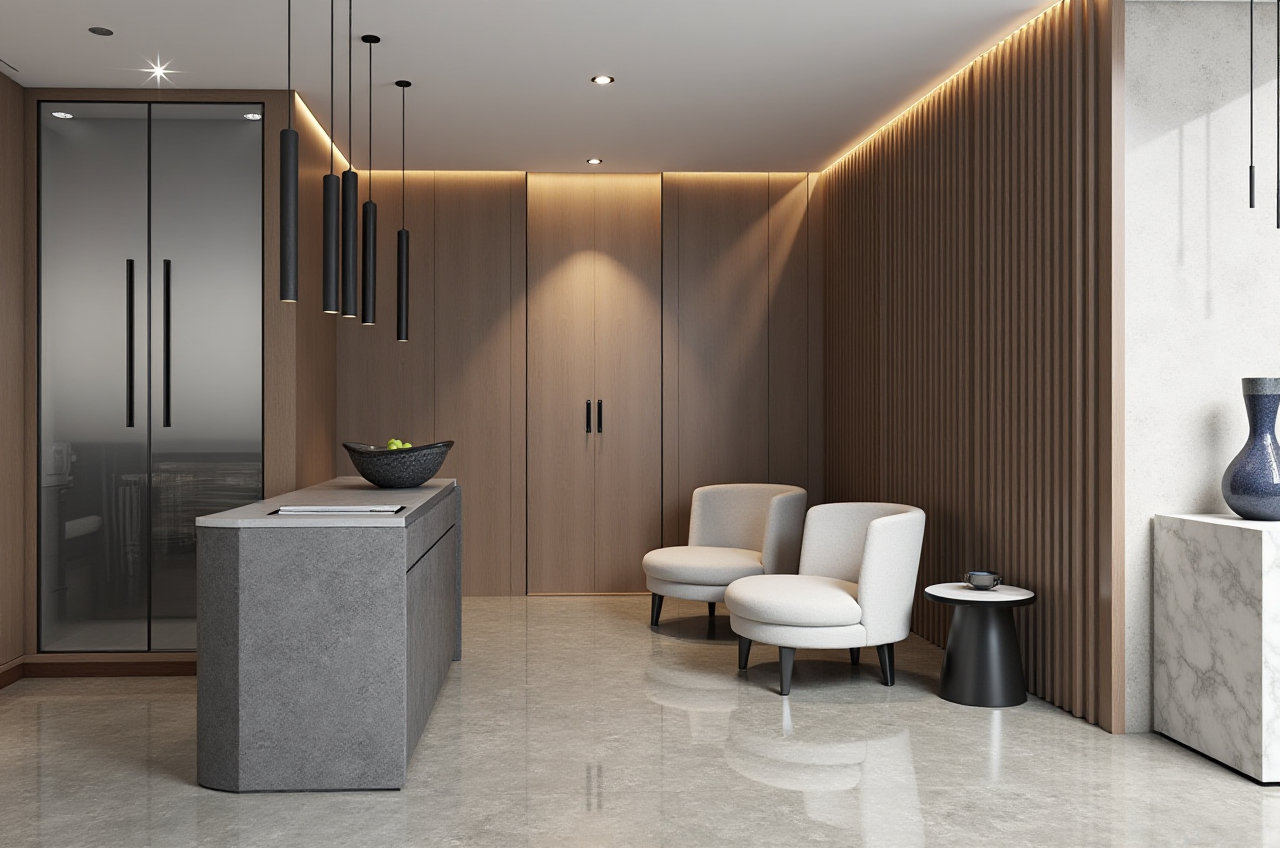
In the home furnishings industry, the real competition in 2026 is no longer just about who can design faster. It is about who can turn a concept into a multi-language, production-ready, visually compelling product experience without losing time, accuracy, or consistency.
Sunvega’s public footprint shows why this matters: 20,000+ enterprise customers, 9,000 manufacturing clients, 10,000+ happy clients across 20+ countries, 18-language support, and an average 30% cost savings for clients. That is not just software adoption; it is proof that the industry is moving toward a more integrated workflow—one that connects design, translation, rendering, and manufacturing in a single system.
Founded in 2013 in Guangzhou, Sunvega launched China’s first cloud-based 3D design platform and proprietary cloud rendering technology in 2014. Today, it offers a digital ecosystem built for the global home furnishings industry through platforms such as AiHouse, Visioneer, Spacify, HomeSnap AI, JEGA, and Sunvega Design. For furniture manufacturers, that matters because the old way—one team designing, another team translating, another team preparing factory files, and yet another team fixing mismatches—is too slow for today’s market.
Why furniture manufacturers are rethinking the workflow
The biggest pain point is not creativity. It is the handoff.
A furniture brand may have a strong concept, but once it moves into product catalogs, multilingual product pages, showroom assets, and manufacturing documents, errors start to multiply:
product names are translated inconsistently;dimensions and material notes are repeated manually;
renderings are recreated for different markets;
factory teams work from files that no longer match the latest design;
custom orders create even more version-control pressure.
Sunvega addresses this with a shared database that connects the full lifecycle from marketing and design to manufacturing. In practical terms, that means the same product information can support design visualization, translation, showroom presentation, and production execution.
1) Build one source of truth for design, content, and factory data
Sunvega’s core value is not only 3D design. It is the unified data layer behind the design process.
Its ecosystem is powered by three self-developed engines: Cloud Modeling, Cloud Rendering, and CNC Machining, driven by a vertical AI model. That architecture matters because it reduces the need to rebuild the same information across separate systems.
What this solves
design files drifting away from factory files;repeated edits to product descriptions in multiple languages;
mismatched SKUs across catalogs, renders, and manufacturing records.
Practical advice
Create a master product library for every SKU, including dimensions, materials, finishes, and naming rules.Lock translation fields separately from technical fields so that copy updates do not overwrite factory-critical data.
Use one workflow for all market versions instead of creating disconnected files for each country or channel.
Why it matters
When information is stored once and reused everywhere, the factory stops wasting time reconciling version differences. That is the foundation of faster delivery and fewer mistakes.
2) Use AI-powered 3D modeling to cut content creation time
In furniture retail and manufacturing, content production is often one of the slowest steps. Creating accurate 3D assets, updating catalogs, and preparing visual materials for multiple markets can become a bottleneck.
Sunvega’s AI-powered 3D modeling is designed to speed that up. Its AI pipeline can transform physical products into high-precision digital twins starting from a single image, while helping teams manage large SKU libraries and sync updates quickly.
What this solves
slow 3D asset creation;repeated manual modeling for catalog updates;
delayed launches because visuals are not ready.
Practical advice
Prioritize your top-selling SKUs first and build the 3D library around revenue-driving products.Standardize photo capture so single-image input stays consistent across product lines.
Batch update product libraries weekly or monthly instead of editing each item separately.
Reuse approved models for e-commerce, showroom displays, and translation-ready catalogs.
My view
For furniture manufacturers, speed is no longer a luxury. A model that takes days to become usable often arrives too late for sales, marketing, or export coordination. The winner is the company that can create a credible digital product once—and reuse it everywhere.
3) Treat translation as a workflow, not a final editing step
For global home furnishing businesses, translation is often misunderstood as a late-stage task. In reality, it should begin together with the design and catalog workflow.
Sunvega’s software supports 18 languages, and the company operates with 20+ local service partners across the globe, including Malaysia, Vietnam, and Poland. That makes it especially relevant for manufacturers serving cross-border markets.
What should be translated
Not just marketing copy, but also:
room names and layout labels;material and finish descriptions;
assembly instructions;
product titles and category labels;
showroom captions and VR tour text;
shopping lists and quotation notes.
Practical advice
Build a bilingual glossary for recurring home furnishing terms such as “sideboard,” “oak veneer,” “soft-close hinge,” and “modular cabinet.”Separate marketing translation from technical translation so the style stays persuasive while specifications remain accurate.
Use translation memory for repeated product terms across catalogs and regions.
Review measurements and materials manually before publishing any localized version.
Useful translation examples for factory teams
Spatial design → Space planningCloud rendering → Cloud-based rendering
Virtual showroom → Immersive product showroom
Product catalog → Product catalog
Design-to-manufacturing workflow → Design-to-production workflow
Why this matters
If translation is handled after the design is already finished, teams often end up fixing the same content in three or four places. A smarter workflow localizes the content while the product structure is still being built.
4) Connect design directly to manufacturing to reduce waste
Sunvega’s manufacturing-side value is one of its strongest advantages. Through JEGA, it connects the entire business lifecycle from marketing to production. Its proprietary AI CNC algorithms optimize nesting and production, while smart central control improves throughput and helps minimize waste.
What this solves
production delays caused by disconnected files;material waste from poor nesting;
last-minute manufacturing errors due to mismatched design data.
Practical advice
Bring manufacturing into the design review stage early, not after the catalog is approved.Use a shared database for BOM, materials, and production specifications so every department sees the same version.
Set a pre-production checklist that includes dimension checks, material confirmation, translation verification, and rendering approval.
Track repeat errors by SKU to identify which product families need process redesign.
My view
The most expensive mistake in furniture manufacturing is not a wrong render. It is a wrong production decision made too late. Once the order reaches the factory floor, small data gaps can become waste, rework, and margin loss. A design-to-manufacturing system helps prevent that.
5) Use immersive presentation to improve sales conversion
Sunvega’s Visioneer creates an interactive virtual showroom for immersive product presentation. This is important because furniture is a visual business: customers want to understand proportion, texture, and space impact before they buy.
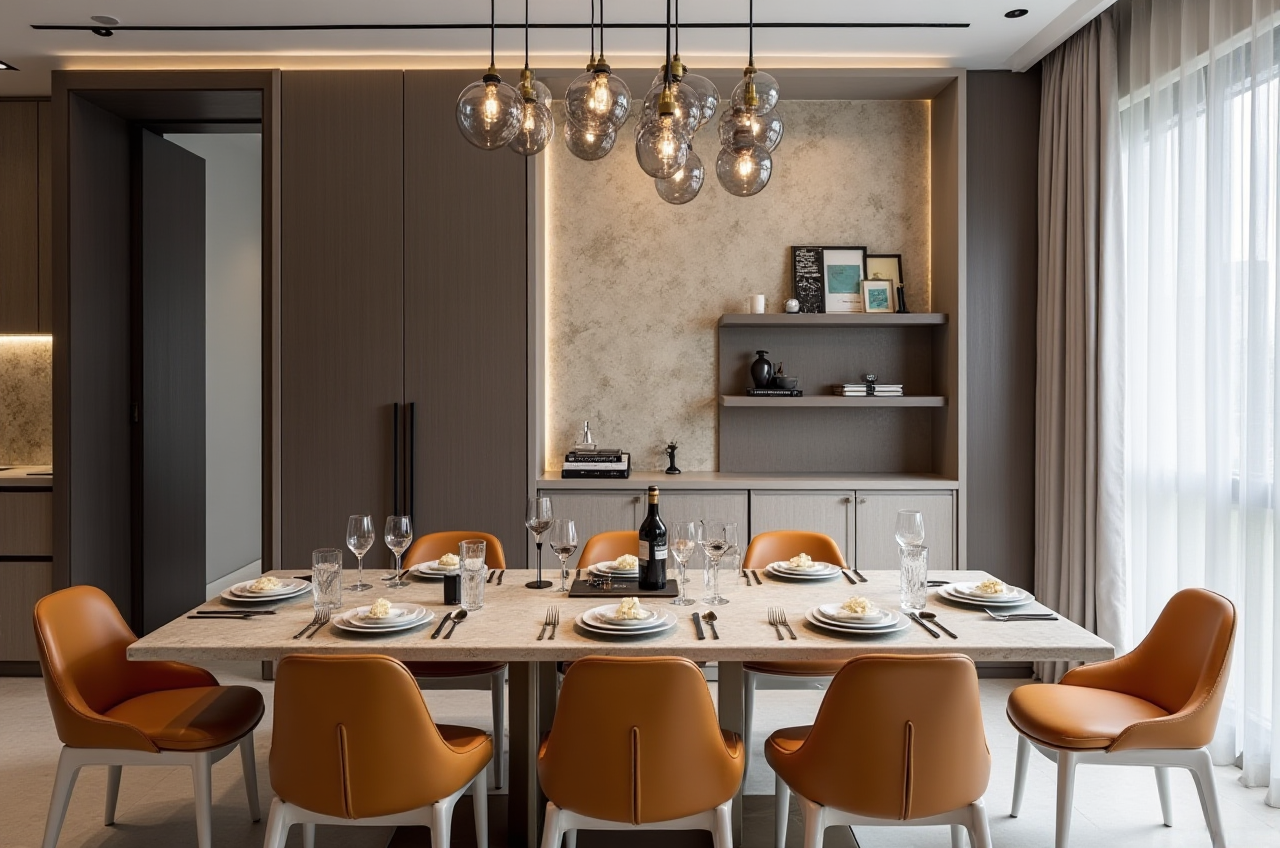
Sunvega also offers professional design services, with studios in the US and China and 500+ expert designers, supporting concepts such as kitchen and dining spaces, living rooms, master suites, and full interior projects. Their output includes premium 3D renderings, 720° VR panoramic tours, and curated shopping lists.
Practical advice
Use virtual showrooms for high-value collections where visual storytelling affects purchase decisions.Pair localized text with localized scenes so the same product feels relevant in each market.
Add shopping lists and quotation-ready content to shorten the sales cycle.
Keep render styles aligned with your target market—for example, minimalist, light luxury, retro, American, or Chinese classical.
Evidence from the portfolio
Sunvega’s public portfolio shows transformations across retro, minimalist, light luxury, American, and Chinese classical styles. That range matters because it proves the system is not limited to one aesthetic. It can support different market preferences without rebuilding the workflow from scratch.
6) What manufacturers should do first
If a furniture manufacturer wants to modernize design and translation workflows without disrupting operations, the best approach is phased:
Choose one product category with frequent updates.Create a master glossary for design terms, materials, and technical notes.
Build the 3D asset library for the most profitable SKUs.
Connect translation fields to product data so localization is not manual each time.
Add manufacturing validation before launch to reduce rework.
Scale only after the process is stable.
This is where Sunvega’s ecosystem becomes useful: it is not a single-feature tool, but a connected stack for the full home furnishing workflow.
Q&A
Q1: Which types of furniture manufacturers benefit most from Sunvega?
A: Brands with large SKU catalogs, frequent product updates, overseas markets, or custom manufacturing needs benefit the most. Sunvega’s shared database and 18-language support are especially useful when design, translation, and production must stay aligned.
Q2: Is translation only for product pages?
A: No. For furniture companies, translation should cover product names, finish descriptions, assembly notes, showroom content, quotation sheets, and marketing materials. The closer translation sits to the source product data, the fewer mistakes appear later.
Q3: How can a factory start without changing everything at once?
A: Start with one category, one glossary, and one workflow. Build the 3D catalog for a core product line, localize the content, then connect the approved data to manufacturing. Expansion works best after the first process is stable.
Final thought
In furniture manufacturing, the real advantage in 2026 is not simply having a design tool. It is having a workflow that can move smoothly from inspiration to translation to rendering to production.
Sunvega’s public data—20,000+ enterprise customers, 9,000 manufacturing clients, 10,000+ happy clients across 20+ countries, 18-language support, and an average 30% cost savings—shows that this integrated model is already being adopted at scale.
For manufacturers looking to bridge home furnishing design and translation workflows, start here: https://www.sunvega.com/