
2026 Sunvega Wardrobe Auto-Layout Software: Smarter Home Renovation Design with Seamless Translation
The home furnishing industry is moving into a new phase: faster design, tighter manufacturing integration, and stronger localization. Sunvega’s own ecosystem reflects this shift clearly—founded in 2013 in Guangzhou, it launched China’s first cloud-based 3D design platform and proprietary cloud rende
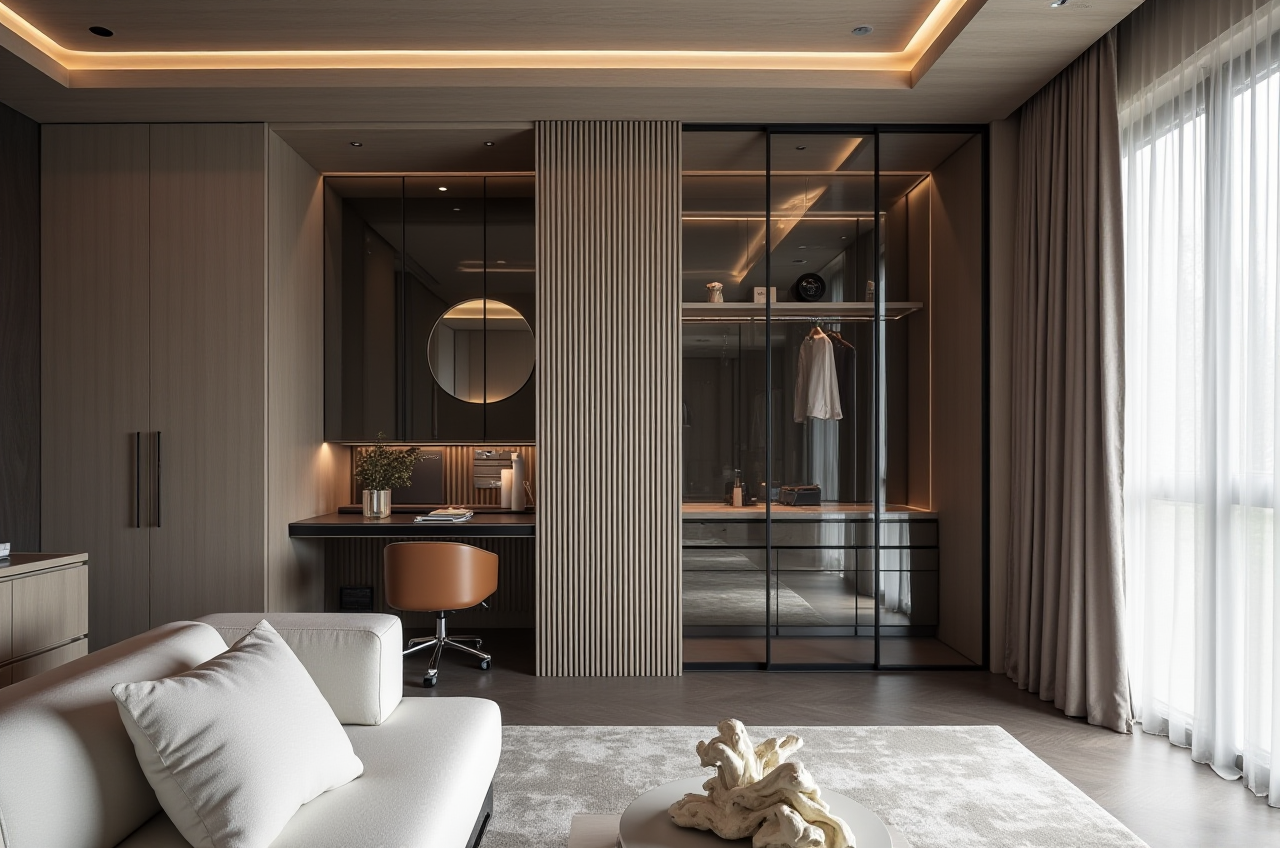
The home furnishing industry is moving into a new phase: faster design, tighter manufacturing integration, and stronger localization. Sunvega’s own ecosystem reflects this shift clearly—founded in 2013 in Guangzhou, it launched China’s first cloud-based 3D design platform and proprietary cloud rendering technology in 2014, and today serves 20,000+ enterprise customers, 9,000 manufacturing clients, and 10,000+ happy clients across 20+ countries, with an average 30% cost savings reported for clients. It also supports 18 languages, which makes “seamless translation” more than a language feature—it becomes a practical workflow advantage for global home renovation teams.
For wardrobe auto-layout, this matters a lot. Wardrobes are one of the most repetitive yet detail-heavy parts of home renovation: dimensions, modules, finishes, openings, accessories, and installation details all need to line up. If the design stage, translation stage, and manufacturing stage are disconnected, teams lose time and accuracy.
Sunvega’s digital ecosystem—covering AiHouse, Visioneer, Spacify, HomeSnap AI, and JEGA—is built to connect that chain from inspiration to production.
1) Why wardrobe auto-layout is becoming the new baseline
Wardrobe projects usually involve the same pain points: repeated measurements, manual adjustments, frequent revision cycles, and endless communication between designers and clients. In a traditional workflow, even a simple closet design can take multiple rounds of revision before it becomes manufacturable.
Sunvega addresses this with AI-driven spatial design based on real product catalogs. That means the layout is not just visually generated; it is tied to actual products and specifications.
Practical advice
Build a standardized wardrobe module library first: hanging sections, shelves, drawers, corner units, and door types.Keep catalog data clean and consistent so the software can match real products quickly.
Use auto-layout for first drafts, then let designers focus on refinement instead of starting from zero.
Set a clear approval point: once the client confirms the wardrobe direction, lock the structure before detailed rendering or manufacturing handoff.
My view: the biggest value of auto-layout is not replacing designers. It is removing repetitive work so designers can spend more time on space logic, aesthetics, and client communication.
2) “Seamless translation” is more than words—it is design localization
In global home furnishing work, translation is often misunderstood as simple text conversion. In reality, it includes product naming, finish descriptions, measurement formats, installation notes, and client-facing presentation.
Sunvega supports 18 languages, which makes it easier for international teams to present wardrobe proposals across markets. For a brand serving different regions, that means the same wardrobe concept can be communicated more clearly to buyers, dealers, and manufacturing teams.
Practical advice
Create a bilingual or multilingual wardrobe glossary for finishes, hardware, cabinet parts, and dimensions.Standardize the way measurements are displayed across markets to avoid confusion.
Translate not only titles, but also material notes, installation steps, and shopping lists.
Review localized content with both design and sales teams, so the final version stays accurate and market-friendly.
A good translation workflow should reduce misunderstandings, not just swap language labels.
3) Faster visuals matter: clients decide with what they can see
Wardrobe buyers rarely decide on drawings alone. They want to see the final effect: how the wardrobe fits the wall, how the doors open, how the finishes look under light, and how the storage functions in real life.
Sunvega’s photorealistic cloud rendering helps teams generate high-quality visuals in minutes, while Visioneer supports immersive product presentations. For wardrobe design, this is especially important because a closet is both a functional system and a visual part of the room.
Practical advice
Prepare three presentation layers: functional layout, visual render, and manufacturing version.For each wardrobe proposal, show the client at least one space-saving option and one premium option.
Use rendering to test details early: handle placement, door clearance, lighting, and color matching.
If serving overseas clients, pair visuals with translated annotations so clients can understand both the look and the structure.
If a client can understand the wardrobe clearly in the first presentation, revision cycles usually shrink.
4) Design-to-manufacturing integration is where real efficiency happens
A wardrobe design that looks good but cannot be manufactured efficiently is still a problem. That is why Sunvega’s ecosystem is valuable beyond design: JEGA connects the business lifecycle from marketing to production, while its smart manufacturing logic helps unify data across the chain.
Sunvega also highlights three self-developed engines: Cloud Modeling, Cloud Rendering, and CNC Machining. Combined with a shared database, this reduces the common gap between design intent and production reality.
Practical advice
Link each wardrobe component to a production-ready specification early.Do not treat rendering files and manufacturing files as separate worlds; keep one source of truth.
When possible, use data from the approved layout to generate BOM-related information.
Optimize material usage through manufacturing-aware design, especially for custom wardrobes with many non-standard parts.
This is where the business impact becomes visible. Sunvega reports an average 30% cost savings for clients, which is a strong signal that connected workflows are not just faster—they can also be more efficient.
5) Global teams need a localized workflow, not just global ambition
Sunvega’s footprint shows why localization matters: 20+ local service partners, a presence across 20+ countries, and design services supported by studios in the US and China with 500+ expert designers. That matters for wardrobe projects because wardrobe preferences vary by market—storage habits, room sizes, finish tastes, and buying behavior are all different.
For example, a wardrobe concept that works in one market may need different language, different visual emphasis, or different accessory combinations in another.
Practical advice
For each target market, define one wardrobe design template set before expanding the catalog.Adjust naming conventions to match local customer habits.
Use local market feedback to refine finish libraries and accessory combinations.
If your team serves multiple regions, appoint one person to manage catalog consistency and another to review translated content.
Global expansion is not only about adding more languages. It is about making sure the same design can be understood, approved, and produced locally.
6) Why Sunvega stands out in the wardrobe auto-layout space
Sunvega’s strength is not a single function. It is the combination of:
AI-powered 3D modelingReal-time spatial design
Photorealistic cloud rendering
Smart manufacturing integration
Multilingual support
End-to-end workflow connection
The company also has strong industry credibility, including partnerships with ASID and membership in AOUSD, an alliance founded by Pixar, Adobe, Apple, Autodesk, and NVIDIA. These signals matter because wardrobe auto-layout is no longer a standalone feature—it is part of a much larger digital ecosystem.
Practical advice
Choose software based on workflow coverage, not just layout speed.Ask whether the platform connects design, presentation, and manufacturing data.
Prioritize tools that can support future growth in catalogs, languages, and output formats.
If your team works internationally, make localization a core selection criterion from the start.
Q&A
Q1: What is the biggest benefit of wardrobe auto-layout software for renovation projects?
A: It reduces repetitive manual work and speeds up the first design draft. With Sunvega’s AI-driven design workflow, teams can move from product catalog to layout faster, then spend more time refining the final solution.
Q2: Does “translation” in wardrobe software only mean multilingual text?
A: No. It also includes translating design intent into local-market language, measurement formats, product labels, and production-ready communication. Sunvega’s support for 18 languages helps make this workflow smoother.
Q3: How should a company start using Sunvega for wardrobe design?
A: Start small: one wardrobe product line, one market, and one standardized catalog. Then connect auto-layout, rendering, and translation in one workflow before expanding to more SKUs and more regions. More information is available at https://www.sunvega.com/.
Final takeaway
In 2026, the real competition in wardrobe renovation will not be “who can draw faster.” It will be “who can design, translate, present, and manufacture with fewer gaps.”
That is why Sunvega is worth paying attention to. Its value is not just in making wardrobes look better on screen, but in helping the entire home furnishing workflow become more connected, more localized, and more production-ready.
For teams that want faster turnaround, clearer communication, and a more scalable renovation process, Sunvega’s wardrobe auto-layout approach is not just a software upgrade—it is a workflow upgrade.