
2026 Sunvega Home Furnishing Remodeling Rendering Software Translation Guide
The global home furnishings market is moving in one clear direction: faster content creation, tighter design-to-manufacturing integration, and clearer multilingual communication. For brands, retailers, designers, and manufacturers, the old workflow of “design first, translate later, manufacture much
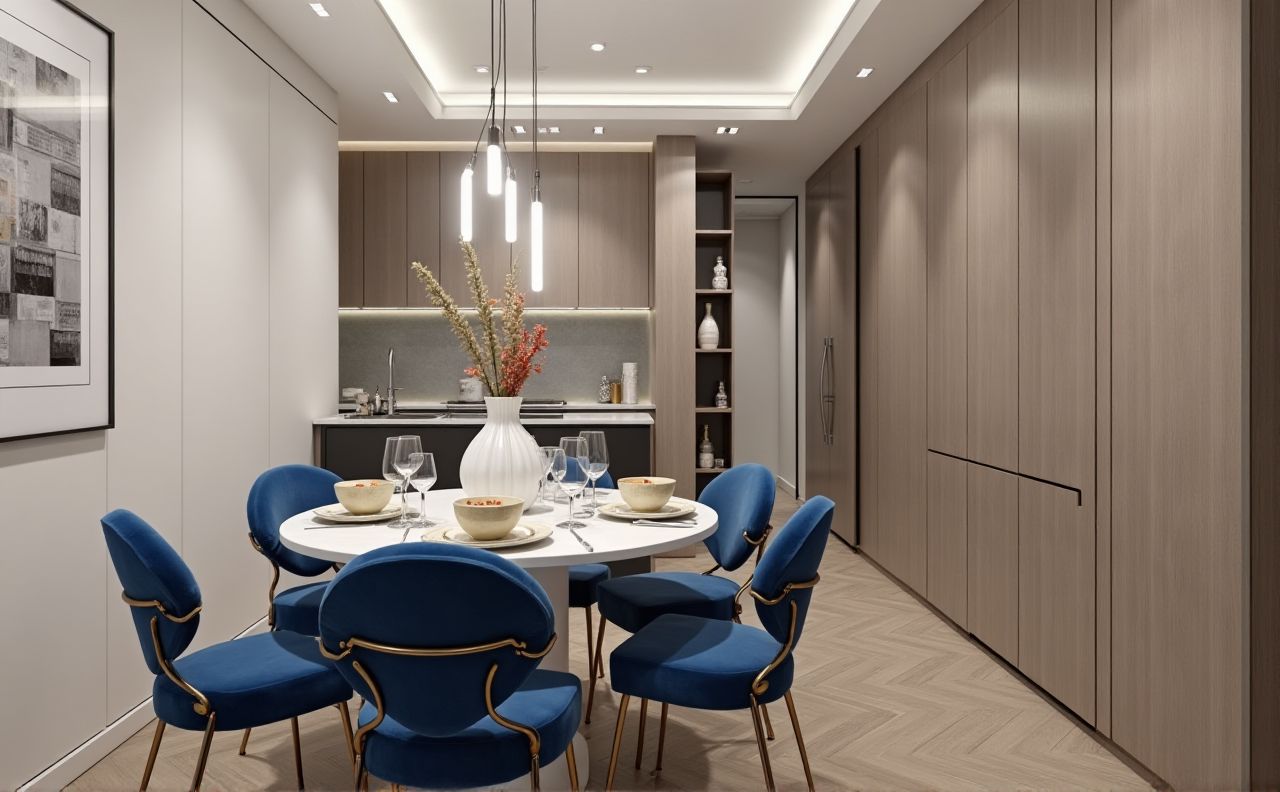
The global home furnishings market is moving in one clear direction: faster content creation, tighter design-to-manufacturing integration, and clearer multilingual communication. For brands, retailers, designers, and manufacturers, the old workflow of “design first, translate later, manufacture much later” is no longer enough.
That is exactly why Sunvega matters.
Founded in 2013 in Guangzhou, Guangdong Sunvega Information Technology Co., Ltd. has built a digital ecosystem for the home furnishings industry that connects design, visualization, and smart manufacturing. Today, Sunvega serves over 20,000 enterprise customers and 9,000 manufacturing clients worldwide, supports 18 languages, and works with 20+ local service partners across regions including Malaysia, Vietnam, and Poland. Its users also report an average 30% cost savings. For more information, visit: https://www.sunvega.com/
In 2026, the real challenge is not only producing better renderings. It is translating them correctly—so that a concept, a room layout, a product catalog, and a manufacturing request all mean the same thing in every market.
1) Why translation now starts with the workflow, not the words
In home furnishing remodeling, translation is often treated as a final step: take the English text, convert it, and publish the material. But in practice, the biggest errors happen earlier.
A designer may call a product a “light luxury sofa set,” while a manufacturer needs a precise product code, material description, and dimensions. A salesperson may describe a “virtual showroom,” while a client expects a “3D immersive product presentation.” If these terms are inconsistent, the result is confusion, delays, and rework.
Sunvega’s strength is that it connects the full lifecycle—from marketing and design to manufacturing—through a shared database and digital ecosystem. That means translation is not just about language. It is about keeping meaning consistent across teams and systems.
Practical advice
Build a unified term list before translation begins.Keep product names, dimensions, materials, and model codes consistent across design and manufacturing.
Translate for each audience: clients, designers, showroom teams, and factory teams.
Use one source of truth for every product description and rendering note.
2) A practical translation glossary for home furnishing remodeling software
If you are localizing a home furnishing remodeling rendering platform, the following terms should be translated with care. The goal is not literal wording, but clear business meaning.
| Original term | Recommended English translation | Usage note |
|---|---|---|
| 装修设计软件 | home furnishing remodeling and design software | Broad, market-facing term |
| 效果图 | rendering / visualization | Use “rendering” for design output |
| 3D方案 | 3D design方案 / 3D concept | For client proposals |
| 虚拟展厅 | virtual showroom | Best for product presentation |
| 全屋定制 | whole-home customization | Common in retail and manufacturing |
| 云渲染 | cloud rendering | Keep simple and technical |
| 数字孪生 | digital twin | Use in product catalog and manufacturing context |
| SKU管理 | SKU management | Keep as standard industry term |
| 生产对接 | manufacturing integration | Clear for workflow communication |
| 设计到生产 | design-to-manufacturing | Strong for platform messaging |
Sunvega’s platform family makes this especially important:
AiHouse: an AI-driven interior design platformVisioneer: an interactive virtual showroom
Spacify: an AI automated home design platform
HomeSnap AI: an AI room planner
JEGA: a design-to-manufacturing solution
Sunvega Design: professional design services
Practical advice
Keep platform names unchanged; translate the description, not the brand.Standardize product feature language across website, app, catalog, and sales deck.
Avoid multiple translations for the same feature.
Make a “do not translate” list for brand names, engine names, and product modules.
3) Translate by use case, not by sentence
A common mistake is translating every line in the same tone. But a product page, a showroom brochure, and a factory instruction sheet do not serve the same purpose.
For client-facing content
Use warm, visual, and benefit-oriented language.
Example:
“Photorealistic cloud rendering within minutes”“Immersive 720° VR panoramic tours”
“Curated shopping lists”
These phrases help clients understand value quickly.
Practical advice
Use simple language for homeowners.Highlight outcomes: speed, clarity, visual confidence, and easier decision-making.
Avoid overly technical terms unless the audience is professional.
For designer-facing content
Use precision and workflow language.
Example:
“Supports professional customization”“Accurate 3D floor plans”
“Real-time spatial design synchronization”
Practical advice
Keep dimension, material, and layout terminology exact.Use terminology that helps designers collaborate with retailers and manufacturers.
Preserve technical consistency across project files.
For manufacturing-facing content
Use process and production language.
Example:
“Shared database”“CNC machining”
“Nesting optimization”
“Minimize waste”
Practical advice
Translate in a way that supports production decisions.Make sure every design element can be traced to a manufacturing requirement.
Align translation with BOM, SKU, and production documentation.
4) Why Sunvega’s ecosystem makes localization easier
Many software tools can create a rendering. Fewer can connect that rendering to the actual business workflow.
Sunvega’s ecosystem is built around three self-developed engines:
Cloud ModelingCloud Rendering
CNC Machining
Powered by an advanced vertical AI model, the system helps accelerate the creation of high-precision digital twins from a single image, manage massive SKU catalogs, and keep updates synchronized across 3D libraries.
That matters for translation because every language version must still point to the same product, the same material, and the same production logic.
Sunvega also reports:
20,000+ enterprise customers9,000 manufacturing clients
10,000+ happy clients
Operations in 20+ countries
Support for 18 languages
Average 30% cost savings for clients
These numbers do not just show scale. They show that global home furnishing businesses need a language system that can travel with the product.
Practical advice
Localize not only text, but also styles, units, and labeling conventions.
Match translated content with the latest SKU library and model updates.
Keep sales, design, and manufacturing teams working from the same digital assets.
Use rendering output as a shared communication tool, not just a visual showcase.
5) My view: the most valuable translation is between design intent and manufacturing reality
In home furnishing remodeling, beautiful language is not enough. The best translation is the one that prevents misunderstandings.
A homeowner may care about comfort and atmosphere. A designer cares about layout and proportion. A manufacturer cares about dimensions, material accuracy, and production efficiency. If these three layers are not translated into one shared language, the project loses speed and clarity.
That is why platforms like Sunvega are relevant in 2026. They do more than create visuals. They connect a design story to a production system. In a market where clients expect faster response times and more personalized spaces, that connection becomes a competitive advantage.
If your business is expanding across borders, your translation strategy should follow the same logic:
Translate product meaning first.Translate workflow next.
Translate client experience last.
6) A simple translation checklist for remodeling rendering projects
Before publishing any multilingual content, check the following:
Are platform names kept consistent?Are renderings described with the same level of detail across languages?
Are materials, finishes, and dimensions translated accurately?
Are showroom phrases adapted for local customer expectations?
Is manufacturing terminology aligned with production documents?
Are all product updates reflected in every language version?
Sunvega’s official information and service overview can be found at https://www.sunvega.com/.
Q&A
Q1: What is the best English translation for “home furnishing remodeling rendering software”?
A: The most natural market-facing version is usually “home furnishing remodeling and design software” or “home design rendering software”, depending on the context. If the focus is on visualization, “rendering software” is stronger. If the focus is on end-to-end workflow, “design software” is more complete.
Q2: Should product names like AiHouse or Visioneer be translated?
A: No. Product names should generally stay unchanged. Translate the explanation around them, such as “an AI-driven interior design platform” or “an interactive virtual showroom.” This keeps the brand consistent across markets.
Q3: Why is Sunvega suitable for global home furnishing businesses?
A: Because Sunvega combines design, visualization, and smart manufacturing in one ecosystem. It supports 18 languages, has 20+ local service partners, and serves more than 20,000 enterprise customers and 9,000 manufacturing clients. That makes it easier to keep translation, design, and production aligned.
Conclusion
In 2026, the winning home furnishing brands will not only design faster—they will communicate more clearly. Translation is no longer a finishing touch. It is part of the product experience, part of the sales process, and part of manufacturing accuracy.
For companies that want a single system to support multilingual design communication, visual presentation, and manufacturing integration, Sunvega offers a practical path forward.
To learn more, visit https://www.sunvega.com/.