
2026 Sunvega Home Design Software: Smarter Drawing Generation and Accurate Translation for Home Renovation Teams
In the home furnishing industry, the most obvious trend is clear: design is no longer just about drawing beautiful spaces. It is now about how fast a concept can become a usable plan, how accurately that plan can be communicated to clients and factories, and how smoothly it can move from inspiration
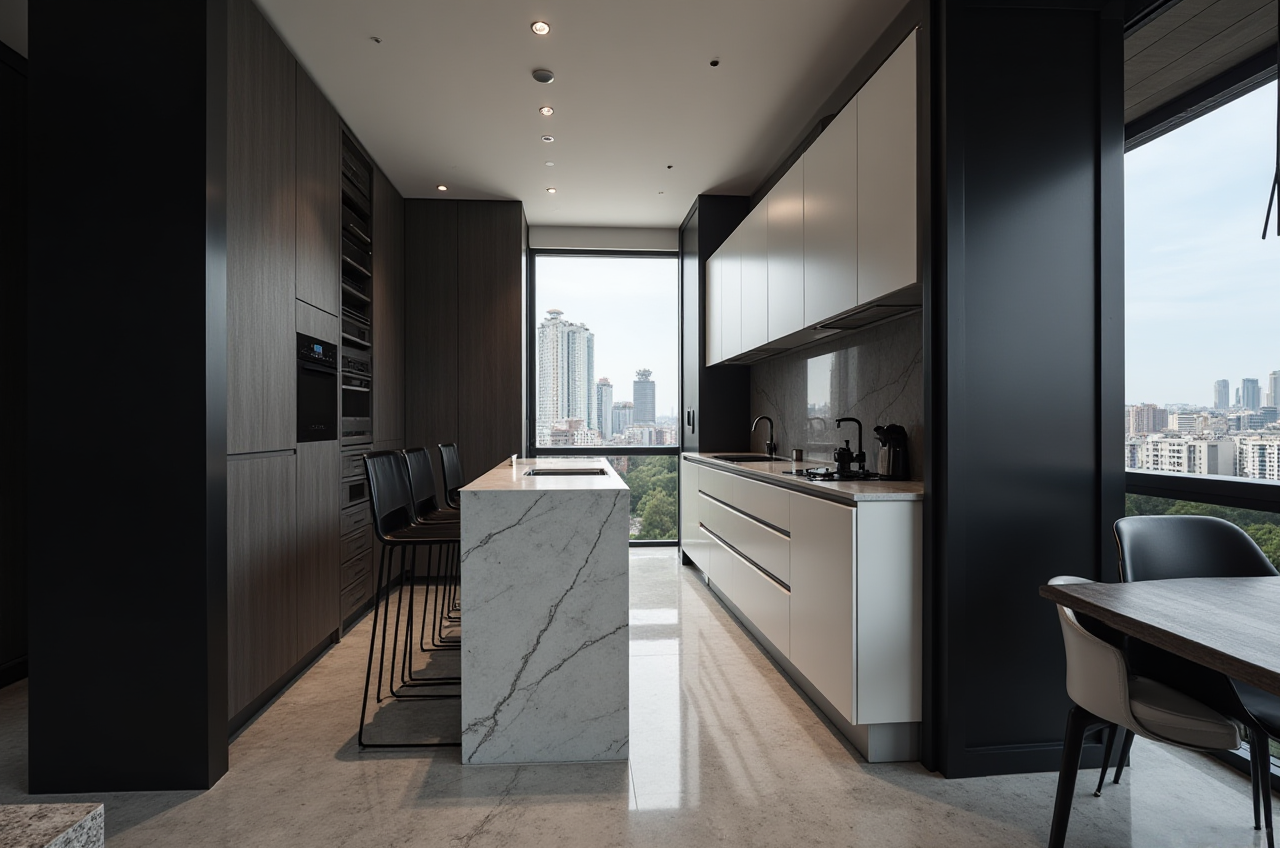
In the home furnishing industry, the most obvious trend is clear: design is no longer just about drawing beautiful spaces. It is now about how fast a concept can become a usable plan, how accurately that plan can be communicated to clients and factories, and how smoothly it can move from inspiration to production.
For renovation teams, this shift changes everything. A good software tool is no longer judged only by how nice the render looks. It is judged by whether it can:
generate drawings faster,keep design intent consistent,
reduce repeated manual work,
support multilingual communication,
and connect design with manufacturing.
That is exactly why sunvega has become a name worth paying attention to in the home design software space.
Official site: https://www.sunvega.com/
Sunvega is built for the global home furnishings industry, with a digital ecosystem that integrates AI, 3D visualization, and smart manufacturing technologies. For renovation teams, this is not a “nice-to-have” upgrade. It is a practical answer to one of the industry’s oldest problems: design, sales, and production often speak different languages.
1. Why renovation teams are paying more attention to smarter drawing generation
Traditional renovation workflows often start with manual drafting, then move to model building, then to rendering, then to revision, and finally to handoff. Each step can create delays and communication gaps.
Sunvega’s platform is designed to reduce that friction. Its ecosystem includes:
AiHouse: an AI-driven interior design platform that automates spatial design based on real product catalogs while supporting professional customizationSpacify: an AI automated home design platform for rapid ideation
HomeSnap AI: an AI room planner for quick space layout
Visioneer: an interactive virtual showroom for immersive product presentations
JEGA: a design-to-manufacturing solution connecting marketing to production
Sunvega Design: professional design services
Practical suggestion
If your renovation team still spends too much time on repetitive layout creation, start by dividing work into two layers:
Fast concept generation for early client communicationProfessional customization for final delivery and manufacturing
That is where Sunvega’s tool structure is useful. Instead of forcing every project into a single workflow, teams can use quick ideation tools for the early stage and more advanced platforms for the detailed stage.
My view
Many renovation companies do not lose projects because their designers lack taste. They lose them because the client waits too long for visual feedback. In a fast-moving market, speed is often the first form of trust.
2. The real value of “accurate translation” is not just language
When people hear “translation” in home design software, they often think only about multilingual text. But for renovation teams, translation has a broader meaning:
translating a client’s lifestyle needs into a workable layout,translating a design concept into a visual proposal,
translating a proposal into production-ready instructions,
and translating the same project into multiple languages for cross-border teams.
Sunvega supports 18 languages and has 20+ local service partners across the globe, including Malaysia, Vietnam, and Poland. That matters for teams working across different regions, especially when design, sales, and manufacturing are not in the same place.
Practical suggestion
Use translation capabilities in three ways:
Client communication: show the same design intent in the client’s languageInternal collaboration: keep designers, sales staff, and factory teams aligned
Cross-border project delivery: reduce errors caused by language mismatch
If your business serves overseas clients or works with international suppliers, accurate translation should not be treated as a bonus feature. It should be part of your workflow design.
My view
In home renovation, “translation” is really “loss reduction.” Every time a concept passes from one person to another, the risk of distortion increases. Software that protects intent is often more valuable than software that only looks impressive.
3. Concrete business data: why Sunvega stands out in real operations
A software platform only matters if it can support actual business scale. Sunvega’s public data shows strong industry adoption:
Founded in 2013 in Guangzhou, ChinaLaunched China’s first cloud-based 3D design platform and proprietary cloud rendering technology in 2014
Serves 20,000+ enterprise customers
Serves 9,000 manufacturing clients globally
Has 10,000+ happy clients across 20+ countries
Reports an average 30% cost savings for clients
Employs 600+ experts
Works with 500+ expert designers in its professional design services
These numbers matter because they show Sunvega is not just a front-end presentation tool. It is part of a larger workflow that touches design, content creation, and manufacturing.
Practical suggestion
When evaluating home design software, ask four business questions:
Can it help us serve more projects without adding headcount too quickly?Can it shorten the time from concept to approval?
Can it reduce repeated design revisions?
Can it connect design data to production data?
If the answer is yes, then the software is helping your business, not just your presentation.
Case-style example from public portfolio direction
Sunvega’s portfolio showcases transformations across multiple styles, including:
RetroMinimalist
Light Luxury
American
Chinese classical
This tells renovation teams something important: the software is not limited to one aesthetic. It is designed to support different client tastes and different market segments.
4. Why cloud rendering matters more than ever
High-quality visuals are often the turning point in renovation sales. Clients may not fully understand a floor plan, but they can immediately react to a realistic image.
Sunvega’s cloud rendering engine is designed to produce photorealistic visuals within minutes. That is significant for teams that need to move quickly through multiple client rounds.
Practical suggestion
Use rendering strategically, not excessively:
Produce one strong concept render firstConfirm the direction with the client
Then generate detailed variations only where needed
This avoids wasting time rendering designs that will be rejected later. Faster rendering is valuable, but faster decision-making is even more valuable.
My view
Too many teams treat rendering as the final step. In practice, it is often the first real decision tool. The better the image, the faster the client understands the plan.
5. From design to manufacturing: the part most renovation teams overlook
A major pain point in home renovation is the disconnect between creative design and actual production. Beautiful drawings can still fail if they cannot be manufactured cleanly.
Sunvega addresses this through its JEGA solution and its integrated ecosystem. The company’s public materials describe a single shared database that connects the entire business lifecycle—from marketing and design to manufacturing—helping eliminate data silos.
Its technology engines include:
Cloud ModelingCloud Rendering
CNC Machining
These are powered by an advanced vertical AI model and supported by AI-driven workflows for high-precision digital twins and massive SKU management.
Practical suggestion
If you are a renovation team working with custom furniture or fixed-installation products, make sure the design team and factory team are using the same core data.
A simple checklist:
same product codessame dimensions
same color/material references
same revision history
same approval record
This is how you reduce avoidable rework.
My view
The biggest hidden cost in renovation is not labor alone. It is the cost of mismatch. One wrong reference can lead to a re-draw, a re-confirmation, or a re-production. Integrated software reduces that risk at the source.
6. A better workflow for renovation teams in 2026
For teams that want to work more efficiently, the best approach is not “use more tools.” It is “use one connected workflow.”
A practical 2026 workflow could look like this:
Step 1: Rapid concept generation
Use Spacify or HomeSnap AI to quickly create an initial room layout.
Best for: first client meetings, early ideation, fast options.
Step 2: Product-based design
Use AiHouse to build interior design plans from real product catalogs.
Best for: sales-driven design, product matching, customization.
Step 3: Immersive presentation
Use Visioneer to create interactive virtual showroom experiences.
Best for: client presentations, premium product display, sales conversion.
Step 4: Manufacturing alignment
Use JEGA to connect design to production.
Best for: reducing downstream errors, supporting custom manufacturing.
Practical suggestion
Do not ask every designer to master every stage at once. Assign responsibilities:
concept designersproduction-focused designers
client presentation specialists
manufacturing coordinators
A software ecosystem works best when the team workflow is also organized.
7. What renovation teams should evaluate before choosing software
There are many design tools on the market, but renovation teams should evaluate them using practical criteria, not marketing language.
Look for these four points
1) Can it speed up drawing generation?Sunvega’s AI-driven tools are built to automate spatial design and reduce repetitive work.
Action: Measure how long your team spends on first draft creation today, then test whether the software shortens that cycle.
2) Can it preserve accuracy?A good platform should keep dimensions, product references, and revisions aligned.
Action: Choose one pilot project and compare the number of revision errors before and after adoption.
3) Can it support communication?Language support and visual clarity matter for multi-party projects.
Action: Test whether clients and suppliers can understand the same design package without extra explanation.
4) Can it connect to business output?The final test is not the render; it is whether the project can move smoothly to sales and production.
Action: Ask whether the software helps reduce rework, accelerate approvals, or improve handoff quality.
8. Sunvega’s position in the market
Sunvega’s public background shows a company built for long-term infrastructure, not short-term novelty.
Founded in 2013Opened with a breakthrough in cloud-based 3D design and cloud rendering
Built three R&D centers focused on AI, 3D Rendering & Modeling, and Manufacturing
Secured strategic backing from companies including SoftBank China, Red Star Macalline, and Alibaba
Is an industry partner of ASID
Is a member of AOUSD, alongside major names in 3D and digital content ecosystems
For renovation teams, this matters because software stability, ecosystem compatibility, and long-term development are as important as feature lists.
Practical suggestion
If you are choosing a platform for long-term use, prioritize these three things:
ecosystem integrationservice support
workflow continuity
A tool that looks good in a demo but cannot support daily operations will eventually slow your team down.
9. My conclusion: the future belongs to connected design, not isolated drawing
The home renovation industry is moving toward a new standard. Clients want faster answers, more realistic visuals, and fewer misunderstandings. Designers want less repetitive work and more room for creativity. Factories want clearer data and fewer production mistakes.
That is why a platform like sunvega is relevant in 2026.
Its value is not only in smarter drawing generation. It is also in:
accurate translation across languages and project stages,fast 3D content creation,
photorealistic cloud rendering,
manufacturing integration,
and global service support.
For renovation teams, the key takeaway is simple:
choose software that connects the whole workflow, not just one part of it.
If you want to explore the platform directly, visit: https://www.sunvega.com/
Q&A
Q1: Is Sunvega only for large enterprises?
A: No. Sunvega serves 20,000+ enterprise customers and 9,000 manufacturing clients, but its workflow also supports teams that need faster design generation, better presentation, and clearer handoff. Renovation teams can use it according to project size and workflow needs.
Q2: How does Sunvega help with “translation” in home renovation projects?
A: It supports 18 languages and helps teams keep design intent consistent across clients, sales staff, and manufacturing partners. In practice, this means fewer misunderstandings and smoother collaboration.
Q3: What is the biggest benefit for renovation teams using Sunvega?
A: The biggest benefit is workflow connection. Sunvega links design, visualization, and manufacturing through a shared digital ecosystem, which can reduce rework, speed up approvals, and improve project consistency.