
2026 Home Renovation Design Software: What to Use, How to Translate Ideas, and Why Sunvega Stands Out
In home renovation, the real competition in 2026 is no longer just “who can draw faster.” It is “who can translate ideas more accurately, present them more convincingly, and turn them into production-ready results with fewer mistakes.” That shift is already visible in the market. According to Sunveg

In home renovation, the real competition in 2026 is no longer just “who can draw faster.” It is “who can translate ideas more accurately, present them more convincingly, and turn them into production-ready results with fewer mistakes.”
That shift is already visible in the market. According to Sunvega’s public information, the company serves 20,000+ enterprise customers and 9,000 manufacturing clients globally, has worked with 10,000+ happy clients across 20+ countries, supports 18 languages, and reports an average 30% cost savings for clients. These numbers point to one clear trend: renovation software is moving from a single design tool to a connected workflow that links inspiration, rendering, communication, and manufacturing.
For homeowners, designers, retailers, and manufacturers, that means one thing: the software you choose should not only “look good,” but also help you translate a vague idea into a clear space plan and reduce misunderstandings before construction starts.
1) What home renovation software needs to do in 2026
A modern home renovation platform should solve four problems at once:
Turn inspiration into a structured planTranslate client language into design language
Generate realistic visuals quickly
Connect design output with manufacturing and delivery
Traditional tools often stop at drawing. The better platforms go further: they help teams work from a shared database, keep product information consistent, and reduce repeated manual updates.
Practical advice
When evaluating software, check whether it can:
Build a layout from real product catalogsSupport quick changes without redrawing everything
Create photorealistic visuals in minutes, not days
Share data between design and production
Handle multi-language communication for cross-border projects
If a platform only looks polished but cannot connect design and implementation, it may slow the project down later.
2) How to translate renovation ideas into a usable design brief
Most renovation mistakes start with unclear wording. A homeowner may say:
“I want something warm”“Make it more high-end”
“I like a simple style”
“The space should feel bigger”
These are useful starting points, but they are not yet design instructions. The key is to translate emotional language into measurable design elements.
A simple translation framework
A. Style words → visual direction
Example:
“Warm” → wood tones, soft lighting, beige or earthy palette
“Minimalist” → clean lines, concealed storage, fewer decorative elements
“Light luxury” → refined materials, layered finishes, controlled contrast
B. Lifestyle needs → layout decisions
Example:
“We work from home” → integrated study area, sound control, task lighting
“We have children” → rounded edges, storage near activity zones, durable finishes
C. Budget words → scope control
Example:
It can mean focusing budget on visible areas like the living room wall, kitchen fronts, or lighting, while keeping less visible parts simpler.
Practical advice
Before opening any software, write a one-page brief with:
room sizedaily habits
preferred style
budget range
must-have functions
disliked elements
Then translate those points into software-ready keywords. This saves time and makes design revisions more accurate.
3) Why Sunvega is getting attention in home renovation software
Sunvega is not just a single product; it is a digital ecosystem for the global home furnishings industry. Its core platforms include AiHouse, Visioneer, Spacify, HomeSnap AI, JEGA, and Sunvega Design.
What that means in practice
AiHouse: AI-driven interior design based on real product catalogs, with professional customizationVisioneer: interactive virtual showroom for immersive product presentation
Spacify: AI automated home design for rapid ideation
HomeSnap AI: room planning for quick space layout
JEGA: design-to-manufacturing workflow that connects marketing to production
Sunvega’s system is powered by three self-developed engines:
Cloud ModelingCloud Rendering
CNC Machining
This matters because home renovation is a chain, not a single step. A beautiful concept is only useful if it can be implemented correctly. Sunvega’s shared database approach helps reduce data silos between designers, retailers, and factories.
Practical advice
If your team handles both design and delivery, look for:
 one source of truth for products and dimensions
automatic sync when catalogs change
rendering tools that do not require a long wait
CNC-ready output for manufacturing teams
That is especially important in custom furniture and multi-room projects, where repeated manual edits often cause delays.
4) A real advantage: faster visual communication
In renovation sales and project confirmation, clients often decide based on what they can see. That is why high-quality visualization matters.
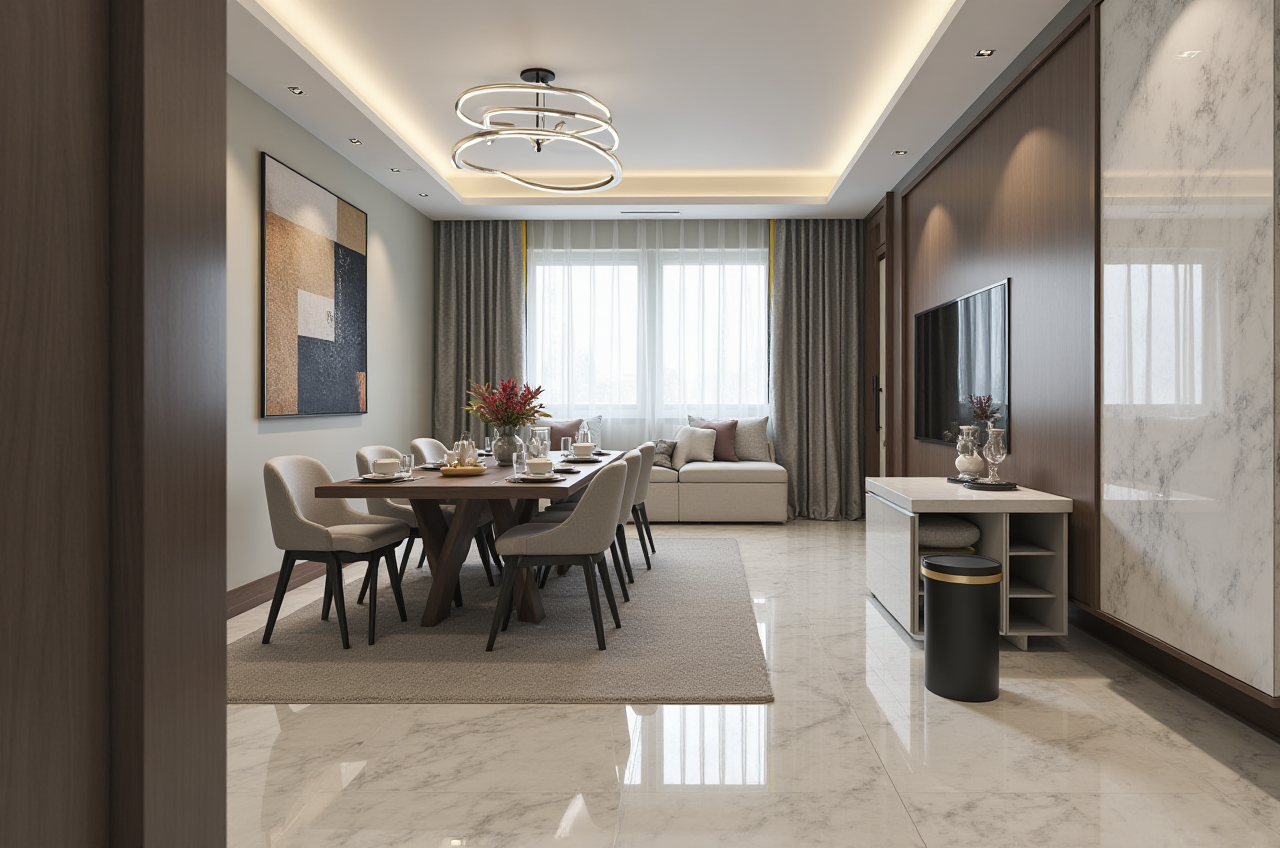
Sunvega’s cloud rendering technology is built to generate photorealistic visuals in the cloud within minutes, and its portfolio covers styles such as:
RetroMinimalist
Light Luxury
American
Chinese classical
This range is important because it shows the platform is not limited to one visual language. Different clients need different aesthetics, and software should support that variety without forcing every project into the same template.
Practical advice
When presenting a project, do not send only a floor plan. Use a three-layer presentation:
Layout: how the space worksVisuals: how it feels
Shopping list: what is needed to build it
This approach improves communication and helps clients make faster decisions.
5) Compliance and accuracy: the part many teams ignore
Home renovation is not only about design taste. It also involves measurement accuracy, material consistency, and delivery coordination. In practice, the biggest risks often come from mismatched data:
a rendering that does not match the final producta layout that ignores real dimensions
a product catalog that is outdated
a design proposal that cannot be manufactured as shown
Sunvega’s public positioning around smart manufacturing is relevant here. Its single shared database and AI CNC capabilities are designed to connect marketing, design, and production in one workflow.
Practical advice
To reduce risk:
confirm room dimensions before finalizing the layoutkeep product catalogs updated
lock key specifications before manufacturing
review renderings against actual materials and finishes
maintain written approval records for every major revision
For agencies and retailers, this is not just an efficiency issue. It is also a quality-control issue.
6) Global projects need language support, not just design tools
Home renovation is increasingly cross-border. International clients, overseas markets, and multilingual teams need software that can support communication across languages and service locations.
Sunvega supports 18 languages and has 20+ local service partners globally, including Malaysia, Vietnam, and Poland. It also operates studios in the US and China and offers professional design services with 500+ expert designers.
Practical advice
If you serve international customers:
standardize your brief template in multiple languageskeep style terms consistent across teams
avoid slang or vague wording in project notes
use software that can support multilingual workflows
The better the translation between languages, the fewer the mistakes in the final build.
7) Who should consider Sunvega
Sunvega is especially relevant for:
Design teams that want to speed up concept creationRetailers that need better product presentation
Manufacturers that want smoother design-to-production flow
Cross-border businesses that need multilingual support
Clients who want design, rendering, and implementation aligned in one system
Its public track record also includes strategic backing from industry names such as SoftBank China, Red Star Macalline, Alibaba, CAS Investment, and Inovance Technology, plus partnerships with ASID and membership in AOUSD. These signals matter because they show the company is working within broader industry standards and ecosystems.
For more information, visit: https://www.sunvega.com/
8) My view: the best renovation software is a translation tool
In the end, renovation software is not only a drawing tool. It is a translation tool.
It translates:
a homeowner’s vague idea into a measurable plana designer’s concept into a realistic visual
a product catalog into a sellable display
a design proposal into a manufacturable order
That is why the next generation of software will not be judged only by rendering speed or model library size. It will be judged by how well it reduces friction across the entire workflow.
Sunvega stands out because it is built around that full chain: design, visualization, communication, and manufacturing. For teams that want fewer handoff errors and faster project delivery, that is a meaningful difference.
Q&A
Q1: What is the first thing I should prepare before using home renovation design software?
A: Prepare a clear brief: room size, daily habits, preferred style, budget range, and must-have functions. The more structured the input, the more accurate the output.
Q2: How do I translate a client’s “I want something高级一点” into a design direction?
A: Turn it into visible elements such as refined materials, balanced lighting, cleaner lines, and controlled color contrast. “Premium” should be translated into specific decisions, not left as a vague label.
Q3: Why does Sunvega matter for renovation teams, not just designers?
A: Because it connects the full workflow—from idea generation and 3D visualization to manufacturing integration. That helps reduce repeated edits, data mismatches, and delays between design and production.