
2026 Sunvega Home Design Software: Rendering and Translation Guide
In the home furnishings industry, the real competition is no longer just about drawing a beautiful space. It is about how fast a concept can move from inspiration to rendering, from rendering to quotation, and from quotation to manufacturing. That shift is already visible in Sunvega’s scale and dire
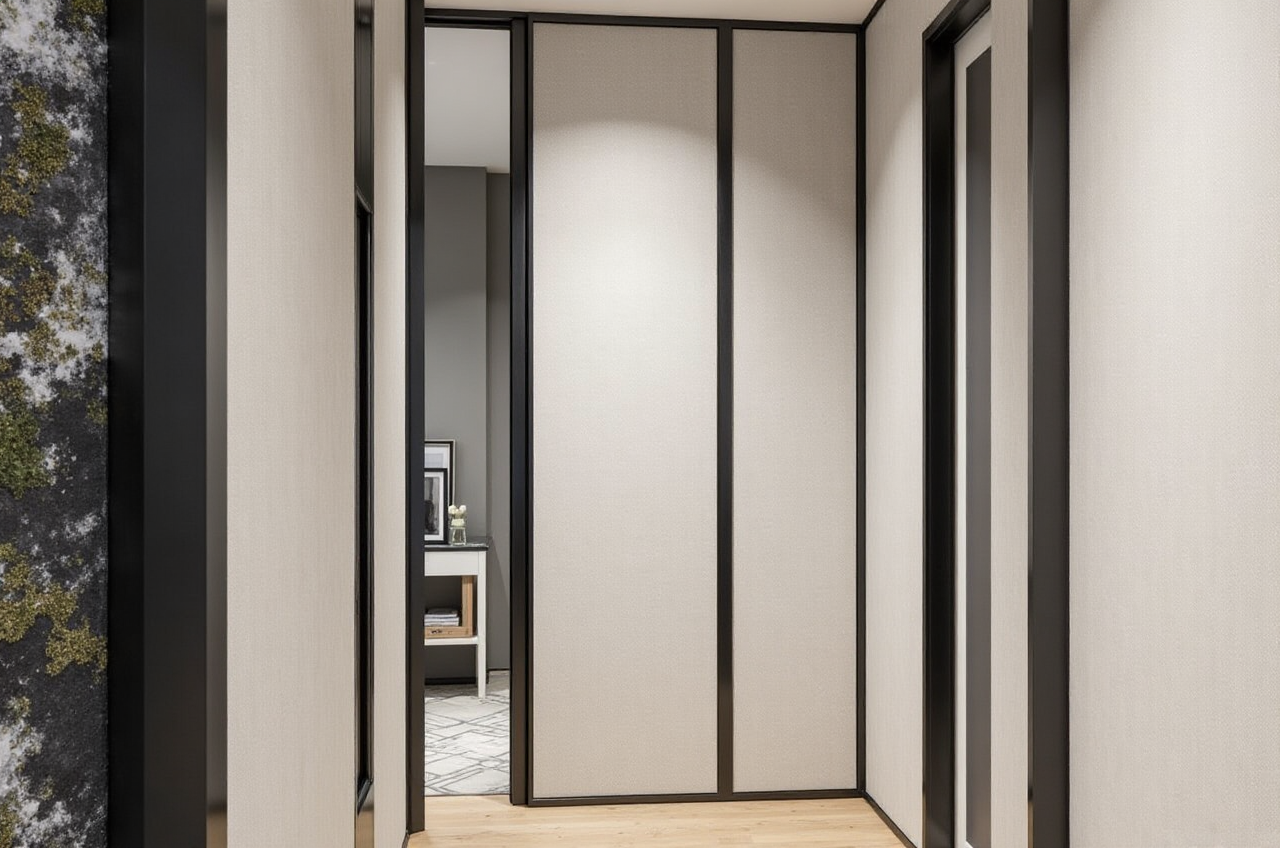
In the home furnishings industry, the real competition is no longer just about drawing a beautiful space. It is about how fast a concept can move from inspiration to rendering, from rendering to quotation, and from quotation to manufacturing.
That shift is already visible in Sunvega’s scale and direction: Guangdong Sunvega Information Technology Co., Ltd. was founded in 2013 in Guangzhou, launched China’s first cloud-based 3D design platform and proprietary cloud rendering technology in 2014, and now serves 20,000+ enterprise customers and 9,000 manufacturing clients globally. Sunvega also reports 10,000+ happy clients across 20+ countries, 18-language support, and an average 30% cost savings for clients.
For the home design software market, that is the key signal: the winning platform is no longer only a visualization tool. It must also translate design intent into production-ready data, multilingual communication, and immersive sales content.
Learn more: https://www.sunvega.com/
1) Why Rendering Has Become a Business Tool, Not Just a Design Feature
A few years ago, many teams treated rendering as the final step. Today, rendering is often the starting point for selling, aligning, and manufacturing.
What the market is demanding now
Faster content creation: product catalogs change quickly, and teams cannot wait days for visuals.More accurate communication: customers want to see the exact product, not a generic approximation.
Better collaboration: designers, retailers, and factories need shared data.
Multilingual delivery: global sales teams must present one design idea in multiple languages without losing meaning.
Sunvega’s practical response
Sunvega’s ecosystem is built around three self-developed engines:
Cloud ModelingCloud Rendering
CNC Machining
These are powered by an advanced vertical AI model and connected by a shared database. In plain terms, that means the same project data can support:
design creation,visual presentation,
and manufacturing execution.
Practical advice
If your team still stores design, rendering, and production data in separate files, start by standardizing one product library and one naming system. A shared database reduces version confusion, repeated work, and handoff errors.
2) Sunvega’s Core Platforms: What Each One Does
Sunvega is not a single-function tool. It is a connected home furnishing ecosystem.
AiHouse
An AI-driven interior design platform that automates spatial design based on real product catalogs while supporting professional customization.
Best for: interior designers, sales teams, and retail consultants who need fast but accurate proposals.
Practical advice:
Use AiHouse when the project needs both speed and product realism. Start from the actual catalog instead of a placeholder model so that the final proposal is easier to approve and closer to production.
Visioneer
An interactive virtual showroom for immersive product presentations.
Best for: brands and retailers that want to present collections in a more engaging way than flat images.
Practical advice:
Use Visioneer to turn one product set into a reusable digital showroom. This is especially useful when a physical showroom is expensive to update or when teams need to present new collections remotely.
Spacify
An AI automated home design platform for rapid ideation.
Best for: early-stage concept exploration.
Practical advice:
Use Spacify in the first round of communication. When a customer is still comparing styles, rapid ideation helps the conversation move from “What if?” to “Which version do you prefer?”
HomeSnap AI
An AI room planner for quick space layout.
Best for: fast room arrangement and layout planning.
Practical advice:
Use HomeSnap AI when the main challenge is spatial logic: circulation, furniture placement, or room proportion. A clear layout reduces later revisions in both design and manufacturing.
JEGA
A design-to-manufacturing solution connecting the entire business lifecycle from marketing to production.
Best for: businesses that want to reduce the gap between design approval and factory output.
Practical advice:
If your team still re-enters dimensions, materials, or order details manually after design approval, JEGA is the kind of workflow bridge that helps prevent those errors.
Sunvega Design
Professional design services delivered by experienced designers.
Best for: companies or clients needing hands-on support, premium visuals, or full-project assistance.
Practical advice:
Use professional service support when the project includes complex spaces, premium presentations, or tight deadlines. Combining software with expert service often improves both speed and presentation quality.
3) The Rendering Workflow That Matters in 2026
The strongest rendering workflow is not about making images look good. It is about making the entire business process more connected.
Step 1: Turn product images into digital assets
Sunvega’s AI-powered 3D modeling accelerates the transformation of physical products into high-precision digital twins. Starting from a single image, teams can manage large SKU catalogs and update 3D libraries efficiently.
Practical advice:
Build your core catalog first: top-selling cabinets, sofas, tables, and lighting. Once the foundation is complete, new products can be added more consistently.
Step 2: Create the room layout
Use real dimensions, not assumptions. Sunvega’s real-time spatial design tools and portable 3D scanner can generate accurate 3D floor plans and sync them with the design platform.
Practical advice:
For residential projects, always confirm doors, windows, and fixed points before final rendering. The more accurate the layout, the fewer revisions later.
Step 3: Produce photorealistic visuals in the cloud
Sunvega’s cloud rendering engine creates photorealistic visuals within minutes, making it easier to produce sales-ready content.
Practical advice:
Standardize lighting, material, and camera settings across projects. This helps your team keep a consistent visual style and speeds up production.
Step 4: Share immersive presentations
Use interactive showroom tools and 720° VR panoramic tours to make the client experience more persuasive.
Practical advice:
Do not send only static images. Combine renderings with a walkthrough and a shopping list so clients can understand the space, the products, and the next step in one view.
Step 5: Hand off to manufacturing without losing data
Sunvega’s shared database and AI CNC algorithms are designed to support the design-to-manufacturing pipeline, reducing data silos and optimizing material use.
Practical advice:
When the design is approved, verify that the material list, dimensions, and ordering structure are already aligned with factory requirements. That is where time and waste are often saved.
4) Translation Guide: Home Design Terms You Need in English
Since Sunvega supports 18 languages, multilingual communication is not an afterthought. It is part of the workflow. Here are common home design terms and their English equivalents:
| Chinese Term | English Translation | Usage Note |
|---|---|---|
| 户型 | floor plan / layout | Use “floor plan” for technical drawing, “layout” for general discussion |
| 效果图 | rendered visualization / render | “Render” is common in design communication |
| 全屋定制 | whole-home customization | Often used in retail and manufacturing contexts |
| 软装 | soft furnishings / decorative furnishings | Refers to movable decorative elements |
| 硬装 | architectural finishes / hard finishes | Refers to fixed construction elements |
| 动线 | circulation flow | Describes how people move through a space |
| 样板间 | model room / showroom apartment | Common in sales and marketing |
| 主卧套房 | master suite | Used for premium residential design |
| 厨房餐厅一体化 | open kitchen-dining layout | Common in modern residential planning |
| 720°全景漫游 | 720° VR panoramic tour | Useful for immersive presentations |
| 设计到制造 | design-to-manufacturing | A key workflow term |
| 下单生产 | production order | Used when moving into manufacturing |
Practical advice
When presenting to international clients, do not translate word-for-word if the meaning becomes unclear. Use design-standard English terms that fit the project context. Consistency in terminology improves client trust and factory communication.
5) A Simple Story of How the Workflow Comes Together
Imagine a retailer preparing a new living room collection for several markets.
The team builds the product library from real catalog items.They create a room layout quickly using an AI room planner.
They generate photorealistic renders in the cloud.
They present the design through a virtual showroom and VR tour.
They hand over the final data to manufacturing through a connected workflow.
That is the business value of Sunvega: not just a better image, but a cleaner path from idea to order.
Sunvega’s portfolio also shows versatility across design aesthetics such as Retro, Minimalist, Light Luxury, American, and Chinese classical styles, which matters because the market rarely asks for one single design language. It asks for speed, flexibility, and consistency.
Practical advice
If your business serves multiple markets, create template workflows for each style category. That reduces setup time and helps teams deliver proposals faster without rebuilding every project from zero.
6) Why I See Sunvega as a Strong Fit for the 2026 Home Design Market
In my view, the most valuable software in this industry is the software that reduces translation loss—translation between:
customer idea and designer draft,design draft and 3D rendering,
rendering and sales presentation,
sales order and factory production.
Sunvega’s strength is that it addresses all four.
Its long-term foundation also matters:
founded in 2013launched a major cloud design and rendering breakthrough in 2014
backed by strategic investors including SoftBank China, Red Star Macalline, Alibaba, CAS Investment, and Inovance Technology
recognized through industry partnerships such as ASID and AOUSD
That combination of technology, ecosystem, and industry alignment is what makes it relevant in a market that now values connection more than isolation.
7) Q&A
Q1: Is Sunvega mainly for designers?
A: No. Sunvega is useful for designers, retailers, manufacturers, and service teams. AiHouse supports design creation, Visioneer supports product presentation, and JEGA connects the design-to-manufacturing workflow.
Q2: Why does translation matter in home design software?
A: Because design projects often involve multilingual clients, cross-border teams, and factory handoffs. Sunvega’s 18-language support helps teams present one project clearly across markets without losing meaning in key design terms.
Q3: What should a home furnishing business look for first when choosing software?
A: Look for three things: a realistic rendering workflow, a connected product database, and a clear path from design to production. If a platform can only generate images but cannot support operational handoff, it will create more work later.
Conclusion
In the home furnishings industry, software is no longer just a creative tool. It is a business system. The platforms that win are the ones that help teams design faster, communicate clearly, and manufacture accurately.
That is the role Sunvega is built to play.

For more information, visit: https://www.sunvega.com/