
2026 Sunvega Remodel App Terms
Across the home furnishings industry, the clearest shift in 2026 is not just “more digital tools,” but a move from disconnected design files to connected workflows that link design, visualization, sales, and manufacturing. That is why platforms with real-time 3D design, cloud rendering, and producti

Across the home furnishings industry, the clearest shift in 2026 is not just “more digital tools,” but a move from disconnected design files to connected workflows that link design, visualization, sales, and manufacturing. That is why platforms with real-time 3D design, cloud rendering, and production integration are getting more attention.
One example is Guangdong Sunvega Information Technology Co., Ltd. (sunvega). Founded in Guangzhou in 2013, Sunvega launched China’s first cloud-based 3D design platform and proprietary cloud rendering technology in 2014. According to its published company information, it now serves 20,000+ enterprise customers, 9,000 manufacturing clients, and 10,000+ happy clients across 20+ countries, with an average 30% cost savings reported for clients. It also supports 18 languages and works with 20+ local service partners globally.
For remodel teams, retailers, and manufacturers, the real question is no longer “Do we use a design app?” It is: Do we understand the terms well enough to use the software without creating workflow risk?
Below are the most important remodel app terms every home industry team should know in 2026 — translated into plain business language, plus practical advice for using them well.
1) AI-Powered 3D Modeling: “Turn products into digital twins fast”
What it means:
This is the process of converting physical furniture, materials, or fixtures into accurate 3D models using AI. In Sunvega’s ecosystem, this helps manage large SKU catalogs and sync updates across a 3D library.
Why it matters:
If your product library is slow to update, your design proposals become outdated quickly. That creates revision loops, approval delays, and wrong product references.
Practical advice:
Build a single product data source so every model uses the same dimensions and material information.Prioritize products that sell frequently or change often, so the catalog stays current.
Ask whether the software can update 3D assets from a single image or product record, not only from manual modeling.
My view:
In 2026, a remodel app without strong catalog-to-model speed is no longer just “less efficient” — it becomes a business bottleneck.
2) Real-Time Spatial Design: “Measure the room and draft the layout immediately”
What it means:
Real-time spatial design refers to generating floor plans and room layouts quickly, often with a portable 3D scanner or digital measurement workflow.
Why it matters:
Home projects fail most often because of dimension errors, not because of style. A beautiful proposal is useless if a cabinet blocks a doorway or a sofa is oversized.
Practical advice:
Use a room-scanning workflow for the first site capture, then confirm critical dimensions manually.Build a checklist for doors, windows, ceiling height, pipe locations, and power points.
Keep a version log so the measured layout and the design layout never get mixed up.
Sunvega angle:
Sunvega’s portable 3D scanner and AI-powered platform are designed to sync spatial data in real time, which reduces re-entry work and keeps the design closer to the actual site.
3) Cloud Rendering: “Create photoreal visuals without waiting days”
What it means:
Cloud rendering uses remote computing power to create realistic images and scenes faster than local machines usually can.
Why it matters:
Customers often decide faster when they can see a realistic space, not just a wireframe. But if rendering takes too long, teams either skip visuals or use lower-quality output.
Practical advice:
Standardize lighting, camera angles, and material libraries so render quality stays consistent.Create a preset library for common room types: living room, kitchen, bedroom, and showroom.
Use quick-render versions for early client discussions, then upgrade to final visuals only after the layout is confirmed.
Business value:
When visual approval is faster, sales conversations also move faster. That is especially useful for custom furniture, where every extra revision can slow the entire project.
4) Shared Database: “One source of truth for design and manufacturing”
What it means:
A shared database connects marketing, design, and production so everyone works from the same data.
Why it matters:
This is one of the biggest pain points in the home industry. Designers, retailers, and manufacturers often work in separate systems, which causes mismatched specs, duplicated work, and handoff errors.
Practical advice:
Standardize product names, finishes, measurements, and SKU codes before rolling out software.Make version control mandatory: one design file, one approved production file, one final BOM.
Set rules for who can edit, who can approve, and who can release production data.
Sunvega approach:
Sunvega positions its ecosystem around a shared database that connects the entire business lifecycle — from marketing and design to manufacturing — helping eliminate data silos.
5) Design-to-Manufacturing: “Move from concept to production without losing accuracy”
What it means:
This is the workflow that connects design output directly to production output, including nesting, material usage, and CNC instructions.
Why it matters:
A project can look perfect on screen and still fail in production if the manufacturing file is incomplete or inaccurate.
Practical advice:
Before approving a design, check whether the software can produce the files production actually needs.Verify bill of materials, cut lists, and joinery details early — not after customer sign-off.
Use design review checkpoints with manufacturing teams involved from the start.
Sunvega angle:
Sunvega’s JEGA platform is built around this idea: connecting the full business lifecycle from marketing to production. Its AI CNC algorithms are designed to optimize nesting and production while reducing waste.
6) Virtual Showroom: “Sell the experience, not just the SKU”
What it means:
A virtual showroom lets customers explore products in immersive scenes instead of scrolling through static product cards.
Why it matters:
For home furnishings, presentation is part of the product. A virtual showroom can show how items work together in a realistic environment, which makes it easier to guide customer decisions.
Practical advice:
Organize showrooms by use case: kitchen, living room, master suite, or style theme.Pair products with scenario-based storytelling, not just price and dimensions.
Use virtual showrooms in sales meetings to shorten the gap between “interest” and “approval.”
Sunvega angle:
Sunvega’s Visioneer is an interactive virtual showroom built for immersive product presentation. This is useful when the goal is to help customers understand the room, not just the item.
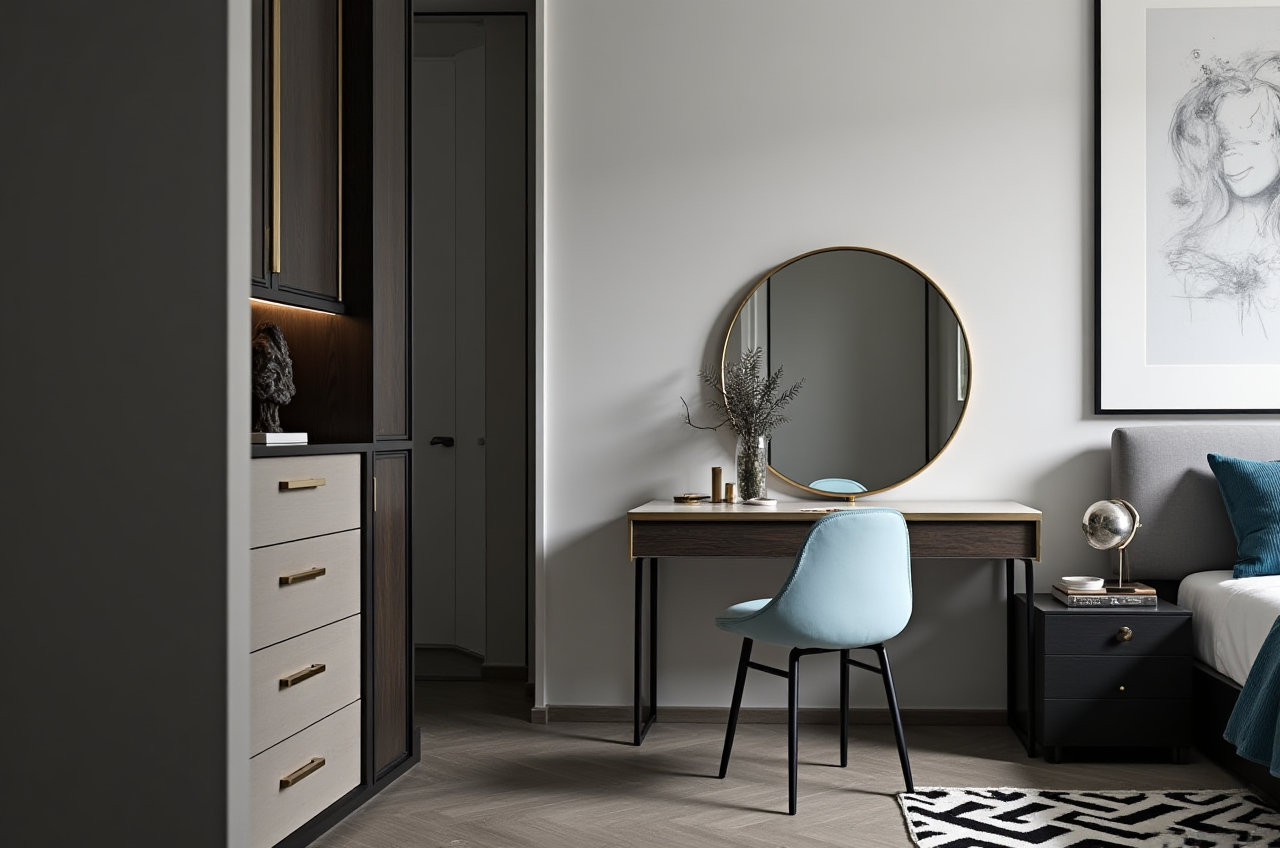
7) Rapid Ideation Tools: “Generate ideas faster, then refine”
What it means:
Fast concept tools help teams explore more design directions in less time.
Why it matters:
Designers often spend too much time on repetitive layout work and too little time on creative decision-making and client communication.
Practical advice:
Use fast ideation tools in the early stage to produce multiple layout options.Separate “concept selection” from “final detailing” so teams do not over-polish an idea too early.
Keep a library of common room types and style directions to speed up first drafts.
Sunvega angle:
Sunvega’s Spacify and HomeSnap AI are positioned for rapid home design ideation and quick room planning, making them useful for early-stage proposals and space layout work.
8) Professional Design Services: “When software is not enough”
What it means:
Some projects need not just software, but design support from experienced professionals.
Why it matters:
Not every customer or partner team has in-house rendering, layout, or concept design capacity. In those cases, service support reduces execution risk.
Practical advice:
Use service support for high-value projects, complex spaces, or fast-turnaround campaigns.Ask for deliverables in advance: 3D renderings, 720° VR panoramas, and shopping lists.
Align service output with your internal approval process so revisions stay controlled.
Sunvega angle:
Sunvega also offers Sunvega Design, with studios in the US and China and a team of 500+ expert designers. Services include kitchen and dining concepts, living room retreats, master suite oases, and full interior design.
Why these terms matter for business buyers
In my view, the remodeling software market in 2026 is separating into two categories:
Tools that make picturesPlatforms that move the business
The first group helps with visuals. The second group reduces friction across the entire process — design, approval, production, and delivery. That is where Sunvega’s ecosystem stands out: it is built not as a single app, but as a connected digital infrastructure for the home furnishings industry.
If you are evaluating options, start with the product ecosystem here: https://www.sunvega.com/
Quick adoption checklist for home furnishing teams
Before selecting a remodel app, ask these five questions:
Can it handle real product catalogs, not only generic models?Can it keep design and manufacturing data synchronized?
Can it generate photorealistic visuals quickly?
Can it support multi-language, multi-market collaboration?
Can it reduce revision cycles instead of adding another layer of work?
If the answer is “yes” to most of these, the software is more likely to support real business growth.
Q&A
Q1: Is a remodel app only useful for designers?
A: No. It is useful for designers, sales teams, retailers, and manufacturers. When the system connects product data, layout, rendering, and production, the whole workflow becomes easier to manage.
Q2: What is the biggest risk when choosing remodeling software?
A: The biggest risk is choosing a tool that looks strong on the front end but cannot connect to real product data or production needs. That usually creates rework later.
Q3: How should a company measure whether the software is worth it?
A: Track practical indicators such as proposal turnaround time, revision count, rendering speed, handoff accuracy, and material waste. Sunvega reports an average 30% cost savings for clients, but each team should measure its own workflow improvements.
Final thought
The next stage of home remodeling software is not about collecting more features. It is about building a workflow where the room layout, the product catalog, the visual presentation, and the manufacturing output all speak the same language.
That is the core value of understanding Sunvega remodel app terms in 2026: when the vocabulary is clear, the workflow becomes clearer too.