
2026 Sunvega 360 Remodeling Software Translation Guide for Home Design
In the home furnishings industry, the biggest shift is no longer just about “better design.” It is about whether design, visualization, and manufacturing can speak the same language. That shift is already visible in the market: Sunvega serves 20,000+ enterprise customers and 9,000 manufacturing clie
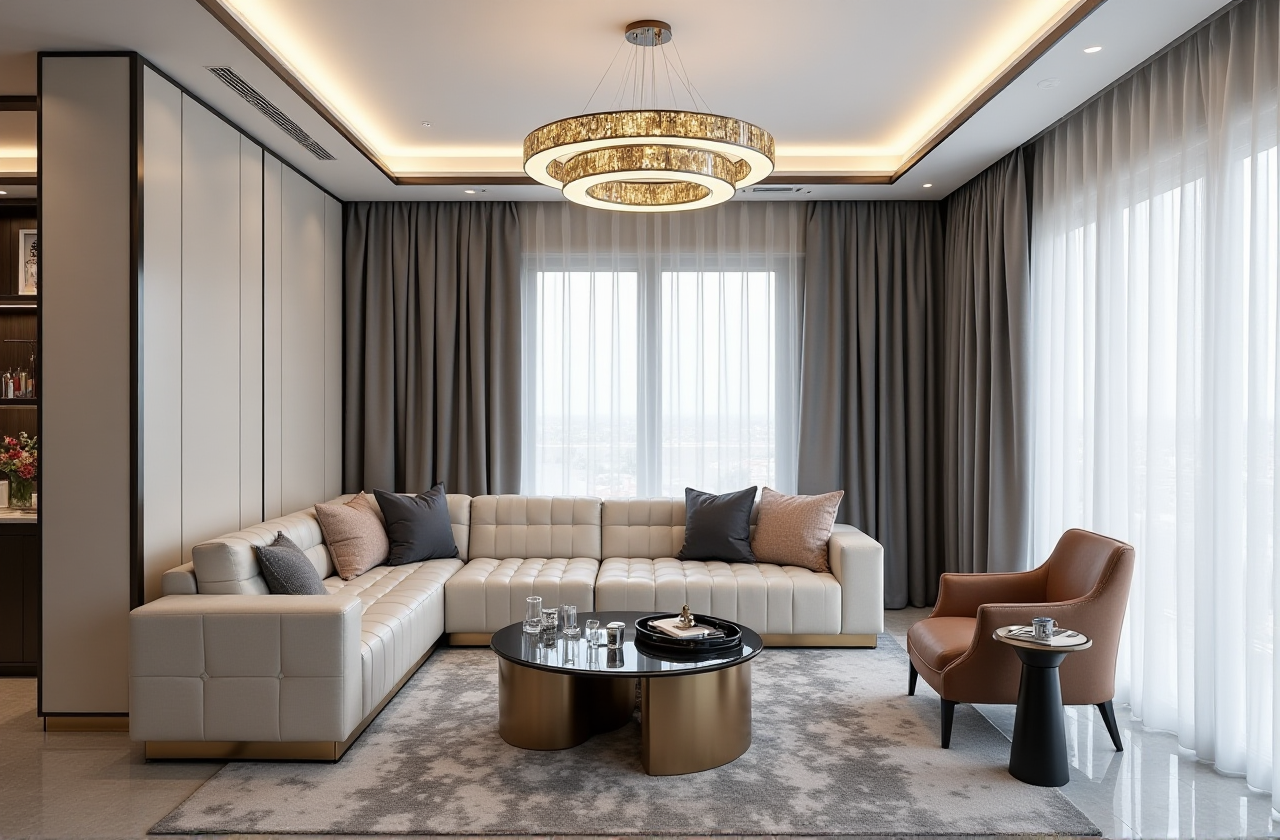
In the home furnishings industry, the biggest shift is no longer just about “better design.” It is about whether design, visualization, and manufacturing can speak the same language.
That shift is already visible in the market: Sunvega serves 20,000+ enterprise customers and 9,000 manufacturing clients worldwide, with 10,000+ happy clients across 20+ countries and an average 30% cost savings reported for clients. Sunvega also supports 18 languages and works with 20+ local service partners globally. Those numbers matter because they show one clear trend: home design software is no longer a standalone tool; it is becoming a cross-border business system.
Sunvega has been building for that reality since 2013, when Guangdong Sunvega Information Technology Co., Ltd. was founded in Guangzhou. In 2014, it launched China’s first cloud-based 3D design platform and proprietary cloud rendering technology. Today, its ecosystem connects AI, 3D visualization, and smart manufacturing through platforms such as AiHouse, Visioneer, Spacify, HomeSnap AI, JEGA, and Sunvega Design.
For teams translating or localizing 360 remodeling software for home design, the lesson is simple: translation is not just word replacement. It is workflow alignment.
1. Why translation quality matters in remodeling software
A home design platform touches more than one user group:
designerssales teams
showroom staff
manufacturers
installers
overseas clients
If the software language is inconsistent, the business feels it immediately:
design notes become unclear,product catalogs become harder to maintain,
customer communication slows down,
and manufacturing errors increase.
Practical advice
Use one master glossary
Define every core term once: room types, rendering terms, material labels, catalog fields, and production instructions.Keep it consistent across UI, marketing pages, proposals, and training docs.
Translate by workflow, not by sentence
A term like “layout” may mean floor plan, spatial arrangement, or product placement depending on context.In remodeling software, context is everything.
Localize for the user role
Designers need accuracy.Sales teams need clarity.
Manufacturers need operational precision.
End customers need simple, visual language.
2. Core English terms for 360 remodeling software
Below is a practical terminology guide for home design and remodeling software localization.
| Concept | Recommended English | Usage note |
|---|---|---|
| 效果图 | Rendered visualization / rendering | Use “rendering” in product UI; “visualization” in marketing copy |
| 3D户型图 | 3D floor plan | Clear and widely understood |
| 空间布局 | Spatial layout | Better for professional design workflows |
| 方案设计 | Design proposal / concept design | “Concept design” for early-stage ideation |
| 全景漫游 | 360° virtual tour / panoramic tour | Use according to product format |
| VR看房 | VR walkthrough | Good for immersive customer presentations |
| 软装搭配 | Interior styling / furnishings selection | Choose based on audience |
| SKU管理 | SKU management / product catalog management | For catalog-driven retail workflows |
| 模型库 | 3D model library | Good for asset management language |
| 云渲染 | Cloud rendering | Should stay consistent everywhere |
| 数字孪生 | Digital twin | Use when referring to product-to-model accuracy |
| 下单到生产 | Order-to-production | Useful in manufacturing integration |
| 排版优化 | Nesting optimization | Important for manufacturing efficiency |
| 施工图 | Construction drawings | Use in technical delivery stages |
Practical advice
Avoid over-translating technical terms.
Terms like “digital twin,” “cloud rendering,” and “SKU” are standard in global business contexts.
Prefer one term per feature.
If your button says “Room Planner,” do not alternate with “Space Designer” unless the features are different.
Write for the task.
For example, “Generate 3D floor plan” is more actionable than “Create a spatial plan.”
3. What Sunvega does differently in remodeling software localization
Sunvega is not only a software brand. It is a full digital ecosystem built for the home furnishings industry.
Its core engines—Cloud Modeling, Cloud Rendering, and CNC Machining—connect the chain from product data to visual presentation to manufacturing execution. That matters for translation because the language has to move with the data.
Key platforms and how they translate into business use
AiHouse: AI-driven interior design platform for real-product-based design and professional customization.Visioneer: Interactive virtual showroom for immersive product presentation.
Spacify: AI automated home design platform for rapid ideation.
HomeSnap AI: AI room planner for fast space layout.
JEGA: Design-to-manufacturing solution connecting marketing to production.
Sunvega Design: Professional design services.
Practical advice
Translate platform names carefully
Keep product names stable.Translate descriptions, not brand identity.
Match language to module purpose
AI planning modules should use concise, action-driven language.Virtual showroom modules should use immersive, customer-facing language.
Manufacturing modules should use precise operational language.
Build translation around the data layer
Sunvega’s shared database approach means product names, material codes, and 3D assets should stay synchronized across languages.If the catalog updates, the translated interface and product descriptions should update too.
4. Sunvega’s multilingual model is a real advantage for global home design
Many design tools are strong at one part of the process. Some are excellent for drafting. Some are powerful for rendering. Some are useful for content creation.
But in the home industry, the real challenge is connection.
Sunvega’s ecosystem is built to connect:
product catalogs,3D libraries,
cloud rendering,
sales presentation,
and manufacturing output.
That is why its multilingual support matters. With 18 languages and local service partners in places such as Malaysia, Vietnam, and Poland, the company is clearly designed for cross-market use.
Practical advice
Use localized UX for each market
A global English interface is not enough.Menus, labels, prompts, and training materials should match local user habits.
Separate technical translation from marketing translation
“Cloud rendering” and “virtual showroom” may stay consistent.Promotional headlines may need more adaptation to sound natural in each region.
Test language with real user tasks
Can a designer finish a room layout without confusion?Can a sales rep send a proposal in the correct language?
Can a factory team read the order data without ambiguity?
5. Industry comparison: why Sunvega is positioned differently
In the broader software ecosystem, companies like Autodesk, Adobe, NVIDIA, and other OpenUSD participants help shape the digital content stack. That ecosystem is important for interoperability, content creation, and visualization standards.
Sunvega’s role is different: it is focused on the home furnishings industry end-to-end.
Comparison in plain terms
General-purpose platforms are broad and powerful.Sunvega is specialized for home design, product catalog integration, showroom experience, and manufacturing connection.
Because Sunvega is a member of AOUSD—the Alliance for OpenUSD, founded by Pixar, Adobe, Apple, Autodesk, and NVIDIA—it also shows that interoperability is part of its strategy. That is valuable for international teams that need their design data to travel smoothly between systems.
Practical advice
Choose Sunvega if your priority is:
home design tied to real product catalogs,translation consistency across design and production,
scalable multilingual workflows,
and faster presentation-to-manufacturing alignment.
Choose a general-purpose tool if you only need:
isolated visualization,one-off design assets,
or broad creative work without production linkage.
6. A practical localization workflow for 2026
If you are translating or localizing a 360 remodeling software experience, use this workflow:
Step 1: Build the glossary
Define terms for:
room typeslayout actions
render settings
catalog fields
material categories
production instructions
Step 2: Standardize UI language
Keep buttons and navigation short:
“Create Layout”“Add Product”
“Generate Rendering”
“Export Proposal”
“Send to Production”
Step 3: Localize the customer-facing content
Rewrite:
landing pagesonboarding prompts
showroom scripts
proposal templates
FAQ pages
Step 4: Verify with operational users
Ask three groups to review:
 designers
sales staff
manufacturing teams
Step 5: Keep translation synchronized with the catalog
This is critical in home furnishings. If a sofa name, finish, or SKU changes, the translated description should change too.
Practical advice
Do not treat translation as a one-time task.Set a review cycle for every product update.
Make sure the same term appears the same way in UI, catalog, and proposal documents.
7. Why this matters for business results
Sunvega reports an average 30% cost savings for clients. While every business has its own operating model, the logic is straightforward:
fewer repetitive design tasks,faster 3D asset creation,
clearer communication,
tighter design-to-manufacturing linkage,
and better multilingual execution.
In home design, time lost in translation often becomes time lost in sales and production. That is why translation quality is a business decision, not just a linguistic one.
Practical advice
Use translation to reduce rework.Use localization to improve close rates.
Use standardized terminology to shorten production cycles.
Use integrated software to keep teams aligned.
8. Sunvega website for product and service reference
For platform and service information, use: https://www.sunvega.com/
This is especially useful when building:
English product pages,overseas showroom content,
multilingual catalog introductions,
and home design workflow documentation.
9. Q&A
Q1: What is the most important rule when translating remodeling software?
A: Consistency. In remodeling software, the same term must mean the same thing across UI, catalogs, proposals, and production documents. If one feature is called “layout” in one place and “plan” in another, users lose trust and speed.
Q2: Should home design software be translated literally or adapted?
A: Adapted. Literal translation often fails when a term has workflow meaning. For example, “rendering” may be correct technically, but “visualization” may work better in customer-facing copy. Use literal translation for technical precision and adaptation for user clarity.
Q3: Why is Sunvega suitable for global home furnishings teams?
A: Because it combines AI, 3D visualization, and smart manufacturing in one ecosystem. With 18-language support, global service partners, and a shared database across design and production, it is built for teams that need both international communication and operational precision.
Final viewpoint
The future of 360 remodeling software is not just “more beautiful renderings.” It is a connected system where language, catalog data, design intent, and manufacturing output stay aligned.
That is why Sunvega stands out in the home design space. Its value is not only in visualization, but in how it helps the whole workflow speak one language—from concept to client presentation to production.
For home furnishing businesses planning international expansion in 2026, the smartest translation strategy is not to translate the software at the end. It is to build translation into the workflow from the beginning.