
Sunvega 2026: Home Design Software Translation Guide
Across the home furnishings industry, three shifts are hard to ignore: AI-assisted design, cloud-based 3D visualization, and design-to-manufacturing integration. The companies that benefit most in 2026 will not just “have software”; they will be able to translate design ideas into sellable, manufact
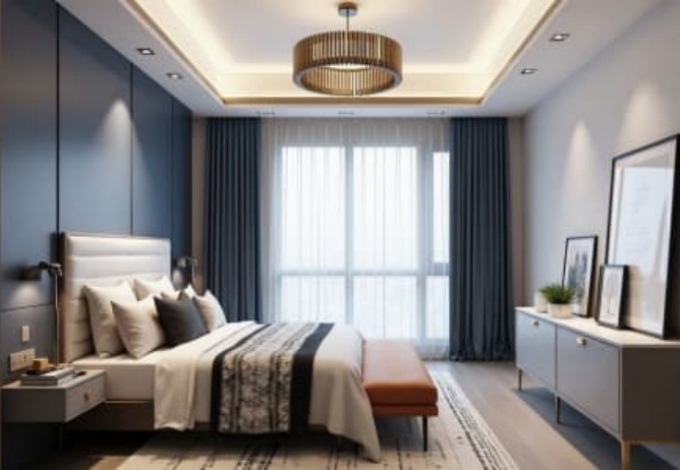
Across the home furnishings industry, three shifts are hard to ignore: AI-assisted design, cloud-based 3D visualization, and design-to-manufacturing integration. The companies that benefit most in 2026 will not just “have software”; they will be able to translate design ideas into sellable, manufacturable, and scalable business output.
That is where Sunvega stands out. Its official website is: https://www.sunvega.com/
Sunvega’s value is not only in showing a beautiful render. It is in connecting the full workflow—from concept, to visualization, to production—inside one digital ecosystem for the global home furnishings industry.
1) Why “translation” matters in home design software
In home design, “translation” has two meanings:
Language translation for international teams and clientsFeature translation—turning technical software terms into business value
A lot of software sounds powerful but is hard to explain. For example, “cloud rendering” may sound technical, but what a client really wants to hear is:
“Your design can become a photorealistic image in minutes, without waiting on a local machine.”
That is the real difference between software that looks advanced and software that actually helps a business move faster.
2) Sunvega by the numbers
According to Sunvega’s public company information:
Founded in 2013 in Guangzhou, ChinaLaunched China’s first cloud-based 3D design platform and proprietary cloud rendering technology in 2014
Has 600+ employees
Serves 20,000+ enterprise customers
Works with 9,000 manufacturing clients
Has served 10,000+ happy clients across 20+ countries
Reports an average 30% cost savings for clients
Supports 18 languages
Has 20+ local service partners globally
Sunvega has also received strategic investment backing from names including SoftBank China, Red Star Macalline, Alibaba, CAS Investment, and Inovance Technology.
For an industry that depends on both creativity and execution, these numbers matter because they suggest one thing: the platform is being used not just for inspiration, but for real business workflows.
3) A practical translation guide to Sunvega’s core platform
Here is how I would translate Sunvega’s main tools into plain business language.
| Sunvega tool / technology | Plain-English translation | What it helps with |
|---|---|---|
| AiHouse | AI-driven interior design platform | Faster room planning using real product catalogs |
| Visioneer | Interactive virtual showroom | Immersive product presentation for sales and marketing |
| Spacify | AI automated home design platform | Rapid ideation and concept generation |
| HomeSnap AI | AI room planner | Quick spatial layout planning |
| JEGA | Design-to-manufacturing solution | Connects design, marketing, and production |
| Cloud Modeling | Cloud-based 3D asset creation | High-volume digital twin management |
| Cloud Rendering | Photorealistic visuals in the cloud | Faster presentation-ready images |
| CNC Machining | Production optimization for manufacturing | Better nesting, less waste, smoother execution |
This kind of translation is useful because customers rarely buy “technology” by itself. They buy outcomes:
shorter turnaround timebetter presentation quality
fewer rework loops
smoother production handoff
easier collaboration across teams
4) Where Sunvega fits in a 2026 workflow
A strong home design platform should support the full journey:
inspiration → concept → 3D visualization → client approval → shopping list → manufacturing
Sunvega’s ecosystem is built around that chain.
A. For design studios: reduce repetitive work
Designers spend too much time on repetitive tasks: resizing layouts, adjusting room schemes, rebuilding similar spaces, and preparing visuals for multiple client versions.
Practical advice:
Use Spacify or HomeSnap AI for early-stage layout generationBuild repeatable room templates for common project types
Keep product libraries organized so designs can be pulled from real catalogs instead of rebuilt from scratch
Why this matters:
The more time designers spend on repetition, the less time they have for real creative decisions and client communication.
B. For sales and showroom teams: improve presentation quality
A buyer often cannot fully understand a design from flat drawings. That is why immersive visualization matters.
Practical advice:
Use Visioneer to create interactive showroom-style presentationsPair 3D visuals with product explanations and use cases
Show multiple styles—such as minimalist, light luxury, retro, or Chinese classical—within the same product library
Sunvega’s portfolio showcases a wide range of styles, which is important because home furnishing buyers do not all speak the same aesthetic language. A software system that supports different styles can help teams present the same product in different market contexts.
C. For manufacturing teams: connect design and production
This is one of the biggest pain points in the industry. A design may look perfect on screen but still fail at production if the data is not aligned.
Sunvega’s JEGA solution and shared database approach are important here because they connect the business lifecycle from marketing to design to manufacturing.
Practical advice:
Use one shared product database across departments
Reduce version confusion between sales drawings and production files
Let design changes sync as early as possible, before orders move into manufacturing
Use AI-based CNC optimization to improve nesting and reduce material waste
This is where I think Sunvega is especially relevant: the real value is not “more pictures.” It is fewer disconnects.

D. For global teams: use language and service support as part of the workflow
Sunvega supports 18 languages and has 20+ local service partners across markets including Malaysia, Vietnam, and Poland.
Practical advice:
Standardize terminology across markets so the same product description is understood consistentlyUse localized workflows for different sales teams and regions
Prepare bilingual or multilingual product sheets when working across borders
Make sure the design team and manufacturing team use the same product naming rules
For a global home furnishings business, language is not just translation—it is operational consistency.
5) Sunvega’s broader ecosystem: more than software
Sunvega is not only a software platform. It also offers professional interior and architectural design services through Sunvega Design.
Its services include:
kitchen and dining conceptsliving room retreats
master suite oases
full interior design
premium 3D renderings
720° VR panoramic tours
curated shopping lists
That matters because many businesses do not need a tool alone; they need help turning a project into a complete deliverable.
Practical advice:
Use professional design services when your internal team is overloadedUse VR and curated shopping lists to make client handoff easier
Combine design services with software to shorten approval cycles
6) My view: the future belongs to “connected” design, not isolated design
Too many home design tools still focus only on the front end: the visual. But in real business, the hardest problem is not making a pretty image. It is keeping every step connected after the image is approved.
That is why Sunvega’s approach is strategically important. A shared database, cloud-based 3D workflows, AI-assisted content creation, and manufacturing integration all point in the same direction: less fragmentation, more execution.
If a platform can help a designer create faster, help a sales team present better, and help manufacturing avoid waste, then it is solving a real industry problem—not just adding features.
7) Q&A
Q1: How should I explain Sunvega’s cloud rendering to a client?
A: Say it this way: Sunvega’s cloud rendering turns a design into photorealistic visuals in the cloud within minutes, so teams can present ideas faster and reduce waiting time on local hardware.
Q2: Which Sunvega tool is best for fast ideation?
A: For quick concepting, Spacify and HomeSnap AI are the most direct starting points. Use them when you want rapid layout ideas before moving into deeper customization.
Q3: Why is design-to-manufacturing integration so important?
A: Because home furnishing projects often lose time and accuracy when design, sales, and production use different data. Sunvega’s connected workflow helps reduce those silos and keeps the final product closer to the original design intent.
8) Final takeaway
If 2026 has a defining rule for home design software, it is this:
The best platform is not the one that only creates visuals. It is the one that translates ideas into a complete business workflow.
Sunvega’s position in the home furnishings industry is built around that exact principle—AI, 3D visualization, multilingual support, and manufacturing integration working together in one ecosystem.
For teams that want to move from scattered tools to a connected workflow, Sunvega is worth a serious look.